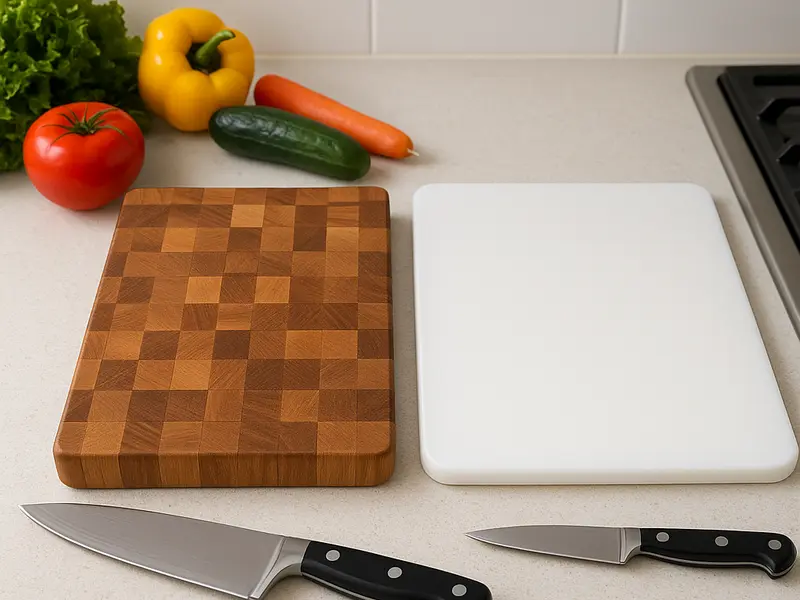
If hygiene is your main concern, the most important choice isn't wood or plastic. It's using separate boards for raw meat and for ready-to-eat foods, cleaning them properly after every use, and replacing them when they're badly worn. USDA food safety guidance says you can choose either wood or a nonporous material such as plastic. Nonporous boards are easier to clean, and plastic boards can usually go in the dishwasher, which makes them the convenient choice for raw meat, poultry, and seafood. Well-kept hardwood boards are a good, knife-friendly option for produce and bread, and can be used for meat too if you clean and sanitize them carefully.
Related on Amazon · Paid links
-
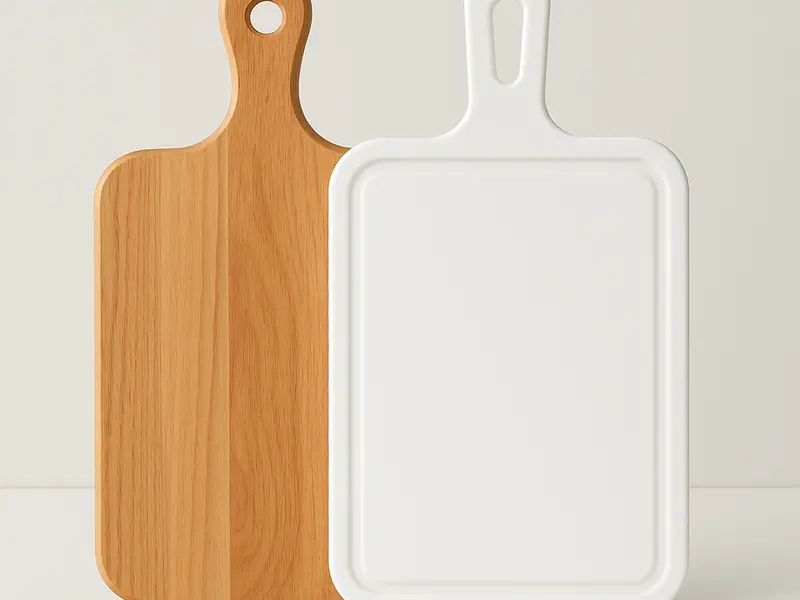 Cutting Boards on Amazon
Browse top-rated cutting board on Amazon — compare prices, features, and customer reviews.
Check price on Amazon
-
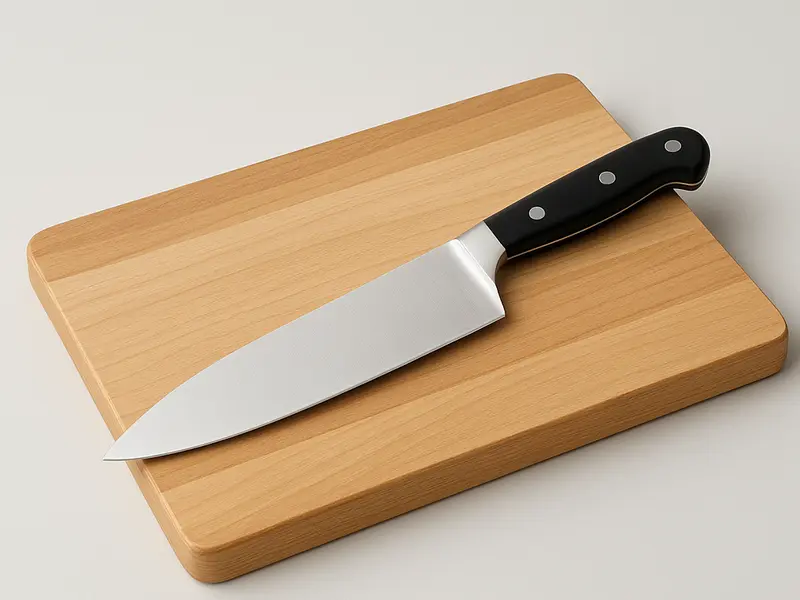 Chef's Knives on Amazon
Browse top-rated chef knife 8 inch on Amazon — compare prices, features, and customer reviews.
Check price on Amazon
We may earn a commission if you buy, at no extra cost to you.
How hygiene works across materials
Bacteria from raw meat, poultry, seafood, and unwashed produce can transfer to a board and then to the next food you cut. How much survives depends on the board's surface, how worn it is, and how you clean and dry it.
- Plastic boards, usually high-density polyethylene or polypropylene, are nonporous, so their surface is easy to wash and sanitize, and most can go in the dishwasher. As they age, knives cut grooves that are harder to clean, which is why worn plastic boards should be replaced.
- Wood boards are porous. Dense hardwoods such as maple, walnut, and cherry, especially in end-grain construction, resist deep knife scarring and are gentle on edges. Wood needs prompt washing and thorough drying, because a board left damp can warp, crack, or grow mold.
- Bamboo boards are hard and inexpensive, but they're made from a grass bonded with adhesives, are harder on knife edges than most hardwoods, and need the same hand-washing and drying care as wood.
- Composite boards made from wood fiber and resin are nonporous, dishwasher-safe in many cases, and kinder to knives than glass or stone.
- Glass, marble, and ceramic boards are easy to clean but dull knives quickly, so they're best kept for serving.
The USDA's practical advice applies to every material: once a board becomes excessively worn or develops hard-to-clean grooves, throw it away.
Use-cases that fit specific needs
If you prepare raw poultry, meat, or seafood often
Choose a plastic or composite board labeled dishwasher-safe and keep it for raw proteins only. Running it through a hot dishwasher cycle is the easiest way to clean it thoroughly after every use. Color-coding, such as red for raw meat and green for produce, makes it easy for everyone in the household to keep them separate.
If you mostly prep fruits, vegetables, and bread and you value knife-friendly surfaces
A hardwood board such as maple is gentle on knives and comfortable to cut on. Wash it with hot, soapy water, dry it promptly, and oil it periodically with food-safe mineral oil or a board conditioner to prevent drying and cracking.
If you want a balanced setup with clear separation
Use one plastic or composite board for raw meat, poultry, and seafood and a wooden board for produce, bread, and cooked foods. This follows the USDA recommendation to keep one board for fresh produce and bread and a separate one for raw meat, poultry, and seafood.
If space or budget is tight
Two inexpensive, thin plastic boards take little room and make separation easy. If you only have one board, cut produce and ready-to-eat foods first, then raw meat, and wash and sanitize the board before it touches anything else.
If you often forget to dry boards
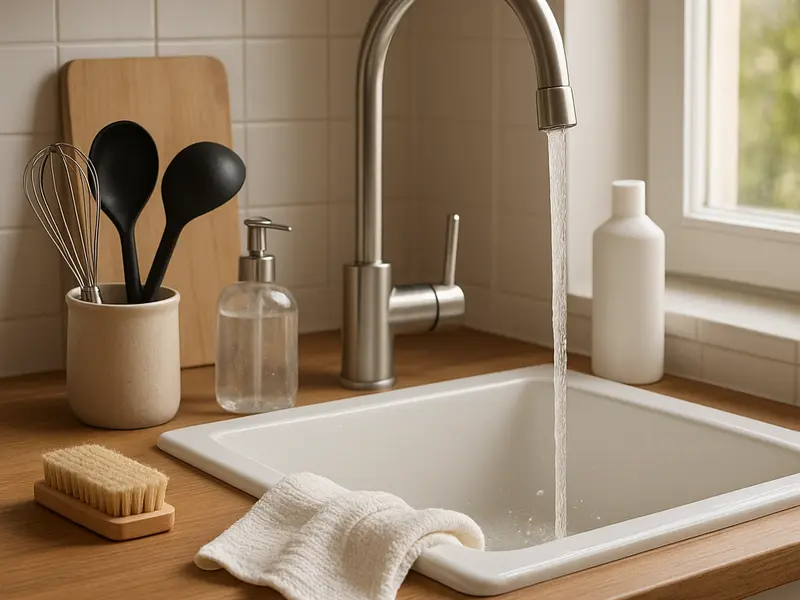
Plastic boards tolerate the dishwasher and drip-drying well. Wood boards left wet in the sink or stacked while damp are prone to warping, cracking, and mold, so if that sounds like your kitchen, lean toward plastic or composite.
How to clean and sanitize a cutting board
- Wash with hot, soapy water after each use, scrub with a brush, rinse, and air-dry or pat dry with clean paper towels.
- Plastic and other nonporous boards can usually go in the dishwasher. USDA guidance also lists solid wood boards as dishwasher-safe, though laminated boards may crack and split, and many wood board makers recommend hand washing to extend board life. Follow the instructions for your board.
- To sanitize, USDA suggests a solution of 1 tablespoon of unscented liquid chlorine bleach per gallon of water. Flood the surface, let it stand for several minutes, rinse with clear water, and air-dry or pat dry. This works for both wood and plastic.
- Don't soak wooden boards or leave them sitting in water.
- Replace any board with deep grooves, cracks, or splits that you can't clean thoroughly.
Trade-offs and when not to buy
- If you want a low-maintenance board for heavy meat prep, a dishwasher-safe plastic or composite board is more forgiving than wood. The trade-off is that plastic scars more visibly and needs replacing more often.
- If you prize knife care and appearance, hardwood boards win on feel and edge-friendliness. The trade-off is hand washing, prompt drying, and occasional oiling.
- If you have limited storage, a single board is tempting but makes cross-contamination more likely. Two boards, one for raw proteins and one for everything else, is the safer setup.
- If you're shopping on a tight budget, avoid very thin boards that warp in the dishwasher and cheap wood or bamboo boards that crack. Look for a board heavy enough to stay put and a non-slip base or feet.
Decision checklist
- Do you cut raw meat, poultry, or seafood regularly? If so, plan for a dedicated, easy-to-sanitize board.
- Do you have a dishwasher, and is the board labeled dishwasher-safe?
- Do you prefer a surface that is gentle on knives, or one that is easiest to clean?
- Will you use color-coding or separate boards to prevent cross-contamination?
- Do you have room to store at least two boards?
- Are you willing to dry and oil a wooden board regularly?
- Is your kitchen humid, which can make wood harder to keep dry?
Practical details you can use today
- Common materials: hardwoods such as maple, walnut, and cherry; plastics such as HDPE and polypropylene; composite boards made from wood fiber and resin; and bamboo.
- Typical sizes: small prep boards around 8 by 10 inches, everyday boards around 12 by 18 inches. Larger, thicker boards are more stable but heavier to clean and store.
- Knife-friendliness: wood and plastic are both reasonably kind to knives; glass, stone, and ceramic dull edges quickly.
- Stability: put a damp towel or non-slip mat under a board that slides; a board that moves while you cut is a safety hazard.
- Common mistakes to avoid: soaking wooden boards, using the same board for raw meat and ready-to-eat foods without washing and sanitizing it in between, putting laminated or glued boards in the dishwasher against the maker's instructions, and keeping boards long after they've become deeply grooved.
How to maintain hygiene over time
- Wash boards promptly after every use, and sanitize them after cutting raw meat, poultry, or seafood.
- Dry boards standing on edge or in a rack so air reaches both sides.
- Oil wooden boards with food-safe mineral oil or a board conditioner whenever they look dry.
- Inspect plastic boards for deep grooves and replace them when they're hard to clean.
- Keep using separate or color-coded boards for different food groups.
If you're choosing one direction, think about your kitchen workflow first: how often you cut raw proteins, whether you have a dishwasher, and how much time you'll spend on upkeep. A practical, widely recommended setup is a dishwasher-safe plastic or composite board for raw meat, poultry, and seafood, paired with a wooden board for produce and bread, with prompt washing and drying for both.