If your cast iron skillet has rust, you can almost always restore it and keep it reliable for years of cooking. Rust on cast iron is usually a surface problem, not a ruined pan. The best method depends on how bad the rust is and how much effort you're willing to put into reseasoning afterward. Use this guide to decide what approach fits, and how to keep rust from coming back.
Products in this article · Paid links
- Lodge 12-Inch Cast Iron Skillet Pre-seasoned cast iron classic — performance of pans five times the price. Check price on Amazon
-
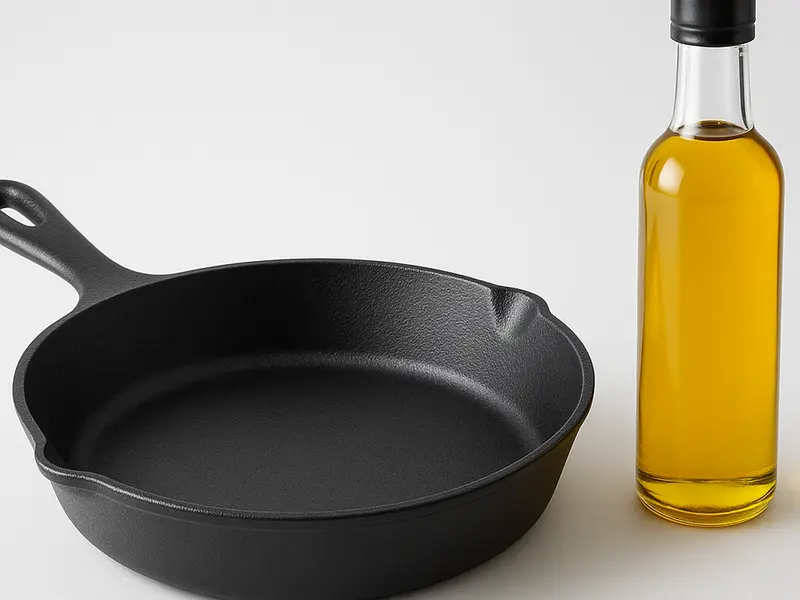 Cast Iron Seasoning & Care on Amazon
Browse top-rated cast iron seasoning oil on Amazon — compare prices, features, and customer reviews.
Check price on Amazon
We may earn a commission if you buy, at no extra cost to you.
Assessing the rust
Start by inspecting the surface. Light surface rust on bare cast iron is common in humid kitchens, after a pan was put away damp, or after it sat unused for weeks. If you see orange or brown spots but the metal underneath feels smooth after a gentle rub, a light scrub and fresh seasoning will fix it. If you find rough, flaky patches or deep pitting, plan for a longer restoration. Cracks or a warped base are a different matter, and usually mean the pan should be retired.
Enameled cast iron is a separate case. Its glass-like enamel coating doesn't rust, but many enameled pans have a bare cast iron rim that can rust if left wet, and a chip that exposes the iron underneath can rust too.
Methods to remove rust
Scrubbing for light to moderate rust
This is the method Lodge, the cast iron manufacturer, recommends for rust.
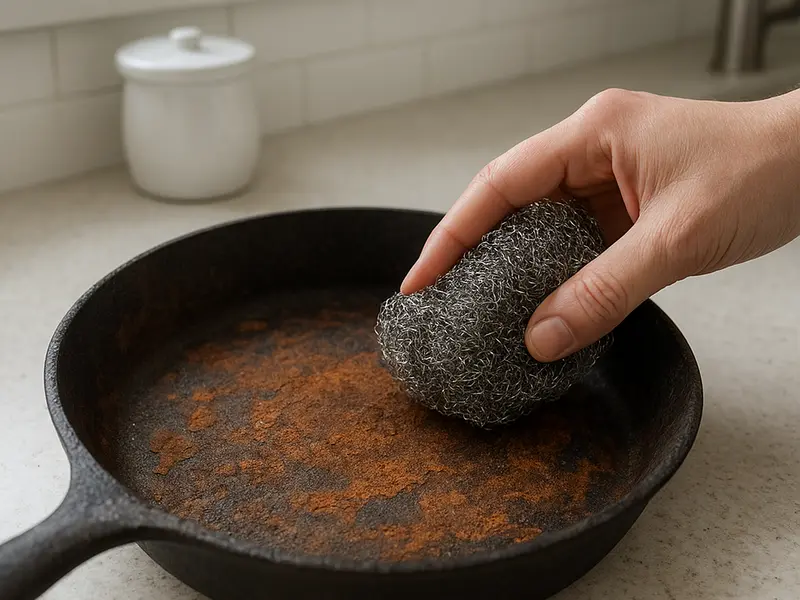
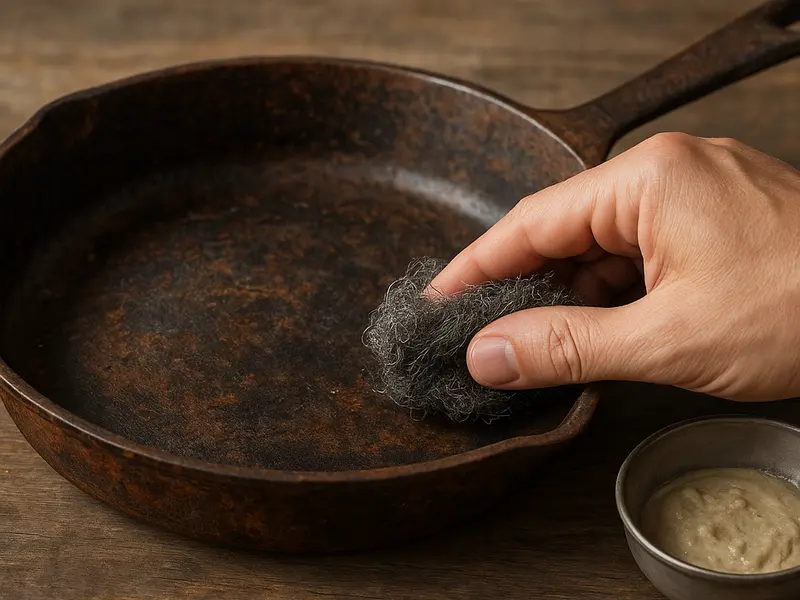
- Scour the rusty areas with steel wool or a rust eraser until the rust is gone and you're back to bare gray or black metal. Steel wool is fine here; you'll be reseasoning afterward anyway.
- Wash with warm water and a little dish soap, rinse, and dry the pan completely with a towel. Then set it on a burner for a few minutes to drive off any remaining moisture.
- Rub a very thin layer of cooking oil over the entire pan, inside and out, and wipe off the excess so it looks almost dry.
- Reseason in the oven (see below).
Vinegar soak for stubborn rust
- For rust that resists scrubbing, soak the pan in a mix of roughly equal parts white vinegar and water.
- Check it often, and limit the soak to about an hour as a starting point. Vinegar dissolves rust, but left too long it starts to attack the iron itself.
- As soon as the rust scrubs off easily, remove the pan, scrub it, rinse thoroughly, and dry it completely. Bare iron rusts again quickly, so oil and reseason right away.
Baking soda paste for small spots
A paste of baking soda and a little water works as a mild abrasive for small rust spots. Scrub, rinse, dry thoroughly, oil, and reseason.
Electrolysis for heavy rust
- Collectors restoring badly rusted or crusted pans sometimes use electrolysis: the pan is placed in a bath of water and washing soda with a low-voltage charger and a sacrificial piece of plain steel, which lifts rust without heavy scrubbing.
- It works well but needs care. The process gives off hydrogen gas, so it should be done outdoors or in a very well-ventilated space, away from sparks and flames. Follow a detailed, reputable guide and the safety instructions for the equipment you use.
- Afterward, rinse, dry completely, and reseason immediately with several thin coats.
Special case for enameled cast iron
- Don't use steel wool or harsh abrasives on enamel. Clean it with warm, soapy water and a nonabrasive sponge or a cleaner made for enameled cookware.
- Rust on a bare cast iron rim is normal and fixable: scrub it off gently, dry the rim thoroughly, and rub in a little cooking oil after washing.
- A chip in the enamel on the cooking surface exposes iron that will rust. Check with the manufacturer; many have warranty or care guidance for chips. If the cooking surface is badly chipped, it may be time to replace the pot or keep it for uses where the chip doesn't matter.
Common mistakes to avoid
- Soaking bare cast iron in water. Lodge is blunt about it: soaking is a recipe for rust.
- Leaving a pan in vinegar for too long, which can etch the iron.
- Skipping the drying step. Bare iron starts to rust within hours if left damp.
- Putting cast iron in the dishwasher, which strips seasoning and causes rust.
- Cooking long-simmered acidic dishes, such as tomato sauce, right after reseasoning, before the seasoning has had time to build up.
Reseasoning and maintenance
Seasoning is a thin layer of oil baked onto the iron until it hardens. It protects against rust and gives cast iron its natural release.
- Start with a clean, completely dry pan. Rub a thin, even layer of cooking oil over the entire surface, inside and out, including the handle. Lodge recommends vegetable oil, melted shortening, or canola oil. Wipe off as much as you can; too much oil leaves a sticky finish.
- Place the pan upside down on the oven's top rack, with foil or a baking sheet on the rack below to catch drips. Bake at 450°F to 500°F for one hour, then let it cool in the oven.
- For a freshly stripped pan, repeat the oil-and-bake cycle three or four times to build a durable base layer.
- After each use, wash with warm water and a brush or scraper. Lodge notes that a little modern dish soap is fine and won't strip seasoning.
- Dry immediately with a towel, warm the pan briefly on the stove to drive off moisture, then rub in a very thin layer of oil while it's warm.
- Cooking regularly with oil and fat keeps building the seasoning. If rust comes back quickly, review how you're drying and storing the pan.
Prevention and storage
Preventing rust is easier than removing it.
- Dry completely after every wash, ideally with a few minutes on a warm burner.
- Apply a light coat of oil after drying, wiping away the excess so the pan isn't sticky.
- Store in a dry place with some airflow. If you stack pans, put a paper towel between them to absorb moisture and protect the surface.
- Keep lids off or slightly ajar when storing, so moisture isn't trapped inside.
- Keep cast iron out of the dishwasher.
- Use your skillet regularly; frequent cooking with oil maintains the seasoning.
- For long-term storage, wipe the pan with oil, wrap it in a paper towel or cloth, and store it somewhere dry.
Choosing a method
- Rust severity: light surface rust usually comes off with steel wool and reseasoning; heavier rust may need a vinegar soak; badly crusted pans may call for electrolysis or a professional restorer.
- Enamel: enameled pans need gentle cleaning only; never use steel wool on the enamel.
- Time: a scrub and one seasoning cycle takes about two hours, mostly hands-off oven time. A full restoration with several seasoning coats can take an afternoon.
- Tools: you'll need steel wool or a rust eraser, cooking oil, paper towels, and an oven. Electrolysis needs a charger, a plastic tub, washing soda, a sacrificial steel plate, and an outdoor space.
- Kitchen humidity: humid kitchens call for extra care with drying and oiling.
Decision checklist
- Is the rust light and on the surface, or is there deep pitting?
- Is the pan bare cast iron or enameled? If enameled, is the enamel intact?
- Are there cracks or warping that would make restoration pointless?
- Do you have time for a scrub plus at least one oven seasoning cycle?
- Can you dry and store the pan where it won't sit in moisture?
Practical tips
- Always dry with a towel and then heat the pan briefly before storing.
- Use a paper towel to apply oil, then wipe off as much as you can; a heavy layer turns sticky.
- Don't skip the oven step after removing rust. Bare iron needs that baked layer of protection.
- When using vinegar or electrolysis, check the pan frequently and follow safety guidance carefully.
- If a pan is deeply pitted, cracked, or warped, replacing it is often more practical than restoring it.
When to consider replacement
- If the pan is cracked anywhere, including around the handle, retire it. Cracks can spread with heat.
- If the base is warped so the pan wobbles or doesn't sit flat on your burner, it will heat unevenly.
- If rust has left deep pits across the cooking surface, the pan may never hold seasoning evenly.
- If an enameled pan's cooking surface is badly chipped, check with the manufacturer and consider replacing it.
- If you don't want to maintain seasoning at all, enameled cast iron is a lower-maintenance alternative.
In summary, restoring a rusted cast iron skillet is a manageable project. Light rust comes off with steel wool, a thorough dry, and a fresh round of oven seasoning; heavier rust may need a short vinegar soak or, for serious restorations, electrolysis. After that, the routine is simple: wash, dry thoroughly, oil lightly, and cook with it often.