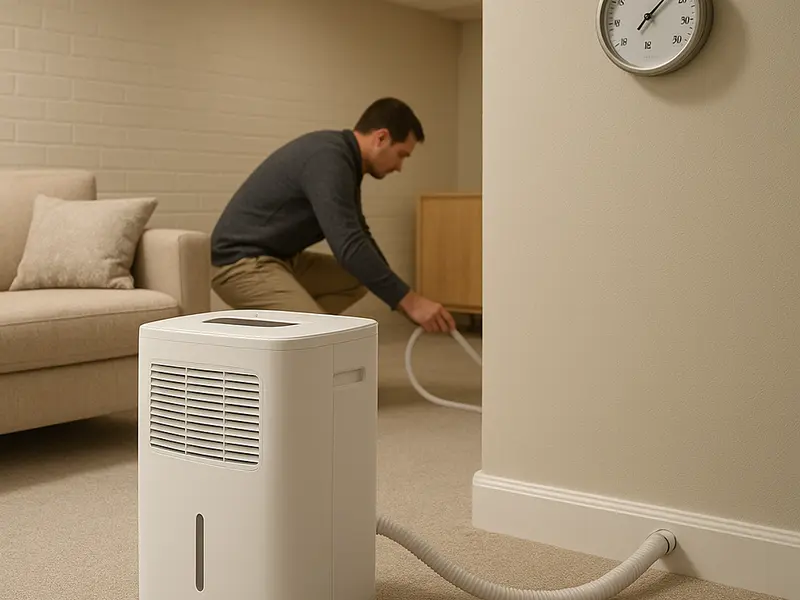
If your goal is to keep a basement dry and comfortable, sizing the dehumidifier is the first decision, and it depends as much on how damp the space is as on its square footage. As a starting point, ENERGY STAR's sizing guide suggests 20 to 30 pints per day for a slightly or moderately damp space under 2,000 square feet, 25 to 40 pints for a very damp space, and 30 to 50 pints for a wet one. ENERGY STAR also advises that it's better to oversize than undersize, so if you're between sizes, choose the larger unit. Then confirm your choice with a hygrometer over a week or two.
Related on Amazon · Paid links
-
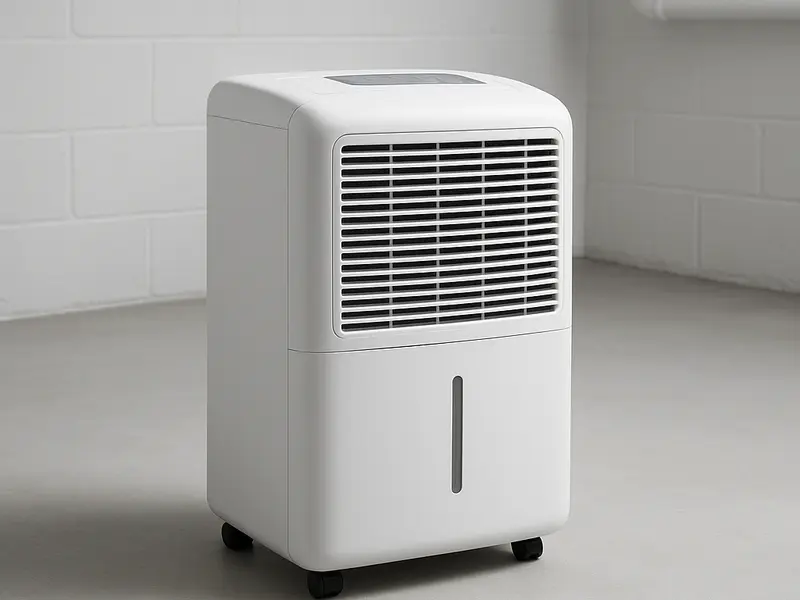 Dehumidifiers on Amazon
Browse top-rated energy star dehumidifier on Amazon — compare prices, features, and customer reviews.
Check price on Amazon
-
 Top-Rated HEPA Air Purifiers on Amazon
Browse top-rated hepa air purifier on Amazon — compare prices, features, and customer reviews.
Check price on Amazon
We may earn a commission if you buy, at no extra cost to you.
Know the new pint ratings before you shop
Dehumidifier capacity is listed in pints of water removed per day, but the way that number is measured changed. Since 2019, the U.S. Department of Energy test procedure rates portable dehumidifiers at 65°F instead of 80°F, to better reflect basement conditions. Cooler air holds less moisture, so the same machine now gets a lower rating. A unit that would have been called a 70-pint model under the old test is roughly a 50-pint model or less today, and the common sizes are now roughly 20, 30 to 35, and 50 pints instead of 30, 50, and 70.
This matters because older sizing charts and advice online often use the old, higher numbers. If a guide tells you to buy a 70-pint unit for a basement, it is probably describing what is now sold as a 50-pint unit.
How to size a dehumidifier for a basement
Square footage is only part of the picture. Moisture sources, foundation leaks, ceiling height, insulation, air leakage, laundry, and how often the space is used all affect how much water you need to remove. When in doubt, choose more capacity rather than less, especially if humidity stays high, you see condensation on pipes or walls, or the basement smells musty.
Quick sizing framework
ENERGY STAR's chart, using current ratings:
- Slightly to moderately damp (feels damp or smells musty in humid weather), under 2,000 square feet: 20 to 30 pints per day.
- Very damp (feels damp and smells musty most of the time), under 2,000 square feet: 25 to 40 pints per day.
- Wet (visible moisture on walls or floors, or occasional seepage), under 2,000 square feet: 30 to 50 pints per day.
- Spaces larger than 2,000 square feet: 30-plus, 40-plus, and 50-plus pints per day for the same three conditions.
For a large or very wet basement, consider a larger unit, two units in different areas, or a ducted whole-home dehumidifier, which ENERGY STAR notes should be sized and installed by a professional.
Consider layout, finish, and drainage options
- Air tightness: a well-sealed basement with limited outside air exchange is easier to keep dry than a drafty one, so sealing obvious gaps reduces the load on the dehumidifier.
- Drainage: units with only a bucket need regular emptying, often daily in humid weather. A gravity drain hose to a floor drain or sump, or a model with a built-in condensate pump, lets the unit run continuously and is usually the better choice for a basement you don't check every day.
- Temperature: standard refrigerant dehumidifiers become less effective as the air gets cooler, and coils can frost up in cold rooms. If your basement stays cool for months, look for a model rated to operate at lower temperatures with automatic defrost. For spaces that are colder still, desiccant dehumidifiers work better than refrigerant models.
- Noise and placement: in a finished living area, a quieter model placed away from bedrooms or a TV area is preferable. In utility spaces, noise matters less, but airflow and drain access still do.
What humidity level to aim for
The EPA recommends keeping indoor relative humidity below 60 percent, and ideally between 30 and 50 percent, to discourage mold and dust mites. ENERGY STAR gives a similar 30 to 50 percent range, and suggests staying toward 30 to 40 percent in cold climates during the heating season to prevent window condensation. Set the dehumidifier's humidistat in that range and use a separate hygrometer to check that the room actually reaches it.
Decision criteria you can act on
- Space size and condition: measure the area and honestly rate how damp it is, using the ENERGY STAR categories above.
- Humidity history: use a hygrometer for a week or more in typical weather. If readings stay above 60 percent, you need more drying.
- Drainage: is there a floor drain, sump, or sink nearby for a hose? If not, a built-in pump can push water up and out to a sink or drain.
- Temperature: check the unit's rated operating range against your basement's coolest months.
- Efficiency: ENERGY STAR certified dehumidifiers use less energy than standard models for the same job, which matters for a unit that may run for months.
- Maintenance: plan to clean the filter regularly and keep the coils and air path clear.
Real-world use-case driven guidance
- If you are finishing a basement of around 800 to 1,000 square feet that is only damp in humid months, a 30- to 35-pint unit (current rating) is a reasonable starting point; choose 50 pints if it often smells musty.
- If the basement is unfinished and stays damp most of the year, start at the high end of the chart, around 50 pints, and use continuous drainage so you aren't emptying a bucket every day.
- If you see condensation on walls or pipes or have occasional seepage, choose a 50-pint unit or more, or add a second unit in the worst area, and fix the water source as a priority.
- If the basement is a workshop, gym, or laundry area, the extra moisture from activity and drying clothes calls for the larger end of the range.
When not to rely on a dehumidifier alone
- If you have active water coming in or visible mold, a dehumidifier helps control humidity but doesn't fix the cause. Repair leaks, improve grading and gutters, and address seepage first. The EPA says you can usually clean up a moldy area smaller than about 10 square feet yourself, while larger areas or significant water damage call for professional help.
- If you lack a convenient outlet or drainage path, plan a proper setup: a nearby grounded outlet and a pump or drain line, rather than extension cords and a bucket that overflows.
- If the space is very cold, a standard refrigerant unit may run inefficiently or frost up. Choose a low-temperature-rated model, or consider a desiccant unit.
Practical details you'll encounter
- Capacity ratings assume standard test conditions. Real performance depends on your basement's temperature and humidity, so treat the rating as a guide and check the results with a hygrometer.
- A bucket requires regular emptying; a gravity drain or condensate pump allows continuous operation. Pumps add a little noise and one more part that can fail, but they save a lot of trips.
- Check the operating temperature range. Many units work best in warmer rooms; low-temperature models with auto-defrost are better for cool basements.
- Clean the air filter as the manual recommends, often every few weeks during heavy use, and keep the coils free of dust so the unit runs efficiently.
- If the unit will be near living or sleeping space, compare noise ratings and place it where the sound bothers you least.
Installation and setup tips
- Place the dehumidifier where air can circulate freely around the intake and exhaust, away from walls and furniture as the manual specifies, and with doors to the space closed while it runs.
- If you use a gravity drain hose, make sure it runs downhill all the way to the drain with no kinks or loops. Raising the unit on a sturdy, level platform can help.
- Plug the unit directly into a grounded wall outlet, not an extension cord, and avoid sharing the circuit with other high-draw appliances where possible.
- Set the humidistat to your target range, typically 45 to 50 percent, and let the unit cycle on and off as needed.
- Check the space with a hygrometer for a week after setup to confirm you're reaching your target.
Maintenance mindset and common mistakes
- Mistake: relying on old sizing advice. Charts that recommend 50- to 70-pint units for small basements are usually using the pre-2019 ratings.
- Mistake: undersizing. An undersized unit runs constantly and may never reach your target humidity. ENERGY STAR advises choosing the larger size if you're unsure.
- Mistake: ignoring drainage. A unit that shuts off because its bucket is full isn't drying anything. Use continuous drainage in a basement that's regularly humid.
- Mistake: ignoring air leaks and water sources. Gaps around rim joists, windows, and pipes let humid air in, and leaks and poor drainage add water. Fixing these reduces the load.
- Mistake: judging by feel alone. Use a hygrometer to confirm the space stays in the 30 to 50 percent range.
Bottom-line guidance
Size your dehumidifier by both the area and how damp it is, using current pint ratings: roughly 20 to 30 pints for a moderately damp basement under 2,000 square feet, up to 30 to 50 pints for a wet one, and more for larger spaces. When in doubt, size up. Pair the unit with continuous drainage, keep humidity between 30 and 50 percent, maintain the filter, and fix the sources of moisture, and you'll have a drier, healthier basement.