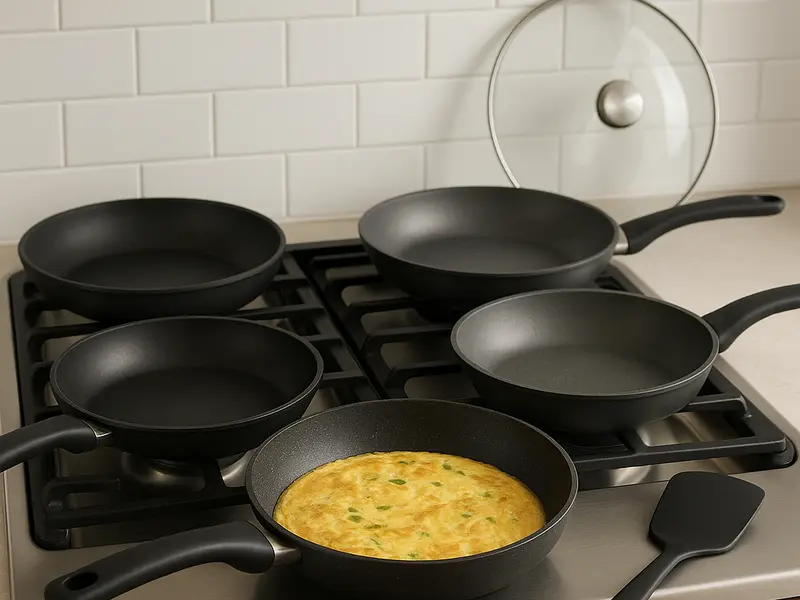
If you are choosing a nonstick pan, the main safety questions are simple: what the coating is made of, how hot it should get, and when it's time to replace it. Used at low to medium heat and replaced when worn, nonstick pans are a convenient everyday tool. This guide explains what the coatings are, what the real safety precautions are, and how to pick a pan that suits the way you cook.
Products in this article · Paid links
- Tramontina Professional Nonstick Fry Pan Restaurant-grade nonstick workhorse, NSF-certified. Check price on Amazon
- All-Clad D3 Stainless 10-Piece Set Fully clad tri-ply stainless, made in USA, the long-running benchmark. Check price on Amazon
- Lodge 12-Inch Cast Iron Skillet Pre-seasoned cast iron classic — performance of pans five times the price. Check price on Amazon
We may earn a commission if you buy, at no extra cost to you.
How nonstick coatings differ
Most nonstick pans use one of two coating families.
- PTFE coatings (polytetrafluoroethylene, best known under the Teflon brand) give the classic easy release for eggs, pancakes, fish, and delicate foods. They are designed for low to medium heat.
- Ceramic or "sol-gel" coatings are made from a silica-based layer rather than PTFE and are often marketed as PTFE-free or PFAS-free. They release food well when new, but many lose their slickness sooner than good PTFE coatings, so expect to use a little more oil over time.
Many pans use an aluminum body, sometimes hard-anodized, which heats quickly and evenly. Others have a stainless steel base, which matters if you cook on induction.
What "PFOA-free" means
PFOA is a chemical that was once used in making PTFE coatings. Under the EPA's 2010/2015 PFOA Stewardship Program, the major manufacturers committed to eliminating PFOA from their emissions and products by 2015, and the companies report they met that goal. As a result, "PFOA-free" on a new pan is accurate but no longer a meaningful point of difference: nonstick cookware made by the major coating suppliers today doesn't use it.
PTFE itself belongs to the broad PFAS family of chemicals. The FDA authorizes PTFE coatings for food contact and says only negligible amounts migrate from these coatings into food. Some states have gone further for environmental reasons: Minnesota, for example, has banned the sale of cookware with intentionally added PFAS since January 2025, and other states have passed or are considering similar rules. If PFAS are a concern for you, ceramic-coated pans, stainless steel, cast iron, and carbon steel are PFAS-free alternatives.
The real risk: overheating
The main safety issue with PTFE pans is overheating. According to the National Capital Poison Center (Poison Control), PTFE coatings start to break down at temperatures above about 500°F (260°C). The fumes can cause a temporary flu-like illness in people, often called polymer fume fever, with chills, fever, headache, and body aches. Birds are extremely sensitive to these fumes, and exposure can be fatal to pet birds.
An empty pan on a high burner can get that hot surprisingly fast, which is why Poison Control's advice focuses on how you heat the pan:
- Don't preheat a nonstick pan empty, and don't leave it unattended on high heat.
- Cook on low to medium heat, and add oil or food before or as the pan warms.
- Use your range hood or open a window while cooking.
- If you keep pet birds, keep them well away from the kitchen, or consider cookware without PTFE.
- Don't put nonstick pans under a broiler or in an oven hotter than the manufacturer's stated limit.
When to replace a nonstick pan
- Replace the pan when the coating is visibly flaking, peeling, deeply scratched, or no longer releasing food. Manufacturers generally advise this for performance and to keep coating fragments out of food.
- Warping, a wobbly base, or a loose handle are also good reasons to retire a pan.
- Nonstick coatings wear with use. Plan for replacement every few years with regular use, rather than expecting a pan to last decades.
Realistic use cases and recommended options
If you cook eggs and pancakes several times a week
- Choose a good PTFE-coated pan, which typically gives the easiest release at medium heat.
- Look for a thick, flat base that heats evenly and a coating from a manufacturer that publishes care and heat guidance.
- Use silicone, nylon, or wooden utensils, and follow the maker's dishwasher advice; hand washing usually extends coating life.
If you frequently sauté vegetables and fish with light browning
- A PTFE or ceramic pan both work at medium heat. Ceramic may need a little more oil, especially as it ages.
- Choose a pan with sloped sides and a comfortable, secure handle if you toss food often.
If you like to sear or deglaze
- Nonstick is not the right tool for high-heat searing. Use a cast iron, carbon steel, or stainless steel skillet for steaks and hard browning, and keep nonstick for delicate foods.
- If you do brown food in nonstick, keep the heat at medium and never heat the pan empty.
If you have limited storage space or a small kitchen
- One or two nonstick skillets in different sizes, plus a stainless steel pan for high-heat cooking, covers most tasks.
- If there's any chance you'll move to an induction cooktop, choose pans labeled induction-compatible.
Care and longevity: practical tips
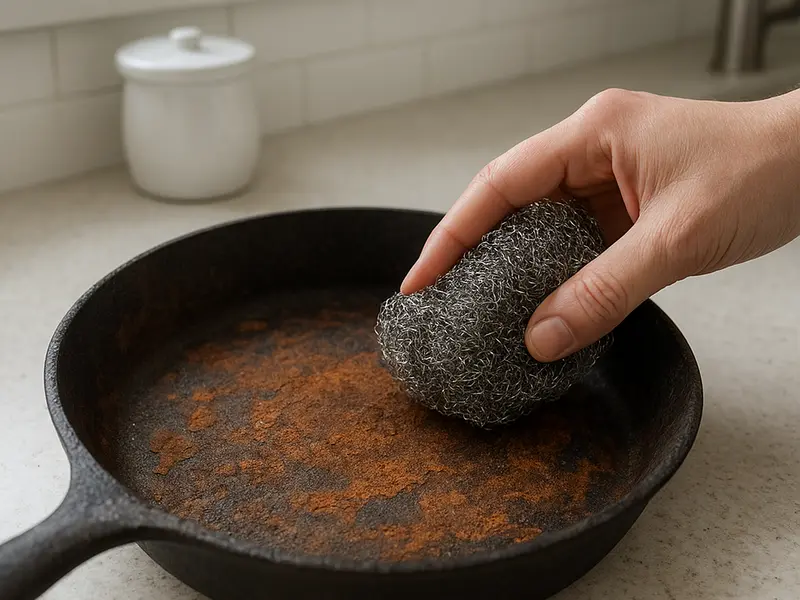
- Wash by hand with warm water, dish soap, and a soft sponge. Avoid steel wool and abrasive powders.
- Let the pan cool before washing; plunging a hot pan into cold water can warp it.
- Use wooden, silicone, or nylon tools rather than metal.
- When stacking, put a pan protector, cloth, or paper towel between pans.
- Avoid cooking sprays on some coatings if the manufacturer advises against them, since they can leave a sticky residue that hurts release.
Sizes, features, and what to check before you buy
- Size: an 8-inch pan suits one or two eggs, a 10-inch pan is the everyday all-rounder, and a 12-inch pan handles family-size portions.
- Base: a thicker base heats more evenly and resists warping. For induction, check for a magnetic stainless steel base.
- Handle: look for a secure, comfortable handle. Check the oven-safe temperature for the handle and any lid.
- Lid: a fitted lid helps with steaming and gentle cooking, though many skillets are sold without one.
- Oven use: if you want to finish dishes in the oven, confirm the pan's maximum oven temperature and keep below it.
- Care instructions: check whether the maker recommends hand washing and which utensils are allowed.
When nonstick may not be the best fit
- If you regularly sear at high heat, cast iron, carbon steel, or stainless steel will perform better and last longer.
- If your household uses metal utensils or scrubs pans aggressively, nonstick will wear out quickly.
- If you keep pet birds, the overheating risk makes PTFE-free cookware the safer default.
- If you want to avoid PFAS entirely, choose ceramic-coated, stainless steel, cast iron, or carbon steel pans and check labeling carefully.
A practical buyer's checklist you can act on
- Decide on your main tasks: eggs and delicate foods, light sautéing, or high-heat cooking (which calls for a different pan).
- Choose the coating type: PTFE for the longest-lasting release, ceramic if you prefer PTFE-free.
- Check the manufacturer's heat limits, oven-safe temperature, and care instructions.
- Confirm compatibility with your cooktop, especially induction.
- Pick sizes that match your portions, and consider whether you need a lid.
- Read independent reviews that mention how the coating holds up over months of regular cooking.
- Plan for replacement once the coating wears or flakes.
Common mistakes to avoid
- Preheating an empty pan or cooking on high heat.
- Leaving a nonstick pan unattended on a hot burner.
- Using metal utensils or abrasive cleaners.
- Stacking pans without protection.
- Expecting nonstick to sear like cast iron or stainless steel.
- Ignoring the manufacturer's heat limits and care instructions.
Bottom line
Nonstick pans are a practical, safe choice for everyday low-to-medium-heat cooking when you follow a few rules: don't preheat them empty, keep the heat moderate, ventilate your kitchen, keep pet birds away, and replace the pan when the coating wears out. "PFOA-free" is now standard rather than special. If you want to avoid PFAS altogether, or you cook mostly at high heat, ceramic, stainless steel, cast iron, or carbon steel are good alternatives.