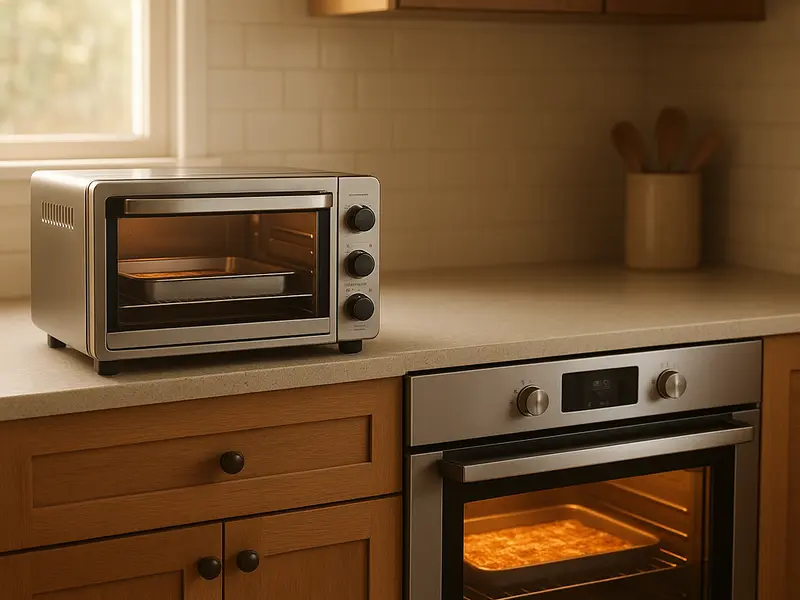
Choosing between a toaster oven and a full oven depends on how you cook, how much space you have, and how many people you feed. If your meals are mostly small batches or you're short on kitchen space, a countertop toaster oven can cover many weekday tasks. If you routinely prepare larger meals, bake sheet-pan dinners, or need to cook several dishes at once, a full-size oven is more practical and forgiving. This guide helps you decide based on your actual cooking patterns, not marketing promises.
Products in this article · Paid links
-
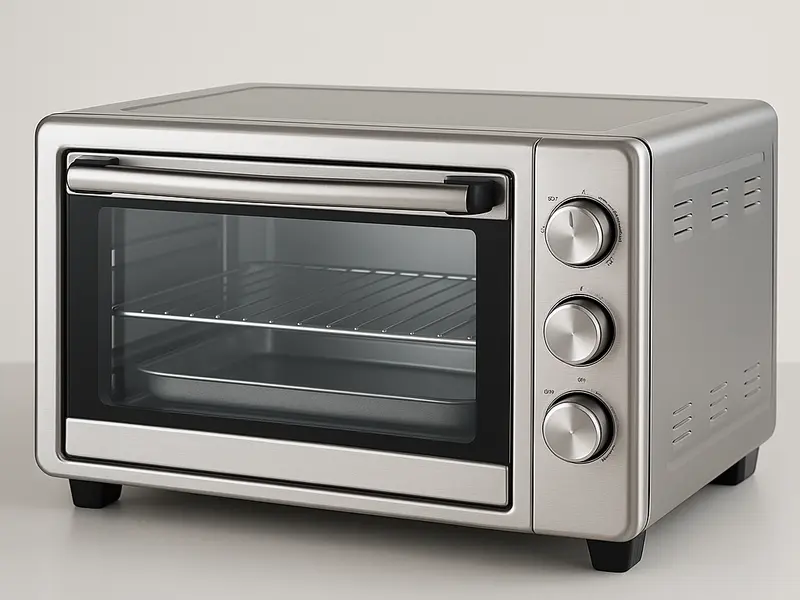 Toaster Ovens on Amazon
Browse top-rated toaster oven on Amazon — compare prices, features, and customer reviews.
Check price on Amazon
- Breville Smart Oven Air Fryer Premium countertop oven that air fries and replaces a toaster oven. Check price on Amazon
We may earn a commission if you buy, at no extra cost to you.
When a toaster oven makes sense
Toaster ovens shine in compact kitchens and for light to moderate cooking loads, especially quick jobs that don't need a full oven's space or long bake times.
- Small kitchens and studio apartments
- Quick reheating and small-batch baking
- Toasting and browning
- Keeping the kitchen cooler in summer than running a full oven would
- Saving energy on small jobs
Because they heat a much smaller space, toaster ovens generally use less energy than a full oven for small meals. North Dakota State University Extension, citing the U.S. Department of Energy, notes that a toaster oven uses about one-third to one-half the energy of a full-size oven.
Common features to look for in a toaster oven
- Convection mode: a fan circulates hot air for more even browning and somewhat faster cooking.
- Interior size and height: check that your usual pans fit. Many toaster ovens take a quarter-sheet pan or a 9-inch pizza, but not a standard half-sheet pan or a tall casserole.
- Removable crumb tray: makes cleanup quick and reduces the risk of crumbs burning on the heating elements.
- Temperature control: an accurate thermostat and a clear dial or display matter more than a long list of presets.
- Rack positions: two or three positions give some flexibility, though capacity stays limited compared with a full oven.
Typical tasks suited to toaster ovens
- Reheating leftovers such as pizza or roasted vegetables with crisp edges
- Toasting bread, bagels, and English muffins
- Small-batch baking such as a few cookies, muffins, or a small cake
- Melting cheese on a small casserole or heating frozen appetizers
- Quick weeknight meals that fit on a single rack and pan
There are downsides. The small cavity limits pan size and height, and food close to the elements can brown unevenly or burn, so you may need to rotate pans. Even with convection, airflow is more limited than in a full oven, so larger or longer bakes need closer attention. Most toaster ovens also need clearance from walls and cabinets while running, and their tops and sides get hot, so check the manual for spacing and never store items on top.
When a full oven is the better choice
A full-size oven shines when you cook for more people or bake and roast several dishes or large pans at once. It is especially useful if your weekly routine includes sheet-pan dinners, casseroles, roasts, or batches of cookies.
- Large meals for family gatherings or entertaining
- Multiple trays or pans at once
- More even heat across a larger cavity
- Long, steady cooks such as roasts and braises
- Baking cookies, bread, and cakes in a stable environment
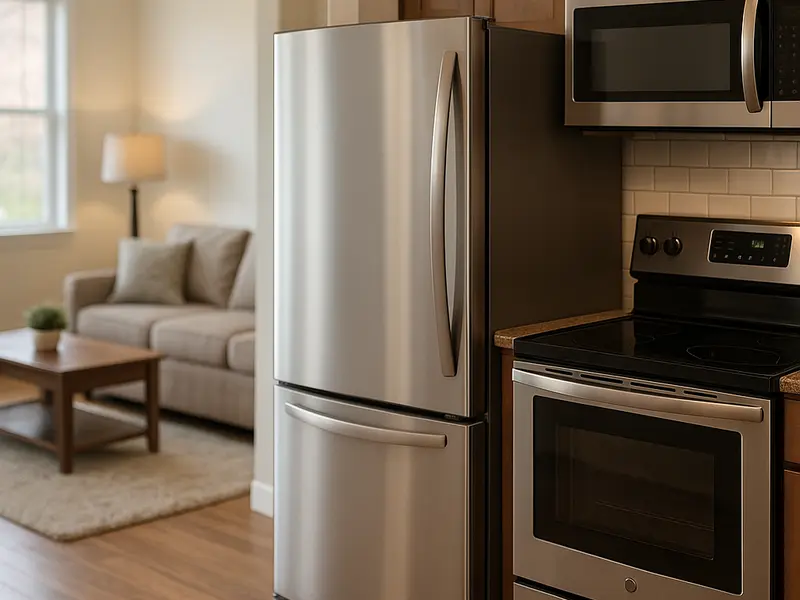
Practical considerations for full ovens
- Preheat time and recovery: full ovens take longer to reach temperature and to recover after the door is opened or cold pans go in.
- Energy use: heating a large cavity uses more energy, which adds up if you use it for small jobs.
- Installation: a range already includes an oven; a separate wall oven adds installation work and cost.
- Cleaning: larger cavities collect more spills, though many have self-clean or steam-clean cycles.
Key decision criteria you can act on
- Size and fit: measure your counter space and the clearance around it. Make sure a toaster oven's door can open fully and that it has the spacing the manufacturer requires from walls and cabinets.
- Heat consistency: if you bake cookies, pastries, or multi-dish dinners, a full oven's larger cavity and more even airflow usually perform better.
- Temperature stability: for bread, custards, and long roasts, a full oven generally holds temperature more steadily.
- Capacity and pan compatibility: check interior dimensions and the largest pan you plan to use. A toaster oven may handle a small chicken or a tray of vegetables if it fits, but a full oven handles multiple racks and larger pans without crowding.
- Accessories and maintenance: are a rack, baking pan, and crumb tray included? How easy is the interior to wipe down?
- Energy and daily use: for daily reheating and small-batch cooking, a toaster oven saves energy by heating a smaller space. For large meals, the full oven's efficiency comes from cooking everything in one go.
- Longevity and cost: a full oven is a long-term appliance; a toaster oven is cheaper to buy and replace. Consider how heavily you'll use each.
Practical tips and common mistakes
- Don't expect a toaster oven to replace every oven function. It handles many tasks, but not large roasts, multiple sheet pans, or tall bakes.
- Avoid forcing oversized pans into a toaster oven. Pans that touch the walls block airflow and can sit too close to the elements.
- Use an oven thermometer when precision matters. Both toaster ovens and full ovens can run hotter or cooler than the dial says.
- Mind rack placement. In a toaster oven, the middle position usually gives the most even results; in a full oven, rotate pans or swap racks partway through for even browning.
- Empty the crumb tray regularly. Built-up crumbs can smoke or catch fire.
- Preheat when a recipe calls for it. Toaster ovens preheat quickly, but baked goods still turn out better in a hot oven.
- Never leave a toaster oven unattended while toasting or broiling, and keep paper, towels, and packaging away from it. If food catches fire inside, turn it off, unplug it if you can do so safely, and keep the door closed.
Concrete scenario-based decisions
- If you cook for one or two and value speed, choose a toaster oven: it preheats quickly, handles small batches, and doesn't heat up the whole kitchen.
- If you regularly prepare large meals, sheet-pan dinners, or several pans of baked goods, rely on a full oven for capacity, even heat, and multiple racks.
- If your goal is crispy reheated leftovers, a toaster oven with convection does it well without heating a big oven.
- If you bake cookies and bars in batches, a full oven is more forgiving and consistent across multiple sheets.
- If you're furnishing a small apartment kitchen without a full oven, a toaster oven covers the essentials for reheating and occasional baking.
- If you already have a full oven, a toaster oven is a handy second appliance for quick, small jobs and for times when the main oven is busy.
Bottom line
The practical choice hinges on your cooking habits, not marketing language. For small households, quick reheats, and limited counter space, a toaster oven is a pragmatic tool that handles many everyday tasks with less energy. For large meals, batch baking, and the most even, predictable results across several dishes, a full oven remains the more capable workhorse. Focus on size, heat behavior, capacity, and your weekly menu, and pick the option that fits how you actually cook.