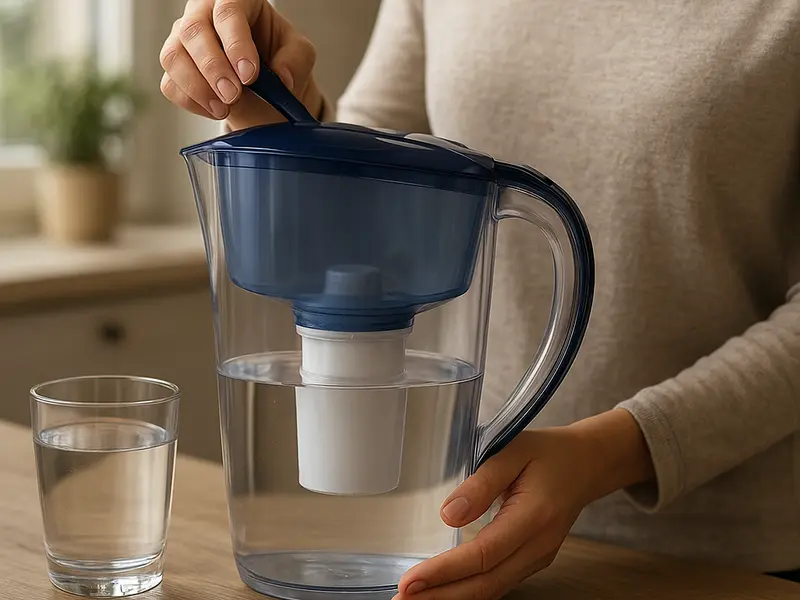
Start with your water, not the pitcher. Read your local water quality report, decide what you want to reduce, then choose a pitcher whose filter is independently certified for those exact contaminants. Certification beats marketing claims every time.
Related on Amazon · Paid links
- Water Filter Pitchers on Amazon Browse top-rated water filter pitcher on Amazon — compare prices, features, and customer reviews. Check price on Amazon
We may earn a commission if you buy, at no extra cost to you.
The short answer
- If you only want better taste and less chlorine smell, almost any certified pitcher filter will do. Look for certification to NSF/ANSI Standard 42, which covers aesthetic effects such as chlorine taste and odor.
- If you are concerned about lead, choose a filter certified to NSF/ANSI Standard 53 specifically for lead reduction. Standard 53 covers health-related contaminants, but each filter is certified for a specific list of them, so check that lead is on it.
- If you are concerned about PFAS, look for certification to NSF/ANSI Standard 473 (which covers PFOA and PFOS) or a certified claim for the specific compounds you care about.
- If your water may be unsafe to drink because of bacteria or viruses, a standard pitcher is not the right tool. Follow your water utility's or health department's advice.
- If you want to remove almost everything, a pitcher is not designed for that. Reverse osmosis systems, certified to NSF/ANSI Standard 58, remove a wider range of dissolved substances, but they are larger, slower and need installation.
Step 1: Find out what is in your water
In the US, community water systems must give customers an annual water quality report, often called a Consumer Confidence Report. It lists the contaminants detected in your water and how they compare with federal limits. Your utility usually posts it online or mails it to you.
Two things the report cannot tell you:
- Lead from your own plumbing. Lead usually enters water from lead service lines, older solder or brass fixtures between the water main and your tap. If your home is older or you are unsure, ask your utility whether they offer lead testing, or use a certified laboratory.
- Private wells. Well owners are responsible for testing their own water. Your local or state health department can tell you what to test for and where.
Once you know what you want to reduce, you can choose a filter for it instead of guessing.
Step 2: Understand certification
The most useful thing you can check on any water filter is independent certification. The organizations that certify water filters in North America include NSF International, the Water Quality Association (WQA) and IAPMO. They test filters against the NSF/ANSI standards.
- NSF/ANSI 42: aesthetic effects, such as chlorine taste and odor and particulates.
- NSF/ANSI 53: health-related contaminants, such as lead and certain chemicals.
- NSF/ANSI 401: certain emerging contaminants, such as some pharmaceuticals and pesticides found in trace amounts.
- NSF/ANSI 473: PFOA and PFOS.
- NSF/ANSI 58: reverse osmosis systems.
Read the performance data sheet
A certification is for specific contaminants, not a blanket "filters everything" claim. Certified filters come with a performance data sheet listing exactly what the filter was certified to reduce and by how much, over its rated capacity. Read it before buying. "Tested to NSF standards" is not the same as "certified by" an accredited body; look for the certifier's name and check the product in its online listings.
Make sure it is the filter you are buying
Pitcher brands often sell more than one filter type for the same pitcher, with different certifications. Check that the specific filter cartridge, not just the brand, carries the certification you need.
Step 3: Choose the pitcher itself
Capacity
Pitchers and dispensers range from small jugs that fit in a fridge door to large countertop or fridge-shelf dispensers with a tap. A larger dispenser means less refilling but takes more fridge space. Measure your fridge shelf height before buying a tall pitcher.
Filter speed
Filters with more thorough filtration often take longer to fill the pitcher. If you will be refilling many times a day, a slow filter can be frustrating. The performance data sheet or product page usually lists a flow rate or fill time.
Filter life and replacement cost
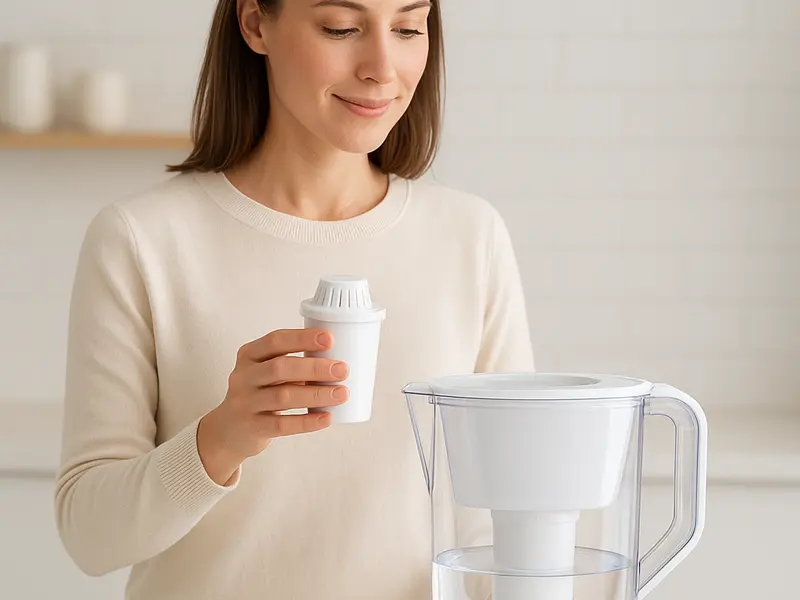
Every filter has a rated capacity in gallons or liters, often expressed as a number of months for typical use. A filter that is used past its rated capacity may no longer reduce contaminants as certified. Check how long each filter lasts and what replacements cost before you buy the pitcher; the ongoing cost of filters often matters more than the price of the pitcher itself.
Filter-change indicator
Many pitchers have a timer or an indicator that counts days or volume. A volume-based indicator is more accurate than a simple timer if your use varies.
Ease of cleaning
Look for a pitcher and reservoir you can wash easily. Some parts may be top-rack dishwasher-safe; others need hand washing. The filter cartridge itself should never go in the dishwasher.
What pitcher filters usually do not do
- They are not designed to disinfect water. Most pitchers are meant for water that is already safe to drink from a public supply.
- They generally do not soften water. Many do not remove much of the hardness minerals that cause limescale.
- Many do not remove fluoride. If that matters to you, check the performance data sheet; most standard carbon filters are not certified for it.
- They do not cover every contaminant. Nitrates, some metals and many dissolved substances require different treatment, such as reverse osmosis.
Using a filter pitcher well
- Prime the new filter as instructed. Many need soaking or flushing before first use.
- Keep the pitcher in the fridge. Filtered water has less chlorine left in it, so keeping it cold and drinking it within a few days is sensible.
- Change the filter on time. An old filter may not perform as certified and can clog or slow down.
- Wash the pitcher and lid regularly with mild soap and water, following the manufacturer's directions.
- Use cold tap water unless the instructions say otherwise. Filters are not designed for hot water.
Who a pitcher suits, and who needs something else
Good fit
- Renters or anyone who cannot install a filter under the sink.
- People who mainly want better-tasting water.
- Households concerned about specific contaminants that a certified pitcher filter addresses, such as lead.
Consider something else
- Large households that drink a lot of filtered water; a faucet-mounted or under-sink filter may be more convenient.
- Homes with contaminants a pitcher is not certified to reduce; an under-sink or reverse osmosis system may be needed.
- Anyone told by their utility or health department to boil or avoid tap water; follow that advice rather than relying on a pitcher.
A practical decision checklist
- Read your utility's annual water quality report, or test your well water.
- If your home is older, find out whether lead is a concern and consider testing at the tap.
- Decide what you want to reduce: taste and chlorine, lead, PFAS or something else.
- Choose a filter certified by an accredited body (NSF, WQA or IAPMO) for those specific contaminants, and check its performance data sheet.
- Confirm the certification applies to the exact cartridge you will buy.
- Compare filter life and replacement cost, not just the pitcher price.
- Check the pitcher fits your fridge and the fill speed suits how often you refill.
- Replace filters on schedule and keep the pitcher clean and cold.