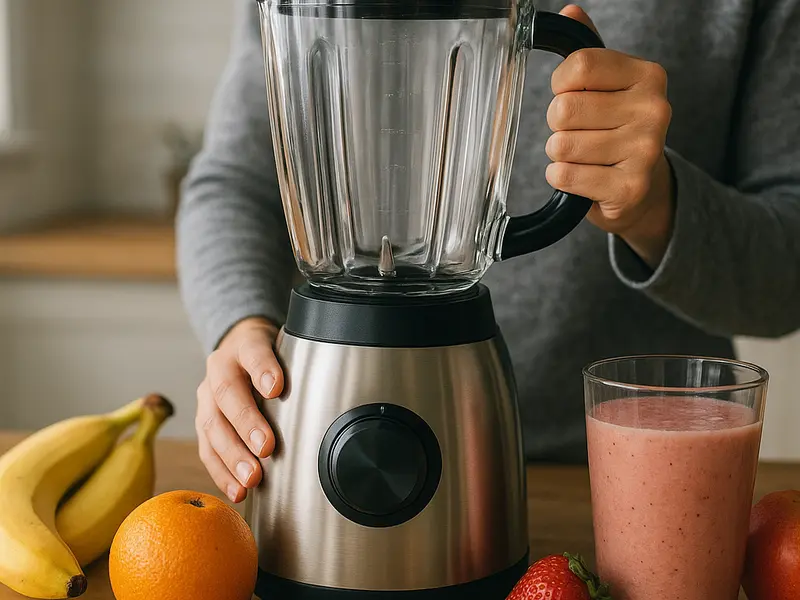
For one smoothie a day, a personal blender that blends in the cup is usually enough. For frozen fruit, ice, leafy greens or drinks for several people, choose a full-size blender with a strong motor, a well-shaped jar and a tamper.
Related on Amazon · Paid links
- Smoothie Blenders on Amazon Browse top-rated smoothie blender on Amazon — compare prices, features, and customer reviews. Check price on Amazon
- Countertop Blenders on Amazon Browse top-rated countertop blender on Amazon — compare prices, features, and customer reviews. Check price on Amazon
We may earn a commission if you buy, at no extra cost to you.
The short answer
- One person, simple fruit smoothies: a personal (single-serve) blender. It is compact, quick to clean, and you drink from the blending cup.
- Daily green smoothies with kale, spinach, seeds or nuts: a full-size blender with a strong motor, which handles fibrous ingredients more smoothly.
- Thick smoothie bowls or lots of frozen fruit: a high-powered blender with a tamper, so you can push ingredients into the blades without adding extra liquid.
- Smoothies for a family or meal prep: a full-size jar, so you can blend several servings at once.
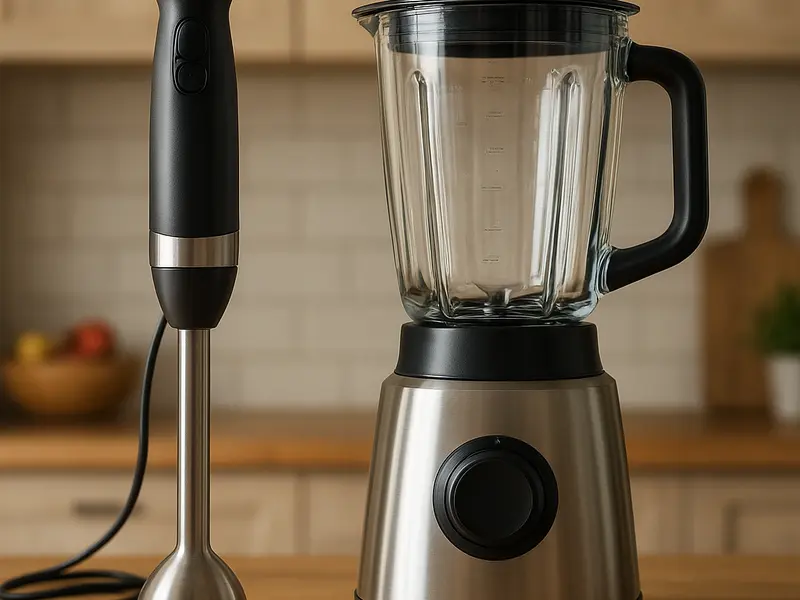
- Mostly soups and sauces, smoothies only now and then: an immersion blender may be enough, though it struggles with ice and hard frozen fruit.
What actually makes a smoothie blender good
Blade, jar and motor working together
A smoothie blender has to pull ingredients down into the blades over and over. That depends on the shape of the jar, the design of the blade and the motor's ability to keep spinning under load. Wattage on the box is a rough guide, but it is not the whole story. Two blenders with similar wattage can blend very differently because of jar shape and blade design. Look at what the manufacturer says the blender is designed to handle, especially ice and frozen fruit, and at what owners consistently report.
Handling frozen ingredients
Frozen fruit and ice are the hardest part of most smoothies. A blender that is underpowered for them will stall, leave chunks or need extra liquid, which thins the smoothie. If you use frozen fruit daily, make sure the manual says the blender can crush ice and blend frozen fruit; some lower-powered models advise adding ice only with enough liquid, or not at all.
Greens, seeds and nuts
Leafy greens, flax, chia and nuts leave a gritty or stringy texture in weaker blenders. If a silky green smoothie matters to you, this is where a more powerful full-size blender earns its space on the counter.
A tamper for thick blends
Smoothie bowls and very thick blends tend to form an air pocket around the blades. A tamper lets you push ingredients down safely while the blender runs, through the lid opening. Only use the tamper that came with your blender, and only in the way the manual describes.
Personal blender or full-size?
Personal (single-serve) blenders
Good for: one or two servings, small kitchens, smoothies on the go.
- You blend in a cup, swap the blade base for a drinking lid and go.
- They take up little counter or cupboard space.
- Cleanup is usually a cup and a blade base.
Watch out for:
- Small batches only. Overfilling past the cup's max line can leak or stall the motor.
- Ice and hard frozen fruit can be a stretch for lower-powered models.
- They are not designed for hot liquids. Blending hot ingredients in a sealed cup can build pressure.
- The blade base gasket needs regular cleaning to prevent leaks and odors.
Full-size countertop blenders
Good for: larger batches, frozen fruit, greens, nut butters and anyone who also wants to blend soups or sauces.
- A bigger jar lets you blend for a family or prep smoothie packs in one go.
- More powerful models handle tough ingredients better.
- Many offer variable speed, pulse and preset programs.
Watch out for:
- Size. Measure the space under your wall cabinets; tall jars may not fit on the counter with the jar attached.
- Noise. Powerful blenders are loud.
- Small batches. A single smoothie in a large jar may not reach the blades properly. Some brands sell smaller cups or jars that fit the same base; check before you buy if you often blend for one.
Features worth paying attention to
Jar material
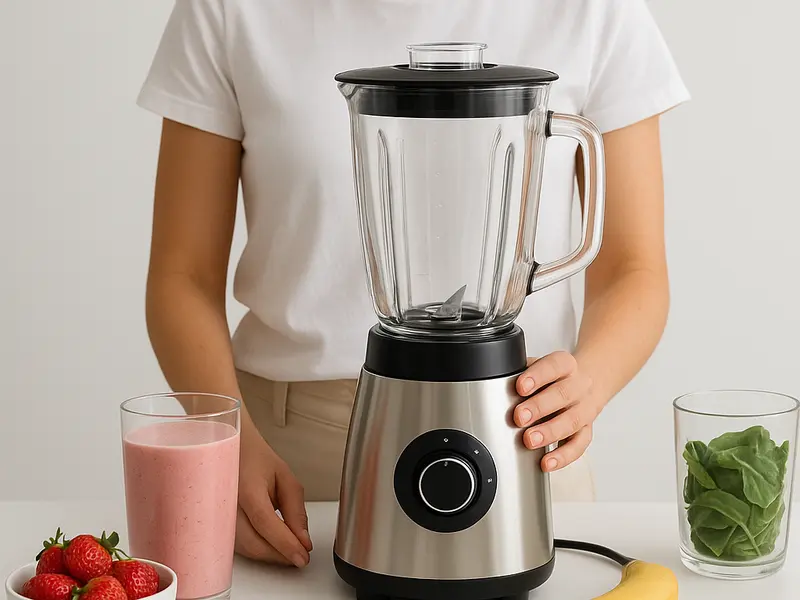
- Plastic (often BPA-free copolyester): light and less likely to break. It can scratch or cloud over time, especially with ice.
- Glass: heavy, does not scratch easily and does not absorb odors, but it can break if dropped.
- Stainless steel: rare, durable, but you cannot see inside while blending.
Controls
- Variable speed gives the most control: start low to pull ingredients in, then increase.
- Pulse helps break up chunks of frozen fruit.
- Smoothie programs can be convenient if you blend the same thing daily, but they are not essential.
Cleaning
Look for jars and blade assemblies the manufacturer lists as dishwasher-safe if that matters to you. Many manufacturers suggest a quick clean by blending warm water with a drop of dish soap, then rinsing. Dried-on smoothie residue, especially from greens and seeds, is much harder to remove, so rinse right after use.
Warranty and parts
Blenders work hard, and motors, drive sockets and blade assemblies wear. A longer warranty and the availability of replacement jars and blades matter more for a blender you use every day than one you use occasionally.
Common smoothie-blender mistakes
- Loading frozen ingredients first. Most manuals suggest liquids first, then soft ingredients, then frozen items and ice on top. This helps the blades catch everything.
- Not enough liquid. Very little liquid makes the blender stall or form an air pocket. Add liquid a little at a time until it moves.
- Running it too long. Long run times on very thick mixtures can overheat the motor; many blenders have a thermal cutoff that stops the motor until it cools. Follow the manual's maximum run times if it gives them.
- Overfilling. Respect the max line, especially in personal cups.
- Choosing by wattage alone. Jar design and blade quality matter too.
Which blender fits your routine
You blend one fruit smoothie most mornings
A personal blender is the simplest choice. If you use frozen fruit daily, pick one that the manufacturer says handles frozen ingredients.
You make green smoothies with seeds and nuts
A full-size blender with a strong motor and a well-designed jar will give a smoother texture. A tamper helps with thick blends.
You make smoothie bowls
You need a blender that handles very thick, low-liquid blends, which usually means a high-powered full-size model with a tamper.
You blend for the whole household
A full-size jar is the practical choice. If you also make single servings, look for a model with optional personal cups on the same base.
Space is very tight
A personal blender, or an immersion blender with a beaker for soft smoothies. Accept that ice and hard frozen fruit will be a weak spot.
A practical decision checklist
- Decide how many servings you usually make and how often.
- List your usual ingredients: fresh fruit only, frozen fruit and ice, greens, seeds and nuts, or thick bowls.
- One serving and simple ingredients point to a personal blender; tough ingredients and larger batches point to a full-size model.
- Check the manual or product page says it handles ice and frozen fruit if you use them.
- Choose variable speed and pulse over preset programs alone.
- Measure under your cabinets for a full-size jar.
- Check which parts are dishwasher-safe, how long the warranty is, and whether replacement jars and blades are sold.
- Load liquids first and frozen ingredients last, and rinse the jar right after blending.