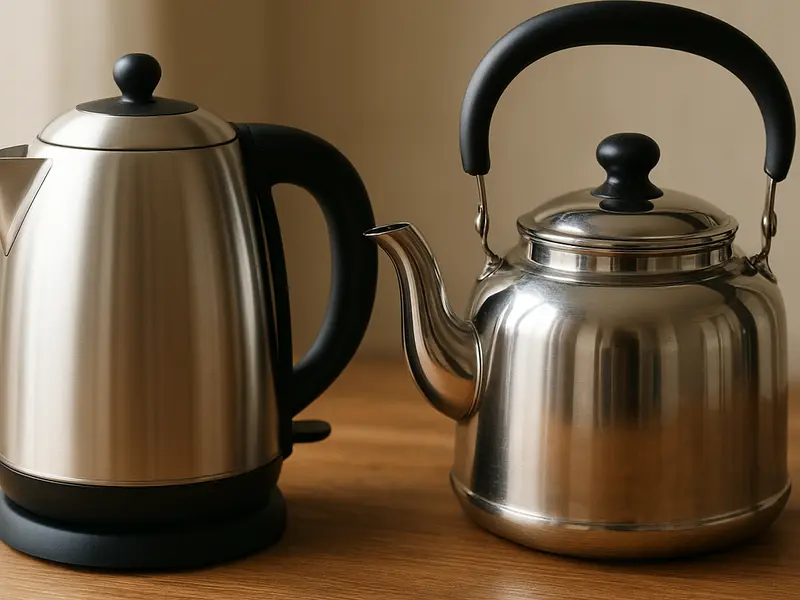
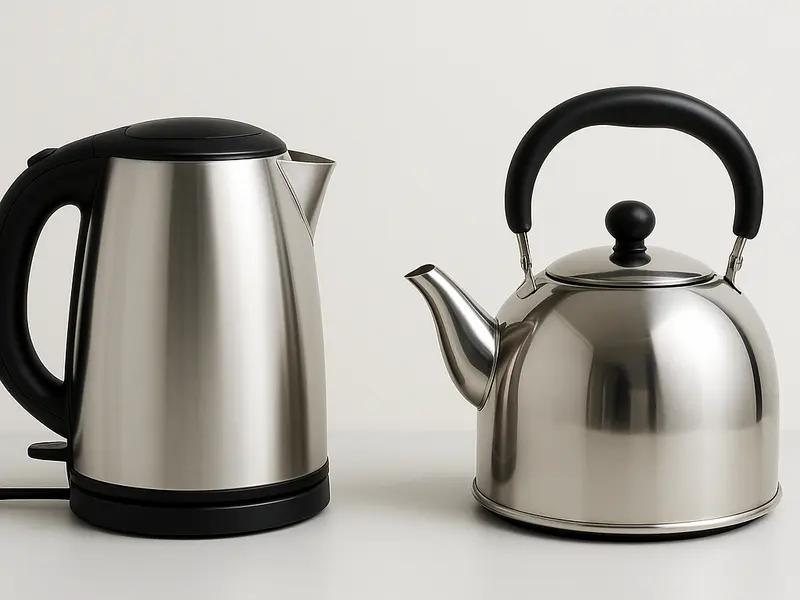
An electric kettle suits most kitchens: it is usually faster, switches itself off, and many models hold exact temperatures for tea. A stovetop kettle makes sense if outlets are scarce, you want no electronics, or you need one in a power cut.
Related on Amazon · Paid links
- Electric Kettles on Amazon Browse top-rated electric kettle on Amazon — compare prices, features, and customer reviews. Check price on Amazon
- Stovetop Kettles on Amazon Browse top-rated stovetop tea kettle on Amazon — compare prices, features, and customer reviews. Check price on Amazon
We may earn a commission if you buy, at no extra cost to you.
The short answer
- Choose an electric kettle if you boil water several times a day, want automatic shut-off, or brew green tea, pour-over coffee or anything that needs water below boiling.
- Choose a stovetop kettle if counter space or outlets are scarce, you want a simple, long-lasting kettle with nothing to break electrically, or you want to boil water on a gas stove or camp stove when the power is out.
- Induction cooktop? A stovetop kettle must have a magnetic base to work. Check that it is labeled induction-compatible.
- Many households have both: an electric kettle for everyday use and a stovetop kettle as a backup.
How they compare
Speed
Electric kettles heat water with an element in direct contact with the water, so little heat is lost to the surrounding air. They are usually quicker than a stovetop kettle on an electric coil burner. A powerful gas burner can be competitive, especially for larger amounts.
Where you live matters too. In North America, kettles run on 120-volt outlets and are typically limited to around 1500 watts, while kettles in countries with 230-volt power can be more powerful. That is one reason electric kettles in the UK and Europe boil noticeably faster than many in the US.
Safety
Most electric kettles switch off automatically when the water boils, and many have boil-dry protection that cuts power if the kettle is switched on empty. That makes them hard to forget about.
A stovetop kettle relies on you. A whistle helps, but if you leave the room or the whistle fails, the kettle can boil dry, which can damage it and is a fire risk on a gas flame. Handles can also get hot on the stovetop, especially metal handles over gas.
Temperature control
This is where electric kettles pull ahead for tea and coffee drinkers. Variable-temperature models let you choose a setting below boiling and often hold it for a while. Many tea sellers recommend water below boiling for green and white teas, and pour-over coffee guides often suggest water just off the boil. With a stovetop kettle, you have to use a thermometer or wait for the water to cool.
Gooseneck spouts
Pour-over coffee brewers often prefer a gooseneck spout for a slow, controlled pour. Gooseneck kettles come in both electric and stovetop versions; electric goosenecks usually add temperature control.
Energy use
Both types use energy most efficiently when you only boil what you need. Electric kettles generally transfer heat to the water efficiently. On a stove, a lot of heat from a gas flame or a large burner escapes around the sides of the kettle, especially if the burner is wider than the kettle base. Whichever you choose, filling it only to the amount you need saves energy and time.
Durability and repair
A well-made stainless steel or enameled stovetop kettle has no electronics and can last a very long time. Electric kettles have switches, elements and thermostats that can fail, and they are rarely repairable. If you buy electric, a decent warranty is worth having.
Counter space and outlets
An electric kettle needs a base and an outlet near where you use it. A stovetop kettle can live on the stove or in a cupboard.
Materials: what to look for
Electric kettles
- Stainless steel: durable and common. The outside can get hot on single-wall models; double-wall models stay cooler to the touch.
- Glass: lets you see the water and any scale build-up. It can show limescale more and needs careful handling.
- Plastic: light and often less expensive. If you want to minimize plastic contact with hot water, look for a stainless steel or glass interior and check what the lid and water window are made of.
- Concealed element: a flat base plate under the water is easier to clean than an exposed coil.
Stovetop kettles
- Stainless steel: durable and easy to clean. Look for a thick, flat base for even contact with the burner.
- Enameled steel: attractive and available in many colors, but enamel can chip if dropped.
- Copper and aluminum: heat quickly, but they are not induction-compatible unless they have a magnetic base plate, and need more care.
- Handle: a heat-resistant handle that sits well away from the flame is safer on gas.
Limescale and cleaning
In hard-water areas, both types build up limescale, a chalky mineral layer. It can slow heating and leave flakes in your cup. Descale regularly using the method in your kettle's manual; many manufacturers suggest a vinegar or citric acid solution, followed by thorough rinsing and a boil of fresh water that you pour away. Do not immerse the base or body of an electric kettle in water.
Some electric kettles have a removable mesh filter in the spout that catches scale flakes; it is worth having if your water is hard.
Safety tips for both
- Never fill above the max line; boiling water can spit out of the spout.
- Keep electric kettle cords away from the counter edge, where they can be pulled by children or pets.
- Use the electric kettle only on its own base, on a dry, flat surface.
- On a gas stove, keep the flame within the base of the kettle so it does not lick up the sides or heat the handle.
- Replace an electric kettle that no longer switches off reliably.
Which fits your kitchen
You drink lots of tea, including green or white tea
An electric kettle with variable temperature settings saves guesswork.
You brew pour-over coffee
A gooseneck kettle, ideally electric with temperature control. A stovetop gooseneck plus a thermometer also works.
You have an induction cooktop
Either works, but a stovetop kettle must be induction-compatible. An electric kettle avoids the question.
You want a kettle that works in a power cut
A stovetop kettle on a gas stove, or as part of an emergency kit with a camping stove used outdoors.
You have a tiny kitchen with one outlet
A stovetop kettle avoids fighting over the outlet. If you choose electric, pick a compact model.
You want the longest-lasting option
A heavy stainless steel stovetop kettle has the least to go wrong.
A practical decision checklist
- Decide whether you need temperature control for tea or coffee; if so, choose a variable-temperature electric kettle.
- Check you have an outlet and counter space where you would use an electric kettle.
- If you cook on induction, make sure any stovetop kettle is labeled induction-compatible.
- Prefer automatic shut-off and boil-dry protection on an electric kettle, and a loud whistle and cool handle on a stovetop one.
- Choose a stainless steel or glass interior if you prefer less plastic in contact with hot water.
- Pick a capacity that matches how much you usually boil, and only boil what you need.
- In hard-water areas, look for a removable scale filter and plan to descale as the manual directs.
- Check the warranty on electric models; they are rarely repairable.