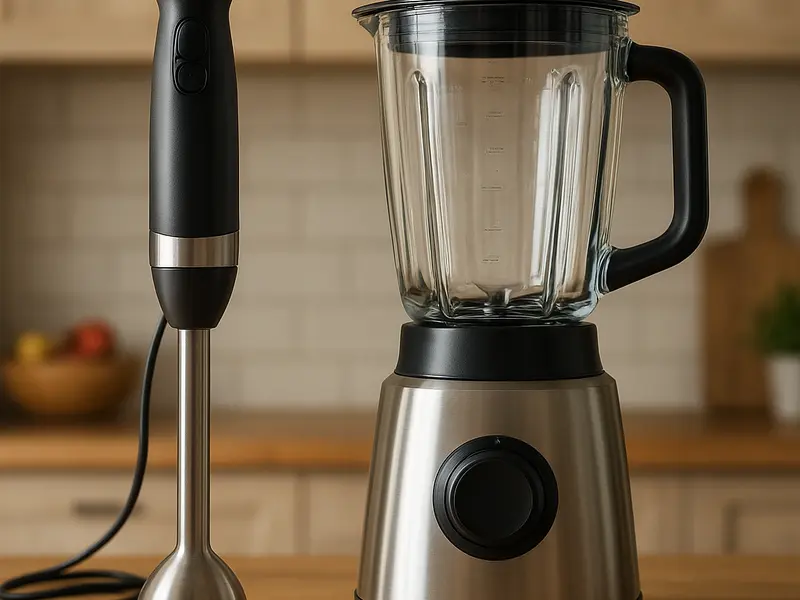
Choose an immersion blender if you mainly purée soups, sauces and baby food, or have little space. Choose a countertop blender for smoothies with ice or frozen fruit, nut butters and big batches. They do different jobs, so many kitchens end up with both.
Related on Amazon · Paid links
- Immersion Blenders on Amazon Browse top-rated immersion blender on Amazon — compare prices, features, and customer reviews. Check price on Amazon
- Countertop Blenders on Amazon Browse top-rated countertop blender on Amazon — compare prices, features, and customer reviews. Check price on Amazon
We may earn a commission if you buy, at no extra cost to you.
The short answer
- Immersion (stick) blender: best for blending hot soup in the pot, quick sauces, dressings and small batches. Easy to store, quick to clean, and far less washing up.
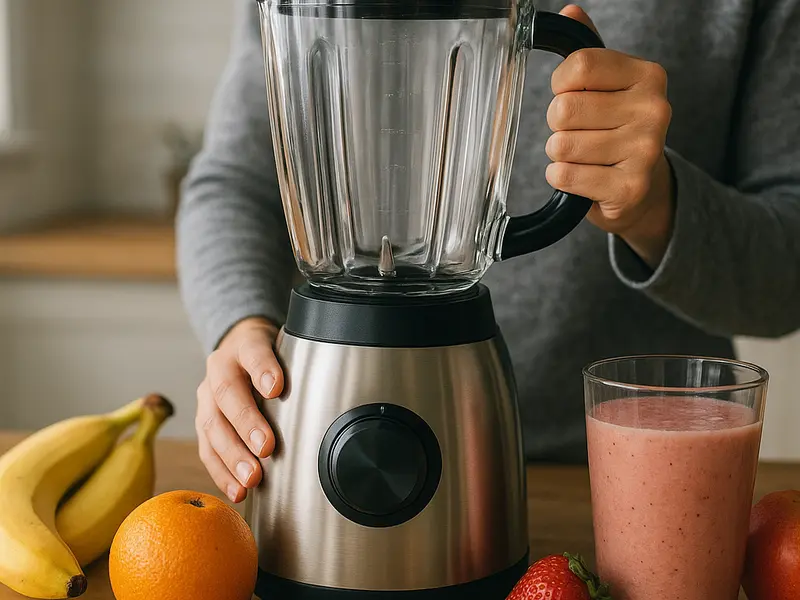
- Countertop blender: best for smooth drinks, crushed ice, frozen fruit, nut butters and anything you want completely silky. More powerful and more consistent, but bulkier and more work to clean.
- Personal (single-serve) blender: a third option if your main goal is one smoothie a day. It blends in the cup you drink from, but it is not meant for hot liquids or large batches.
- If you can only buy one, choose by your most frequent job. Soup-makers should start with an immersion blender; smoothie-drinkers should start with a countertop model.
How they differ
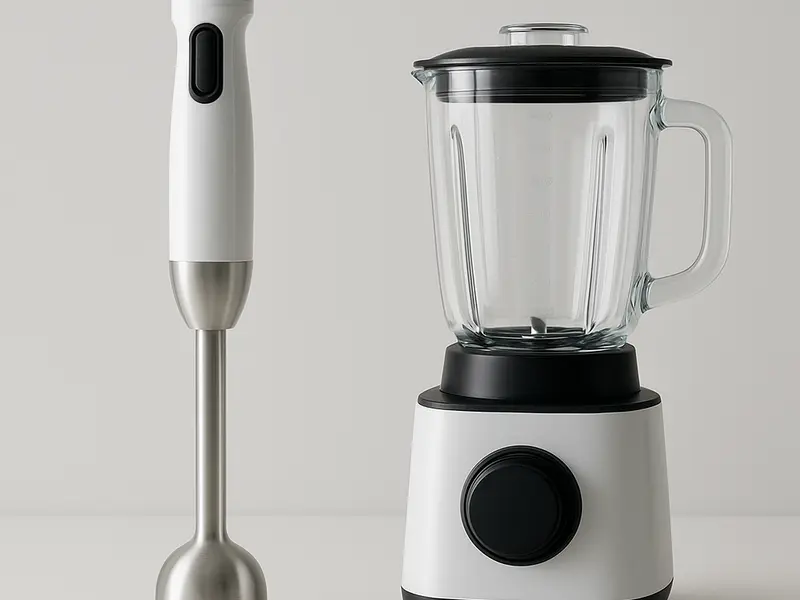
An immersion blender is a motor in a handheld body with a shaft that ends in a guarded blade. You take it to the food, so you blend in the pot, a jug or a tall beaker. A countertop blender sits on a motor base, and you bring the food to it in a jar. The jar's shape and the blade together create a vortex that pulls food down into the blades again and again.
That vortex is the key difference. It is why a countertop blender can turn ice, frozen fruit and fibrous greens into a smooth drink, and why an immersion blender, moving by hand through the food, is fast but less thorough with tough or frozen ingredients.
Where an immersion blender is better
Hot soups and sauces
This is the biggest reason to own one. You purée soup directly in the pot, with no ladling hot liquid into a jar and no extra container to wash. Blending hot liquid in a sealed countertop jar is a known hazard: steam builds pressure and can push the lid off. Many blender manuals tell you to fill the jar only partway with hot liquids, vent the lid and start on low; some do not allow hot liquids at all. An immersion blender sidesteps all of that.
Small batches
A single serving of dressing, mayonnaise, a sauce for two or a little baby food can be too small for a big blender jar to catch. An immersion blender in a narrow cup handles these easily.
Storage and cleanup
It fits in a drawer. Cleaning usually means running the blade end in a cup of warm soapy water, then rinsing. On many models the shaft detaches for washing; check the manual before putting any part in the dishwasher.
Attachments
Many immersion blenders come with or offer a whisk, a small chopper bowl and a measuring beaker. These make it a reasonable light substitute for a hand mixer or mini food processor in a small kitchen, though they will not match dedicated tools for heavy jobs.
Where a countertop blender is better
Smoothies with ice and frozen fruit
A countertop blender with a good jar and enough power gives a consistently smooth result. Immersion blenders can make a soft smoothie from fresh fruit and liquid, but some manuals advise against using the blending shaft on ice or hard frozen pieces.
Very smooth textures
For silky soups, nut milks or green smoothies with kale and seeds, the constant vortex of a countertop jar does a more even job. If you want restaurant-smooth results, this is the tool.
Thick mixtures and nut butters
High-powered countertop blenders with a tamper can process thick mixtures such as nut butters and frozen desserts. Standard blenders may struggle and need frequent stopping and scraping. Check that the manufacturer lists the task you want before buying for it.
Large batches
A full-size jar holds several servings at once, which suits families and batch prep. An immersion blender can handle large volumes in a pot, but only for liquids like soup.
The honest downsides
Immersion blender
- Splatter. Lifting the blade above the surface while it runs throws food. Keep the blade head fully submerged before you switch it on and until it stops.
- Less power for hard jobs. Ice, frozen fruit, nuts and fibrous greens are a weak spot for most models.
- Hand fatigue. You hold it the whole time, and you may need to keep a button pressed. Heavier models can tire your hand on a big pot of soup.
- Pans. The metal blade guard can scratch some pan surfaces, including nonstick coatings. Check the manual, and consider blending in a stainless steel pot or a separate container.
Countertop blender
- Counter and cupboard space. The jar and base are tall; measure under your cabinets before buying.
- Cleanup. The blade assembly is the awkward part. Many manufacturers suggest a quick clean by blending warm water with a drop of dish soap, then rinsing, but check what your model allows.
- Noise. Powerful blenders are loud, which matters in an apartment or early in the morning.
- Hot liquids. As above, they need care, and some jars and lids are not designed for them.
What to look for in each
Immersion blender checklist
- Stainless steel shaft if you will blend hot food; plastic shafts can stain and may not be designed for heat.
- Detachable shaft for easier cleaning.
- Speed control with more than one setting, or a variable dial, for better control over splatter.
- Corded or cordless. Cordless models are convenient but limited by battery runtime; corded models never run out mid-soup.
- Length of the shaft compared with the depth of your tallest pot.
- Attachments you will actually use; skip the bundle if you already own a hand mixer and food processor.
Countertop blender checklist
- Jar size that matches your batches. Personal cups suit one person; full-size jars suit families.
- Jar material. Glass is heavy and does not scratch easily; plastic (often BPA-free) is lighter and less likely to break if dropped.
- Controls. Variable speed and a pulse button give more control than preset programs alone.
- Tamper if you plan to make thick mixtures.
- Hot-liquid guidance in the manual if you plan to blend soup.
- Warranty length and parts availability, especially for a higher-end model you plan to keep for years.
Wattage is a rough guide to power, but it is not the whole story. Blade design, jar shape and motor quality all affect results, so look at what the manufacturer says the blender is designed to do, and at what owners consistently report, rather than the wattage number alone.
Which fits your kitchen
You make soup weekly and smoothies rarely
An immersion blender is the better first purchase. It saves time and washing up, and it removes the risk of blending hot liquid in a sealed jar.
You drink a smoothie most mornings
A countertop or personal blender. A personal blender is enough for single servings; a full-size model is better if you blend for several people or use a lot of ice and frozen fruit.
You cook a bit of everything in a small kitchen
Start with an immersion blender with a whisk and chopper attachment. Add a countertop blender later only if you find yourself wanting smoother drinks.
You want nut butters, frozen desserts or very fine purées
A high-powered countertop blender with a tamper. An immersion blender will not replace it for these jobs.
You are making baby food
Either works. An immersion blender is convenient for small amounts; a countertop blender is easier for large batches to freeze.
Safety basics for both
- Unplug before attaching or removing blades or attachments, and before cleaning blades by hand.
- Never reach into a jar or touch an immersion blade while the appliance is plugged in.
- Follow the manual on hot liquids; vent and fill partially if your blender allows hot blending at all.
- Do not run either appliance empty or overload it; follow the maximum run times in the manual if it gives them.
A practical decision checklist
- Write down the three things you would blend most often.
- Hot soups, sauces and small batches point to an immersion blender.
- Ice, frozen fruit, nut butters and large smoothie batches point to a countertop blender.
- For one smoothie a day and little space, consider a personal blender.
- Check the manual for hot-liquid rules, dishwasher-safe parts and anything it says not to blend.
- Measure your counter clearance and storage space before choosing a full-size countertop model.
- If you cook a wide variety of dishes, plan on owning both eventually; they do not replace each other.