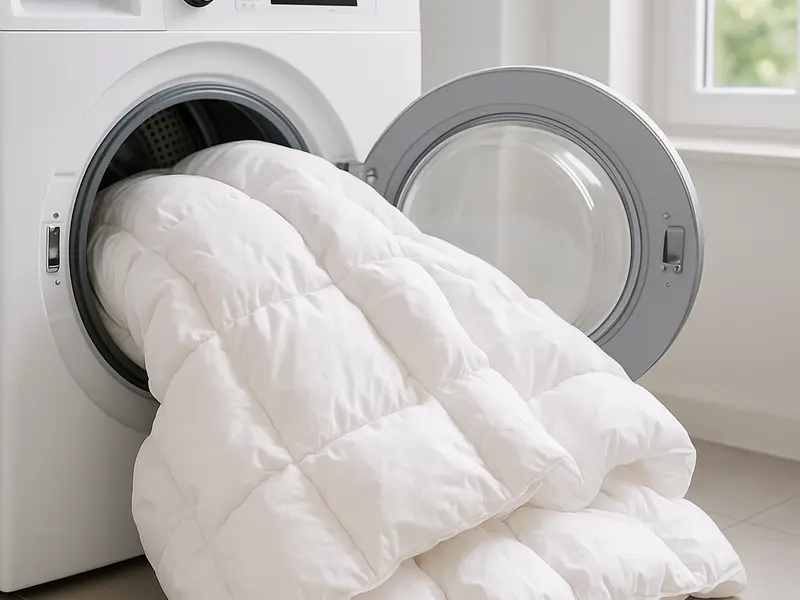
Most down comforters can be washed at home if the care label allows it: a large front-loading washer, a gentle cycle, a small amount of mild down-safe detergent, an extra rinse, then a long low-heat dry with dryer balls until no damp clumps remain.
Related on Amazon · Paid links
-
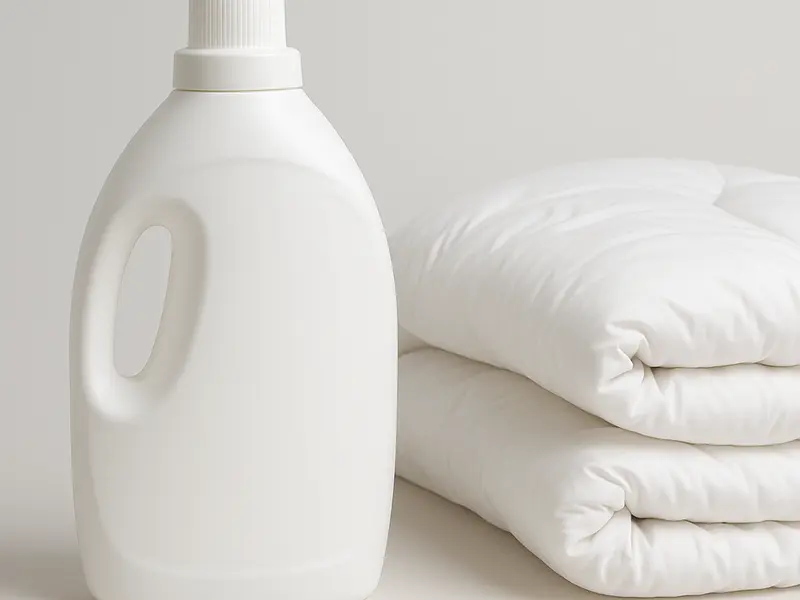 Down Wash Detergent on Amazon
Browse top-rated down wash detergent on Amazon — compare prices, features, and customer reviews.
Check price on Amazon
-
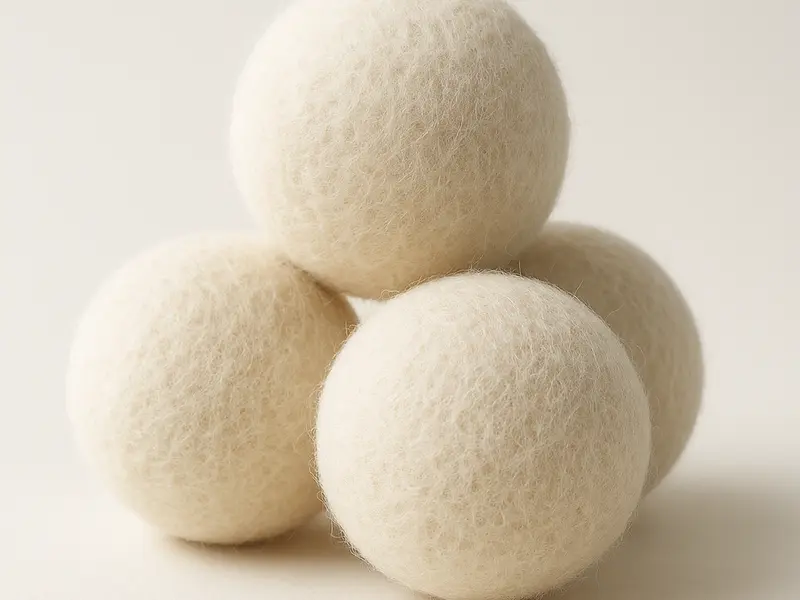 Wool Dryer Balls on Amazon
Browse top-rated wool dryer balls on Amazon — compare prices, features, and customer reviews.
Check price on Amazon
We may earn a commission if you buy, at no extra cost to you.
First decide: home, laundromat or professional
The care label settles more than any guide can, so read it before anything else. Then match your situation:
- The label says "Dry Clean Only." Follow it and take it to a reputable cleaner. Washing a comforter labeled this way risks damaging the shell or fill.
- It fits loosely in your front-loader. Wash it at home. The comforter needs room to move; if you have to cram it in, it will not rinse or spin properly.
- You only have a top-loader with a central agitator, or the comforter is king-size or oversized. Use a laundromat. Large front-loading washers have no agitator for the comforter to wrap around, and the big dryers make the long drying stage much easier.
- It has a silk or very delicate shell, is an heirloom, or has torn seams. Consider a professional cleaner that specializes in down. Some bedding guides caution that traditional dry-cleaning chemicals are harsh on down, so ask whether the cleaner wet-cleans or launders it instead.
- It has one small spill. Spot-clean it instead of washing the whole thing.
What you need
- A mild detergent, ideally one made for down. Use a small amount; too much leaves residue that is hard to rinse out of the fill.
- Wool dryer balls or two or three clean tennis balls.
- Time. Between the wash and a thorough dry, plan on most of a day. One down bedding maker describes it as a full-day commitment.
Skip fabric softener and chlorine bleach. Down bedding makers consistently warn that both can damage the down and reduce its loft. If you need to brighten a white comforter, bleach makers point to a non-chlorine, color-safe bleach for down-filled items, but check your label first.
Before you wash
- Check the seams and shell. Look for small holes or open stitching and sew them closed. A tiny gap can leak a surprising amount of down in a wash cycle.
- Pre-treat stains. Work a little stain remover or diluted detergent into the spot, let it sit, then blot. Do not scrub hard enough to push the stain into the fill.
- Remove the duvet cover. Wash it separately with your sheets.
Washing it step by step
- Load it on its own. Most guides say to wash a comforter alone so it can move freely. If the drum keeps going off balance, one down maker suggests washing two comforters together; a couple of light towels can also help even out the load.
- Choose a gentle or delicate cycle with cold or warm water, whichever the label allows.
- Add only a small amount of detergent.
- Add an extra rinse. Down holds onto soap, and leftover detergent can leave the fill clumpy and dull.
- Add an extra spin if the label allows it. Every bit of water the washer removes is drying time you save.
- Lift it out carefully. A wet comforter is heavy. Support the whole thing rather than pulling it out by one corner, which strains the seams.
Drying it properly (the part that matters most)
Drying is where most home washes go wrong. Down that is not fully dry clumps, smells and can develop mold or mildew inside the shell, where you will not see it until it is too late.
- Use the heat setting your label allows. Most down bedding makers say low heat; high heat can damage the fill and the fabric.
- Add dryer balls or tennis balls. They keep the comforter moving, break up clumps and help the down loft evenly.
- Stop every 30 minutes or so. Take it out, shake it, and break up any clumps with your hands, working them toward the edges. Turn it over before putting it back.
- Expect it to take hours. Some guides estimate two to four hours of low-heat drying. One down bedding maker says a full dry can take much longer, especially in a smaller dryer. Trust the feel and smell, not the clock.
- Do not rely on a clothesline. Line drying alone is too slow for thick down and invites mildew. You can air it outside for a while after machine drying, but finish it in the dryer.
How to tell it is really dry
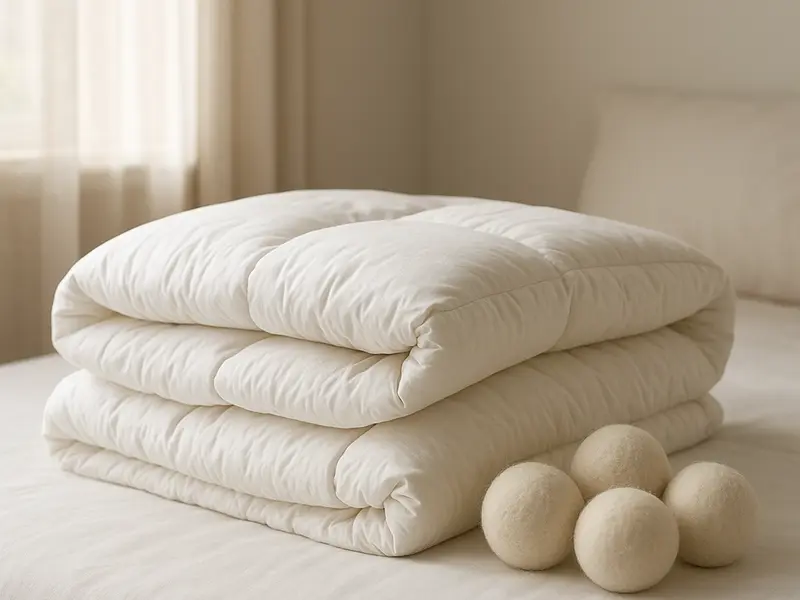
- It feels light and evenly fluffy across the whole surface, with no flat or heavy patches.
- You cannot feel any damp, dense lumps when you squeeze the middle of each sewn section.
- It smells clean. A musty or "wet feather" smell means moisture is still inside; run it through another cycle.
Honest downsides and risks
- It takes a long time. Between washing, repeated drying cycles and checking for clumps, this is a day project, not a quick chore.
- Small dryers struggle. A thick comforter in a compact dryer may never dry evenly. That is a good reason to use a laundromat for the drying stage even if you wash at home.
- Top-loaders with agitators can damage it. The comforter can twist around the agitator, wash unevenly and stretch or tear the shell.
- Washing too often wears it out. Each wash puts stress on the fill and fabric. Down holds its loft better when it is cleaned only when it needs it.
- Down alternative is different. Synthetic fill usually tolerates washing differently, so follow that comforter's own label rather than this guide.
How often to wash it, and how to wash it less
If you use a duvet cover, washing the comforter itself about once or twice a year is usually enough. Without a cover, or if you have allergies or pets on the bed, a cleaning every few months is more realistic.
The easiest way to keep that number low:
- Use a duvet cover and wash it with your sheets. It takes nearly all the everyday wear.
- Air the comforter out occasionally on a dry day, or toss it in the dryer on a no-heat setting with dryer balls to refresh the loft.
- Deal with spills right away with spot cleaning instead of waiting for a full wash.
Storing it between seasons
- Make sure it is completely dry first. Storing it even slightly damp is the fastest way to a musty comforter.
- Use a breathable cotton or linen storage bag. Plastic bins and vacuum bags trap moisture and compress the down for long periods.
- Keep it somewhere cool and dry, not a damp basement or a hot attic.
Troubleshooting
- It smells musty after washing. It is not dry yet. Put it back in the dryer on low with dryer balls and keep going until the smell is gone.
- The fill is clumped in corners. Keep drying, stop more often to break up clumps by hand, and shake it firmly from each corner.
- It looks flat. Down regains its loft as it dries fully. A no-heat or low-heat tumble with dryer balls usually brings it back.
- A few feathers poke through. A small amount is normal with feather and down blends. Pull them back in from the other side rather than out, which can widen the hole.
A practical decision checklist
- Read the care label. "Dry Clean Only" means a professional; otherwise, home washing is usually fine.
- Check that your washer has room for the comforter to move. If not, or if it has an agitator, use a laundromat.
- Inspect seams and close any small holes before washing.
- Use a gentle cycle, a small amount of mild detergent, and an extra rinse. No fabric softener, no chlorine bleach.
- Dry on the heat setting your label allows, usually low, with dryer balls, and stop regularly to break up clumps.
- Budget most of a day and do not stop until there are no damp lumps and no musty smell.
- Use a duvet cover so you only need to repeat this once or twice a year.