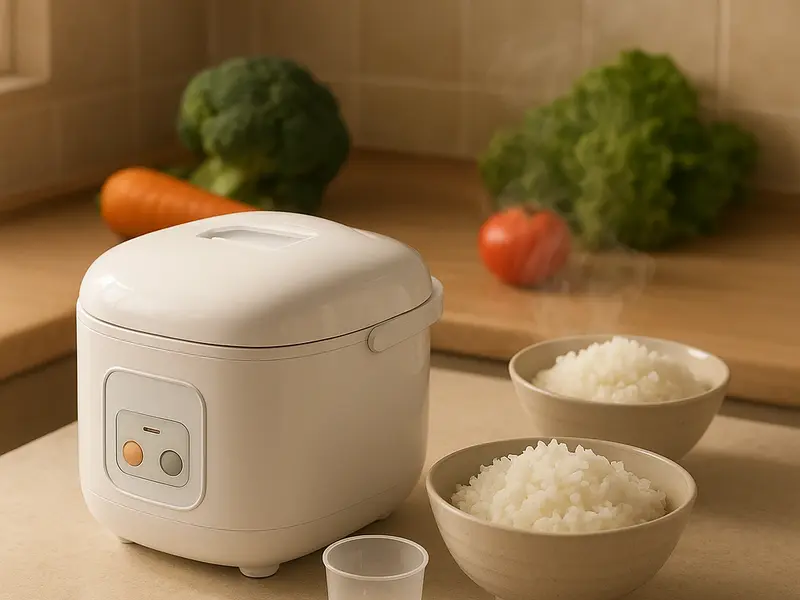
Choosing a rice cooker size is a practical decision you can make without guessing or overbuying. Start from your daily routine and map it to the cooker's capacity. If you cook for one or two people, a small model is usually enough. If rice is a daily staple for a larger family or you batch cook for the week, a larger cooker saves time. The goal is to match capacity to how you actually cook, not to buy the biggest model on the shelf.
Related on Amazon · Paid links
-
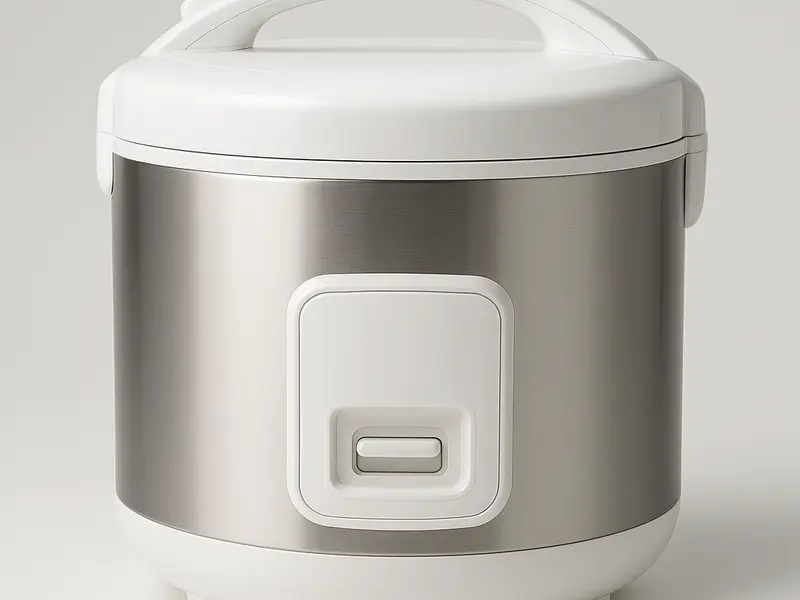 Rice Cookers on Amazon
Browse top-rated rice cooker on Amazon — compare prices, features, and customer reviews.
Check price on Amazon
-
 Kitchen Organization Picks on Amazon
Browse top-rated kitchen organization on Amazon — compare prices, features, and customer reviews.
Check price on Amazon
We may earn a commission if you buy, at no extra cost to you.
First, understand what "cup" means on a rice cooker
Rice cooker capacity is almost always given in uncooked rice, measured with the small cup that comes in the box. That cup is a traditional Japanese rice measure of 180 ml, about three-quarters of a US cup, and the water lines inside the pot are marked for it. Zojirushi, for example, notes that its cups are 180 ml and that you should measure with the included cup rather than a standard measuring cup.
Rice roughly doubles in volume when cooked, so each rice-cooker cup of uncooked white rice makes about two rice-cooker cups of cooked rice, or roughly one and a half US cups. In practice:
- A 3-cup cooker makes up to about 6 rice-cooker cups of cooked rice, enough for two to three people with a little left over.
- A 5.5-cup cooker makes up to about 11 rice-cooker cups of cooked rice, enough for a family of four or for one or two people who eat rice with most meals.
- A 10-cup cooker makes up to about 20 rice-cooker cups of cooked rice, which suits larger families, batch cooking, and entertaining.
Brown rice, mixed grains, and porridge usually have lower maximums than white rice in the same cooker, so check the manual if you cook them often.
How to translate your needs into a size
- Consider household size and appetite. For one or two adults, a 3-cup model usually fits. For three to five people, or a couple who batch cooks, a 5.5-cup model is the common middle ground. For larger households or frequent hosting, a 10-cup model keeps up with demand.
- Think about how you use rice. If you cook once and eat leftovers for several days, size up. If you cook fresh rice in small amounts every day, a smaller cooker often gives better results.
- Remember the minimum. Large cookers have a minimum amount they cook well, often two cups or so, and very small batches in a big pot can cook less evenly. If you usually make one or two cups, a 10-cup model may be more than you need.
- Account for kitchen space and steam. Larger units need more counter depth and room for the lid to open. Many manufacturers advise against running a rice cooker directly under wall cabinets or in an appliance garage, because the steam vent can damage cabinets, so plan for open space above the cooker while it runs.
- Include non-rice cooking. If you want a model that also steams vegetables, cooks oatmeal or porridge, or handles other grains, look at the program list and the maximum capacities for those settings, not just the headline number.
Sizes at a glance and what they typically handle
- Small (about 3 cups uncooked): singles and couples, small side portions, or a dedicated cooker for a second grain.
- Medium (5 to 6 cups uncooked, with 5.5 cups the most common): families of three to five, or smaller households that meal prep a few times a week.
- Large (8 to 10 cups uncooked): larger families, people who serve rice at most meals, and batch cooking for the week.
- Extra large (over 10 cups uncooked): big households, parties, and community events. These take up significant counter and storage space.
Use-case driven recommendations
- If you live alone or with one other person and rarely cook large batches: choose a 3-cup model. It takes less space and handles small amounts well.
- If your household is two adults and two kids who eat rice most evenings: a 5.5-cup cooker is a solid middle ground, with room for leftovers.
- If you cook for a family of five or more, or you pre-portion rice for the week: aim for 8 to 10 cups. You'll cook fewer batches.
- If rice is the centerpiece at gatherings or potlucks: consider 10 cups or more, or borrow a second cooker for big events rather than buying for your largest occasion.
- If you want a multi-use appliance: look at multi-cookers or rice cookers with steaming and porridge programs, and make sure the pot size and lid clearance fit your space.
Practical details that matter in real kitchens
- Inner pot materials. Most inner pots are aluminum with a nonstick coating, which releases rice easily and conducts heat well. Some models use uncoated stainless steel pots, which avoid coatings and resist scratches but need more soaking and scrubbing. Some premium pots are thicker or multi-layer. Hand-wash nonstick pots unless the manual says otherwise.
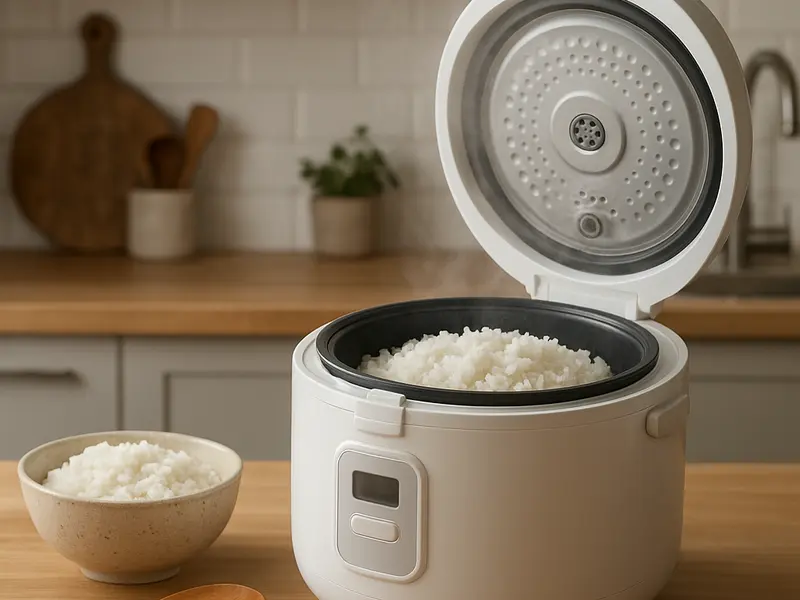
- Lid design and steam management. Hinged lids keep condensation in the cooker and are easy to open with one hand; models with a removable inner lid or steam cap are easier to clean thoroughly.
- Keep-warm and timer features. Keep-warm settings hold rice hot for serving, and manufacturers list a maximum keep-warm time, often around 12 hours, after which quality drops. A delay timer lets you set rice and water in the morning so it's ready at dinner.
- Leftovers and food safety. Cooked rice that cools at room temperature can grow bacteria such as Bacillus cereus. USDA advice is to refrigerate leftovers within two hours and eat them within three to four days. If you won't keep rice on warm, cool and refrigerate it promptly.
- Power and placement. Larger cookers tend to draw more power. Plug the cooker directly into a wall outlet rather than an extension cord, and keep the cord away from the edge of the counter.
- Accessories. Most cookers include a measuring cup matched to the pot markings and a rice paddle; some add a steamer tray. Keep the original cup, since the water lines depend on it.
Pros, cons, and realistic trade-offs
- Smaller models are quick and space-efficient, but they limit batch cooking and may require more frequent cycles for bigger households.
- Medium models suit most mixed households, though you may need two batches when guests arrive.
- Large models save time on batch cooking, but they take more counter and cupboard space and are less suited to very small batches.
- Extra-large units maximize capacity for gatherings, but they can be unwieldy in small kitchens and spend most of the year oversized for daily use.
When to avoid buying a larger model than you need
- If you consistently cook for one or two people and rarely fill the pot, a larger unit wastes space and money.
- If you usually cook just a cup or two, a large cooker may be near its minimum and give less even results.
- If you don't plan to use the extra programs and the bulk complicates storage, choose the simplest model that meets your basic needs.
Decision checklist you can act on
- Household size and typical portions: how much cooked rice do you eat at one meal, and do you want leftovers for lunches?
- Counter and cupboard space: will the unit fit, with open space above it while it steams?
- Batch cooking versus daily cooking: do you cook once or twice a week, or fresh every day?
- Multi-function use: do you want steaming, porridge, or settings for brown rice and other grains?
- Ease of use: do you want a simple one-switch cooker or a model with timers and presets?
- Cleaning: is the inner pot removable, and are the lid parts easy to take off and wash?
- Rice types: if you cook brown rice or mixed grains often, check the capacity limits for those settings.
How to measure and plan in your kitchen
- Measure your counter space and the height to any cabinets above. Leave room for the lid to open fully and for steam to escape freely.
- Check cupboard clearance if you plan to store the cooker between uses.
- Confirm there is a wall outlet within reach of the cord.
- Think about your meal setup. If you often steam vegetables while the rice cooks, a model with a steamer tray can save a pot on the stove.
- Match the size to your rice type and portions, using the cooked-yield guide above.
Maintenance and longevity considerations
- Clean the inner pot after each use. Let it cool, then wash with mild soap and a soft sponge.
- Avoid metal utensils and abrasive pads on nonstick pots, which can damage the coating over time.
- Wash the inner lid, steam vent, and any gasket regularly, following the manual. Worn seals can affect cooking.
- Use the cup and water lines that came with the cooker, and don't fill above the maximum line, which can cause boil-overs.
- Before storing, make sure the pot and lid are completely dry to prevent odors and mold.
Choosing the right rice cooker size is about matching capacity to your real cooking habits. A unit that fits your household, meal-planning style, and kitchen layout will save time and give more consistent rice. Focus on how much cooked rice you actually eat, remember that rice cooker cups are smaller than US cups, and you'll avoid both overbuying and underbuying.