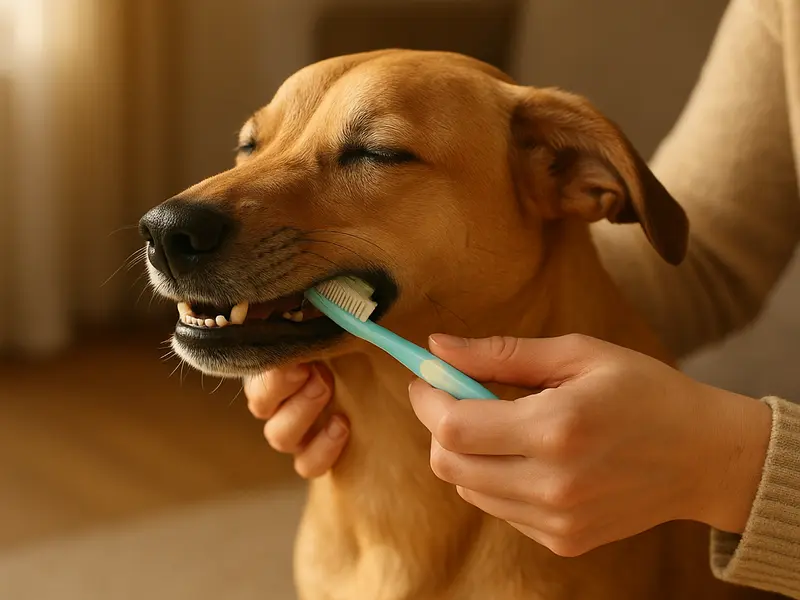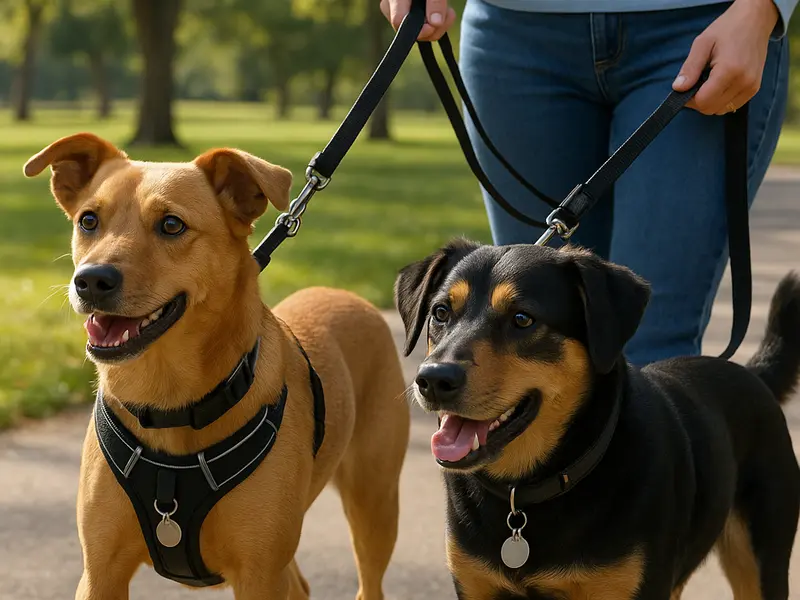
Choosing between a dog harness and a collar is about safety, comfort and how your dog walks on a leash. If your dog pulls, is a small or toy breed, has a flat face, or has any neck or breathing problem, a well-fitted harness is usually the better choice for walks. For many dogs, the most practical setup is both: a flat collar that carries ID tags, and a harness for the leash.
Related on Amazon · Paid links
-
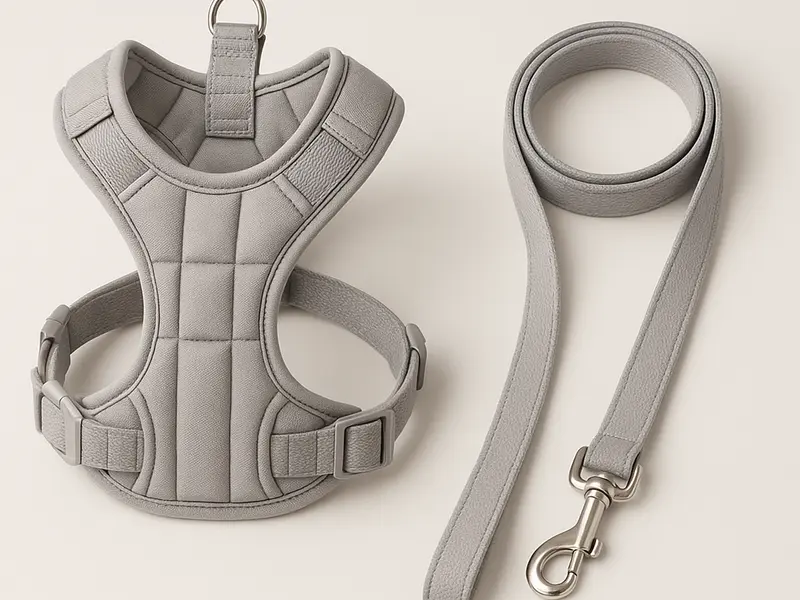 Dog Harnesses on Amazon
Browse top-rated front clip dog harness on Amazon — compare prices, features, and customer reviews.
Check price on Amazon
-
 Pet Supplies on Amazon
Browse top-rated pet supplies on Amazon — compare prices, features, and customer reviews.
Check price on Amazon
-
 Top-Rated Dog Food on Amazon
Browse top-rated dog food on Amazon — compare prices, features, and customer reviews.
Check price on Amazon
We may earn a commission if you buy, at no extra cost to you.
Should you use a harness or a collar for your dog?
A quick decision guide before the details:
- Your dog pulls on the leash: choose a harness. A front-clip harness can help discourage pulling, and either style keeps pressure off the throat. The American Kennel Club (AKC) notes that harnesses can prevent potential throat damage in dogs that pull.
- Your dog has a neck, airway or spine problem: use a harness and follow your veterinarian's advice. The American College of Veterinary Surgeons (ACVS) recommends a body harness rather than a neck lead for dogs with tracheal collapse.
- Your dog is a toy breed or flat-faced (brachycephalic) breed: a harness is generally the gentler choice. Small breeds such as Yorkshire Terriers, Pomeranians, Poodles and Chihuahuas are among those most often affected by tracheal collapse.
- Your dog slips out of collars: consider a martingale collar (common for sighthounds, whose heads can be narrower than their necks) or a well-fitted harness. Keep an ID collar on as well.
- Your dog walks calmly on a loose leash: a well-fitted flat collar or a back-clip harness can both work well.
Collar options explained
- Flat collar: the everyday standard for carrying ID tags. It is easy to put on and take off and suits dogs that walk without pulling. Its main limits are that dogs with narrow heads can back out of it and dogs that pull put pressure on their neck.
- Martingale collar: tightens a limited amount when the dog pulls back, so it is harder to slip out of. The AKC recommends it for narrow-headed breeds. Fit it so it cannot tighten enough to choke, and take it off when your dog is unsupervised, since the loop can catch on things.
- Rolled collar: a round collar that can be gentler on dogs with long coats, sensitive skin or skin folds.
- Head halter: fits around the muzzle and behind the head and steers the head. It can give good control of large, strong dogs but needs a slow, positive introduction, and you should never jerk the leash while using it.
- Choke chains, prong (pinch) collars and shock collars: the American Veterinary Society of Animal Behavior (AVSAB) recommends against training tools that work through pain or discomfort, citing welfare concerns and no evidence that they work better than reward-based methods. Reward-based training and a well-fitted harness are better options for dogs that pull.
Harness options explained
- Front-clip harness: the leash attaches at the chest, which turns the dog back toward you when they pull. The AKC describes front-clip harnesses as useful for discouraging pulling. They work best combined with loose-leash training, and the leash can tangle around the legs if it is very long.
- Back-clip harness: the leash attaches between the shoulder blades. These are easy to put on and comfortable for dogs that already walk nicely, and they are popular for small dogs. They do little to discourage pulling and can make some strong dogs pull harder.
- Dual-clip harness: has both front and back rings, so you can use the front ring while training and the back ring once your dog walks well, or attach a double-ended leash to both.
- Step-in harness: your dog steps in and it fastens over the back. Handy for dogs that dislike things going over their head, but fit is important to prevent rubbing behind the front legs.
Many trainers and veterinarians prefer harness designs with a Y-shaped front that sits on the breastbone and leaves the shoulders free, rather than a strap running straight across the front of the shoulders, which may restrict natural movement.
Fit, sizing and materials
A good fit matters more than the brand. Poorly fitted gear rubs, slips, or lets your dog escape.
- Collars: the AKC suggests the "two-finger rule": you should be able to slip one finger under the collar for a small dog, or two fingers for a large dog. Recheck fit often in growing puppies.
- Harnesses: measure around the widest part of the chest, just behind the front legs, and around the base of the neck. Choose a harness with several adjustment points. It should be snug enough that your dog cannot back out of it, but should not dig into the armpits or restrict shoulder movement.
- Materials: nylon and polyester webbing are durable and easy to wash; padded or mesh chest panels can reduce chafing; leather is durable but needs care when wet. Reflective trim helps on walks in low light.
- Hardware: buckles and leash rings should be sturdy and should not rust. Replace gear with frayed stitching or cracked buckles.
Real-world use cases
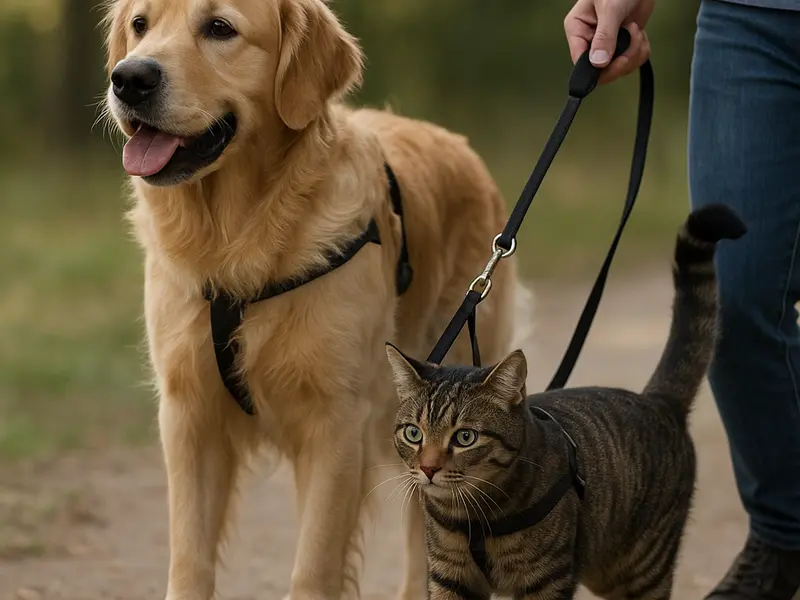
- City walking with lots of distractions: a front-clip or dual-clip harness for control, plus a flat collar with ID tags.
- Toy breeds and flat-faced breeds: a lightweight harness for every walk, plus a light collar or tag attachment for ID.
- Dogs with a history of coughing on walks: a harness, and a check-up with your veterinarian, since coughing can be a sign of tracheal or heart problems.
- Escape artists: a well-fitted harness, possibly a martingale collar, and ID on whatever your dog wears. A microchip with up-to-date contact details is an important backup.
- Puppies: the AKC notes a flat collar is a good choice for puppies learning to walk on a leash, and a lightweight harness is also a good option. Either way, your puppy should wear ID from the start, and you should recheck fit every week or two as they grow.
- Car travel: an ordinary walking harness is not a car restraint. If you want to restrain your dog in the car, look for a crate or a harness that has been independently crash-tested.
Training and maintenance
No gear fixes pulling on its own. Equipment works best alongside training.
- Use reward-based training for loose-leash walking: reward your dog for walking next to you, and stop moving when the leash goes tight.
- Keep early training sessions short and frequent.
- Introduce new gear gradually with treats so your dog is comfortable wearing it.
- Check regularly for rubbing, hair loss or sore spots under straps, and adjust the fit if you see them.
- Take harnesses off when you are home. Leaving them on all day can cause rubbing and matting, and loose straps can catch on things.
When not to use certain options
- Avoid choke, prong and shock collars for walking or training.
- Do not attach a leash to the collar of a dog that pulls hard or has a neck or airway problem; use a harness.
- Do not leave martingale collars, head halters or harnesses on an unsupervised dog.
- Do not ignore fit on a growing puppy or a dog that has gained or lost weight.
Bottom line
- If your dog pulls, is a toy or flat-faced breed, or has neck or airway issues, use a well-fitted harness for walks.
- If your dog walks calmly, a flat collar or a back-clip harness can both work.
- If your dog slips collars, consider a martingale or a secure harness.
- For most dogs, keep a flat collar with ID on and use a harness for the leash.
- Pair any equipment with reward-based training, and talk to your veterinarian if your dog coughs, gags or seems uncomfortable on walks.