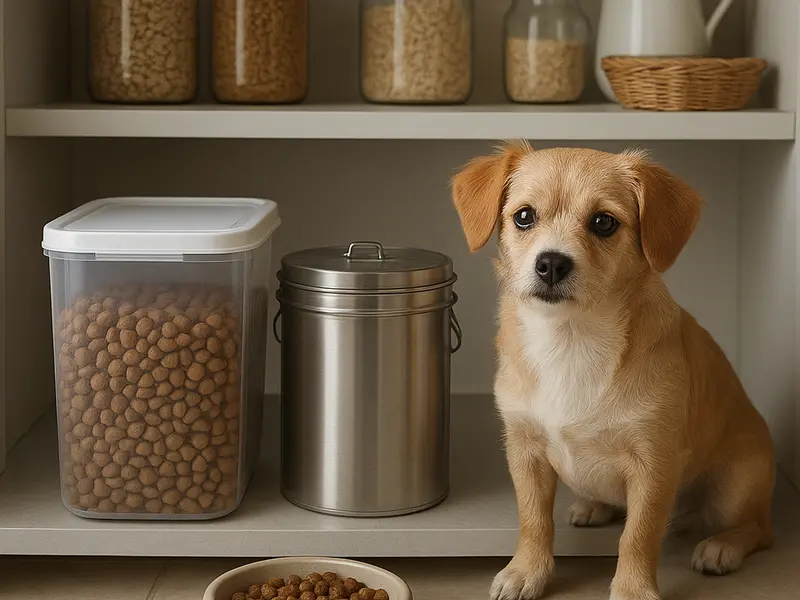
For most households, the best way to store dry dog food is to keep it in its original bag, fold or clip the top tightly closed, and set the whole bag inside a clean, airtight container kept somewhere cool and dry. That combination protects the kibble from air, moisture, heat and pests, and it keeps the label information you need if the food is ever recalled.
Related on Amazon · Paid links
-
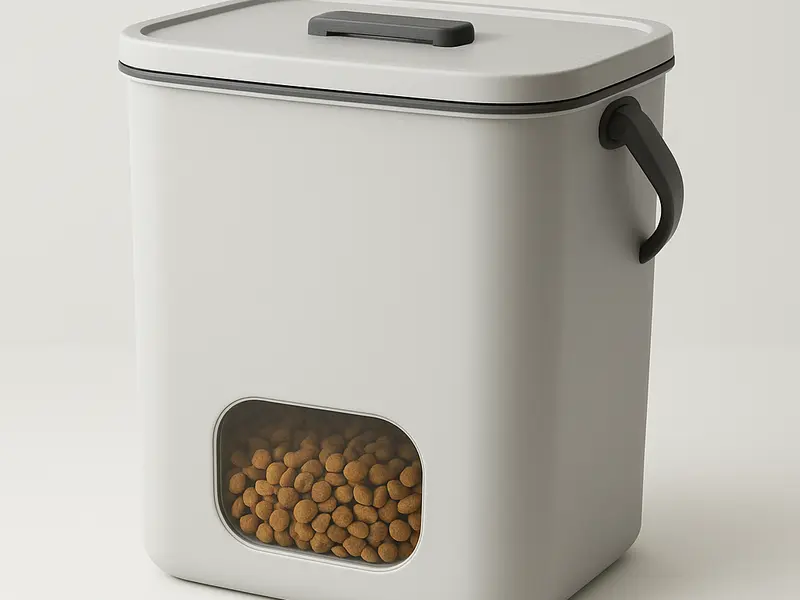 Airtight Pet Food Containers on Amazon
Browse top-rated airtight pet food storage container on Amazon — compare prices, features, and customer reviews.
Check price on Amazon
-
 Top-Rated Dog Food on Amazon
Browse top-rated dog food on Amazon — compare prices, features, and customer reviews.
Check price on Amazon
We may earn a commission if you buy, at no extra cost to you.
Why the original bag matters
It is tempting to pour kibble straight into a storage bin and throw the bag away, but the U.S. Food and Drug Administration (FDA) recommends keeping pet food in its original packaging. There are two practical reasons:
- Recall information. The bag carries the product name, lot number, UPC code and "best by" date. If a food is recalled, or your dog gets sick and you need to report a problem, that information is what identifies your specific batch.
- The bag is designed for the food. Many kibble bags have a liner that helps hold in freshness and keep fats from soaking into the container walls.
If you do decide to pour kibble directly into a container, the FDA suggests cutting out the label section with the lot number and best-by date and keeping it (taping it to the container works), and washing and drying the container before each new bag goes in.
Why air, moisture and heat are the enemies
Dry food is low in moisture, which is what keeps it shelf-stable. Moisture that gets in can encourage mold and spoilage. Heat and air speed up the oxidation of fats, which makes food go stale or rancid and can break down some nutrients. The FDA advises storing dry pet food in a cool, dry place below 80°F. Pests such as pantry moths, ants and rodents are also far less likely to get into food that is sealed inside a sturdy container.
Use-case recommendations
- Hot or humid home, or a big dog that goes through food fast: Choose a sturdy container with a gasket-sealed lid that is large enough to hold the whole bag. A wide opening makes it easier to scoop from the bag inside.
- One small dog and limited space: A compact sealed container sized to your usual bag works well. Smaller bags also mean the food is used up while it is still fresh.
- Buying large bags to save money: Make sure your dog can finish the bag before its best-by date. If not, a smaller bag may be the better value, since stale food tends to be less palatable.
- Storage in a garage, basement or shed: Temperatures in these spaces can swing well above 80°F and humidity can be high, so an indoor closet or pantry is usually a better choice. If you have no alternative, use a tightly sealed container and check the food often.
- Pets or kids who raid the food: Use a container with a locking lid, or store the food somewhere your dog cannot reach. A dog that breaks into a bag can overeat quickly.
Container options and trade-offs
Plastic bins
- Pros: lightweight, widely available in many sizes, easy to wash, and many come with a gasket lid and wheels.
- Cons: thin bins and lids without a gasket may not be truly airtight, and plastic can hold onto smells if it is not washed between bags.
- Best for: most indoor setups, especially when the bag goes inside the bin.
- Tip: choose a container sold as food-safe and wash it with hot, soapy water and dry it fully before refilling.
Metal cans
- Pros: very good protection against chewing pests and very durable, often with tight-fitting lids.
- Cons: heavier, can dent, and some cheaper cans have lids that do not seal tightly.
- Best for: homes with persistent pest problems or dogs that chew through plastic.
Original bag only
- Pros: no extra equipment and all label information stays with the food.
- Cons: a folded bag is not airtight, it is easy for pests or pets to get into, and it can tear.
- Best for: small bags that will be finished quickly. Roll the top down tightly and use a clip.
Glass jars
- Pros: airtight seals and easy to see how much is left.
- Cons: heavy and breakable, and impractical for larger bags.
- Best for: a small daily supply portioned from a bag that is stored properly elsewhere.
Practical setup steps
- Pick a container that fits your usual bag size with the bag inside.
- Wash and dry the container completely before first use and between bags, so old fat and crumbs do not go stale and contaminate the next bag.
- Put the bag in the container, roll or clip the top closed, and close the lid every time.
- Keep a dedicated scoop for pet food only, and wash and dry it regularly. Avoid using your dog's bowl as a scoop.
- Wash your hands before and after handling pet food. Dry pet food can carry bacteria such as Salmonella, which can make people sick.
- Store pet food away from cleaning products and chemicals.
Common mistakes to avoid
- Pouring kibble into a container and throwing away the bag, which loses the lot number and best-by date.
- "Topping up" a container with a new bag on top of old kibble. The old food at the bottom gets older and the container never gets cleaned.
- Storing food somewhere hot, such as near an oven, in direct sun, or in a garage in summer.
- Leaving the bag open or the lid loose, which lets in air, moisture and pests.
- Buying more food than your dog can use before the best-by date.
Maintenance and rotation
- Check the lid and gasket now and then to make sure they still seal.
- Look at and smell the food. If it smells rancid or sour, looks moldy, feels damp, or has insects in it, throw it out.
- If you have more than one bag, use the oldest one first and check best-by dates when you buy.
- Wash the container between bags rather than only when it looks dirty.
When to talk to your vet
If your dog vomits, has diarrhea or refuses food after starting a new bag, stop feeding it, keep the bag and its label, and call your veterinarian. If you suspect a problem with the food itself, the FDA accepts pet food complaints, and having the lot number makes that report far more useful.
Bottom line
Keep dry dog food in its original bag, close it tightly, place it inside a clean airtight container, and store it somewhere cool and dry indoors. Wash the container between bags, use a dedicated scoop, and buy bag sizes your dog can finish while the food is fresh. These simple habits protect the food's quality and keep the information you need if anything goes wrong.