If you want reliable, repeatable coffee across different brewing methods, a burr grinder is worth the investment. If your goal is low-cost simplicity for occasional coffee at home, a blade grinder can work, but with clear compromises. The decision hinges on how much you value grind consistency, versatility, and extraction quality versus how little you want to spend or tinker.
Related on Amazon · Paid links
-
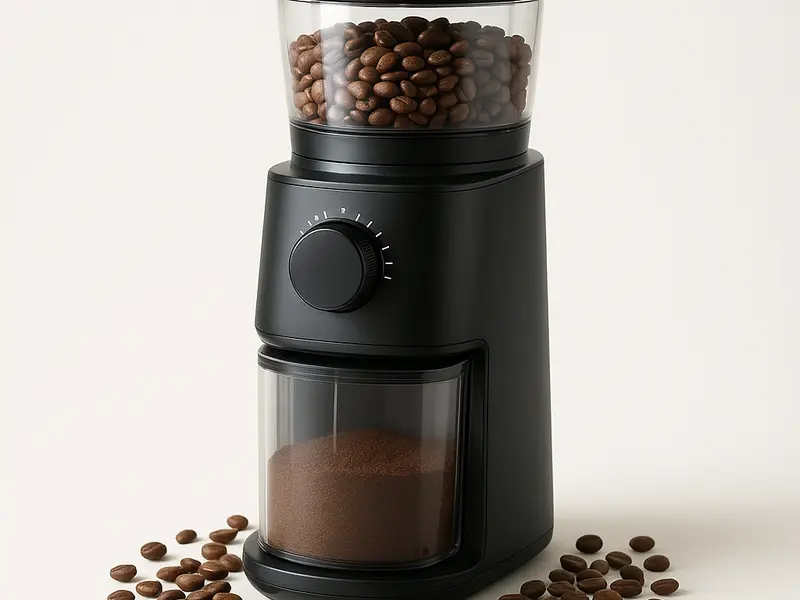 Burr Coffee Grinders on Amazon
Browse top-rated burr coffee grinder on Amazon — compare prices, features, and customer reviews.
Check price on Amazon
-
 Best Coffee Makers on Amazon
Browse top-rated coffee maker on Amazon — compare prices, features, and customer reviews.
Check price on Amazon
-
 French Presses on Amazon
Browse top-rated french press coffee maker on Amazon — compare prices, features, and customer reviews.
Check price on Amazon
We may earn a commission if you buy, at no extra cost to you.
How the two grinders actually behave in practice
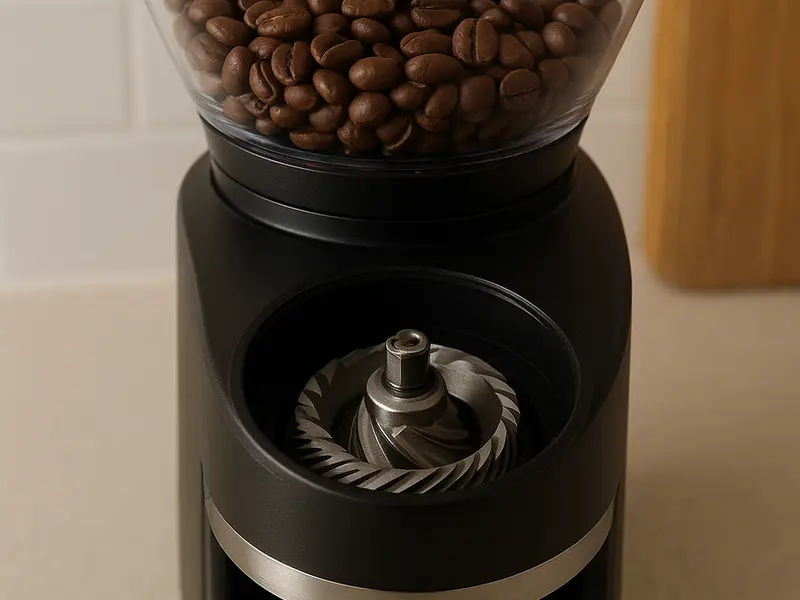
- Burr grinders crush beans between two burrs, either conical or flat, set a fixed distance apart. That gap controls particle size, so the grounds come out relatively uniform. Uniform particles extract at a similar rate, which makes flavor more predictable from batch to batch and easier to fine-tune for a specific brewer.
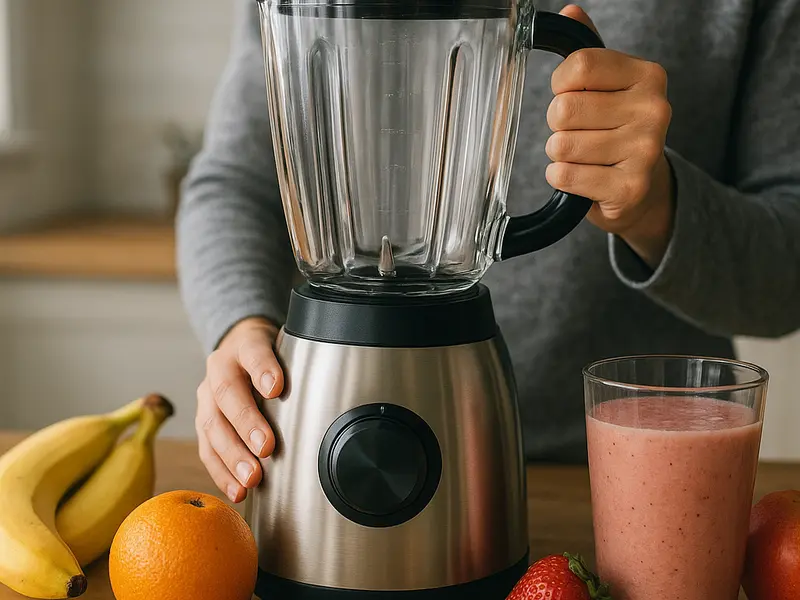
- Blade grinders use a spinning blade, much like a small blender, to chop beans. The result is a mix of powdery fines and larger chunks. Mixed sizes extract unevenly: the fines over-extract and can taste bitter, while the chunks under-extract and can taste sour or weak.
- Control is the biggest difference. Burr grinders have adjustable settings that you can return to every time. Blade grinders have no grind setting at all; you control fineness only by how long you run them, which makes results hard to repeat and makes a true espresso grind essentially impossible.
- Heat is a minor factor at home. A blade grinder that runs for a long time can warm the grounds a little, so short pulses are better. Burr grinders generate some heat too, but for single batches it is rarely something you can taste.
- Maintenance differs. Burr grinders benefit from occasional brushing and, depending on the model, removing the upper burr to clear out old grounds and oils. Blade grinders are simple to wipe out, though oily residue builds up in the bowl and can carry stale flavors into the next batch if you don't clean it.
Use-case driven recommendations
If you are aiming for espresso at home, choose a burr grinder
- Why: espresso needs a very fine, consistent grind and small, repeatable adjustments to hit a good shot time. Blade grinders cannot deliver this.
- What to look for: a grinder that is explicitly rated for espresso, with fine steps or stepless adjustment at the fine end. Many entry-level burr grinders are designed for drip and cannot grind fine enough for espresso, so check before buying. Grinding directly into a portafilter is a convenience, not a requirement.
If you mostly brew pour-over or drip coffee, a burr grinder still helps
- Why: more even grounds give a more even extraction and a clearer cup, and they make it easier to repeat a recipe you like.
- What to look for: consistent grind steps across the medium-fine to medium-coarse range, a hopper that holds enough for your usual batch, and an easy way to clean the burrs.
If your budget is tight and you value speed, a blade grinder can be a stepping stone
- Why: blade grinders are inexpensive and fast, and freshly ground coffee from a blade grinder often still tastes better than stale pre-ground coffee.
- How to get better results: grind small amounts, pulse in short bursts rather than holding the button, and gently shake the grinder between pulses so larger pieces move back into the blade. A clear lid helps you see when you are close to the size you want.
If you travel a lot or have limited kitchen space, consider a manual burr grinder
- Why: hand-crank burr grinders are compact, quiet, and give burr-quality grounds without electricity. The trade-off is effort and time, especially for larger batches or fine grinds.
- What to look for: a compact body, a comfortable crank, clear adjustment markings, and a secure lid so beans don't spill.
Practical details and common mistakes to avoid
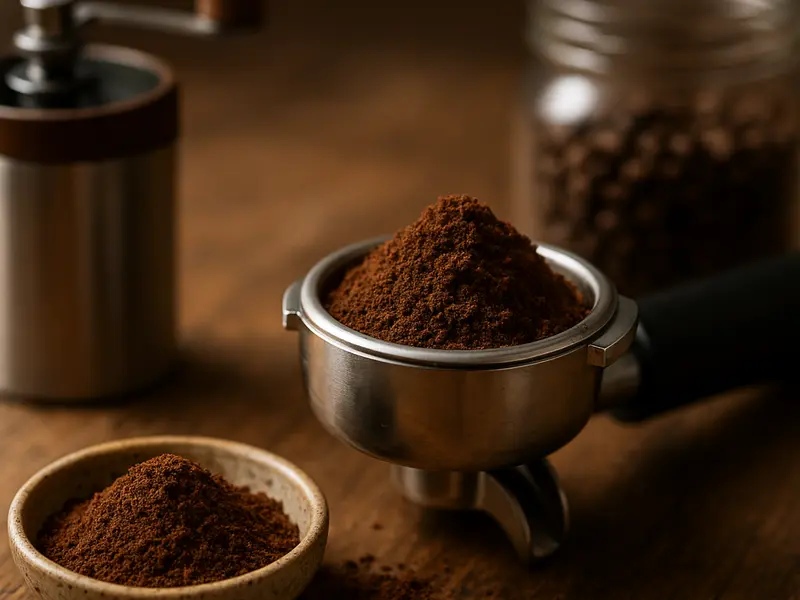
- Particle size matters more than you might expect. Inconsistent grounds can make the same beans taste bitter one day and sour the next.
- Grinding alone won't fix espresso problems. Even with a good burr grinder, you still need a suitable machine, a consistent dose, and even tamping to avoid channeling, where water rushes through weak spots in the coffee bed.
- Cleaning is not optional. Coffee oils build up and go stale. Brush out the chamber and burrs regularly, keep water away from the motor and electronics, and use only cleaning products the manufacturer approves.
- Price is not the same as durability. A cheap blade grinder can last for years, but it will always give uneven results. A modestly priced burr grinder with replaceable burrs and available spare parts often gives better long-term value.
- Measure your space. Burr grinders are usually taller than blade grinders because of the bean hopper; check the height under your cabinets before buying.
How to evaluate a grinder before you buy
- Grind range and repeatability: can it reach the grind size your brewer needs, from fine for espresso to coarse for French press or cold brew? Are the steps small enough to fine-tune?
- Burr type and material: conical burrs are common in home grinders and work well; flat burrs are common in higher-end models. Steel burrs are the norm; ceramic burrs resist corrosion and wear slowly but can chip if a stone slips into the beans.
- Adjustment mechanism: are the settings clearly marked so you can return to them? Is there a finer adjustment for espresso if you need it?
- Capacity and dosing: does the hopper hold enough beans for your usual batch? Does it have a timer or dosing feature?
- Cleaning: can you remove the upper burr without tools? Is the grounds chute easy to clear?
- Noise and speed: electric burr grinders vary widely in noise; manual grinders are quiet but slow.
- Build quality and warranty: is the body solid, are replacement burrs and parts available, and what does the warranty cover?
A concise decision checklist you can act on
- Identify your main brewing methods (espresso, pour-over, drip, or French press). If espresso or precise pour-over is in your plans, choose a burr grinder.
- Confirm the grinder covers the grind range you need, with repeatable steps.
- Check burr type and how easy it is to clean.
- Decide between manual and electric, and whether portability matters.
- Weigh space, noise tolerance, and budget against how long you expect to keep the grinder.
- Read owner reviews that discuss consistency over months of use, not just first impressions.
When not to buy a blade grinder
- If you drink espresso regularly, a blade grinder cannot give you the fine, consistent grind you need.
- If you enjoy comparing different beans and roast levels, the inconsistency of blade-ground coffee makes it harder to taste the differences.
- If you want the same cup every morning with little fuss, the lack of grind settings makes a blade grinder frustrating over time.
In short, the decision comes down to your priorities. If you want consistency, flexibility, and the best chance of good flavor across brewing methods, a burr grinder is worth it. If your priorities are minimal cost, quick setup, and occasional coffee, a blade grinder can be a stepping stone, as long as you accept that results will vary more from batch to batch.
Final takeaway
For most people who care about coffee at home, especially if espresso or pour-over is part of the plan, a burr grinder is the sensible choice. If your routine is simpler and you're just testing the waters, a blade grinder used in short pulses is an inexpensive way to start grinding fresh, and you can upgrade later.