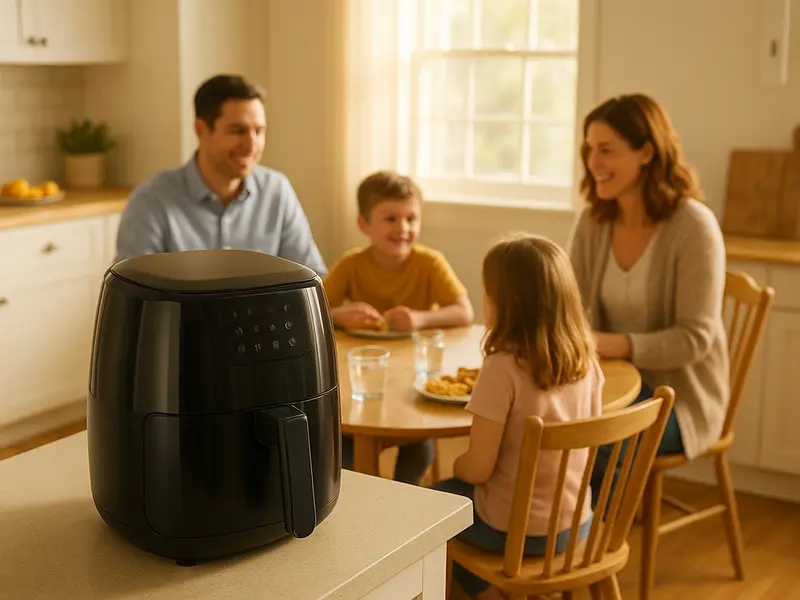
For a family of four, a 5 to 6 quart air fryer is the sweet spot. If you frequently want to roast larger items or replace some oven tasks, consider an 8 quart model or an air fryer oven with multiple racks. If counter space is extremely tight or you mostly reheat small portions, a compact 3 to 4 quart unit can work, but you’ll likely run into batching frustrations.
Understanding your needs for a four person household
The key decision is not just the number of people, but how you cook together. A typical weeknight dinner for four often includes proteins like chicken breasts or thighs, a roasted vegetable mix, and a batch of fries or reheated leftovers. In that scenario, capacity matters because overfilling stalls air flow and undermines browning. Reviewers consistently report that well sized models reduce the need to cook in multiple rounds and let you finish dinner in a predictable time window. On the flip side, a model that is too large for everyday use can sit idle, take up precious counter space, and complicate cleaning.
Size ranges you’ll see in the market
- 3 to 4 quart: This size fits a handful of small items or reheating for one or two people. It can work for a family of four if you’re comfortable cooking in two batches and you rarely roast big vegetables or a full tray of wings at once. Expect longer cook times for larger items because you’ll be splitting batches.
- 5 to 6 quart: The practical middle ground for most families. This capacity can handle a few chicken thighs or a couple of potatoes at once, plus a tray of frozen fries. It’s typically capable of cooking a complete family meal with a single batch if you plan smartly and cut larger items into pieces.
- 7 to 8 quart: A step up for households that routinely feed more than basic portions or who want to roast bigger items like a small chicken leg quarter or multiple vegetables at once. It’s also common for people who want to use the unit more like a compact oven, relying on multiple racks or bigger pans.
- 10 quart and larger: Best for very large families, frequent batch cooking for meal prep, or if you want to substitute a true countertop oven. This size can require more counter space, a sturdier power supply, and careful planning to avoid overcrowding.
Form factors and their tradeoffs
- Drawer style (basket) air fryers: Easy to use, quick to preheat, and simple to clean. They’re great for everyday weeknight meals and small to moderate batches. The main limitation is you trade some flexibility for speed since you’re working in a single basket.
- Air fryer ovens with multiple racks: They can execute more tasks with less batch cooking, such as roasting vegetables on one rack while reheating chicken on another. They tend to be larger and more expensive, but they can replace a conventional countertop oven for some cooks.
- Material and build: Look for baskets and racks that are dishwasher safe, with a nonstick coating or a stainless steel interior that resists sticking and makes cleanup easier. Nonstick coatings can wear with heavy use; some users prefer stainless steel interiors for longevity.
Use case driven recommendations
- If you are busy and want quick weeknight meals for a family of four, choose a 5 to 6 quart model in a basket form. It gives you enough capacity to cook a main protein plus sides in a single batch, reducing last minute oven time and energy use.
- If you routinely batch cook on weekends to freeze meals, or you regularly roast meat and vegetables together, consider an 8 quart model or an air fryer oven with multiple racks. The extra space and flexible airflow can accommodate larger trays and multiple items at once.
- If you live in a small apartment or have a kitchen with limited counter space, a compact 3 to 4 quart model may suffice for reheating and small side dishes, but be prepared to plan around batch timing and meal pacing.
- If you already own a traditional toaster oven but want to expand your air frying capability, an oven style model with multiple racks could serve as a direct oven replacement, but check whether you truly need the extra footprint and the extra features.
How to choose based on real world constraints
- Counter space and power supply: Measure the footprint and compare it to your available counter space. Check the wattage and ensure your kitchen outlet can handle it without frequent trips to the circuit breaker.
- What you plan to cook: If your go to meals include chicken wings, frozen fries, vegetables, and reheated leftovers, a 5 to 6 quart basket unit will usually cover most needs. If you want to roast a full chicken or prepare several dishes in one go, an 8 quart or oven style unit is worth considering.
- Cleaning and maintenance: Removeable baskets that are dishwasher safe save time. Some models have dishwasher safe racks and crisper trays; others require hand washing. Consider the effort you’re willing to invest after meals.
- Durability and warranty: Look for models with robust baskets and reliable temperature controls. Long term reviewers note that better build quality pays off in fewer service issues. Avoid models known for flimsy handles or sticky latches from unreliable assemblies.