Overview
A cast iron skillet is a kitchen workhorse that can last generations when cared for properly. Cleaning it is not about scrubbing away something wrong but about maintaining a resilient layer of seasoning that protects the pan and flavors future meals. With the right routine, you can clean quickly, prevent rust, and keep your skillet performing like new.
Start with a light everyday clean
- After you finish cooking, let the skillet cool until it is warm but not scorching hot.
- Rinse under hot water to loosen food particles, then use a stiff brush or a nonmetal scrub pad to lift residue.
- If the skillet is not heavily soiled, a quick rinse and scrub is all you need.
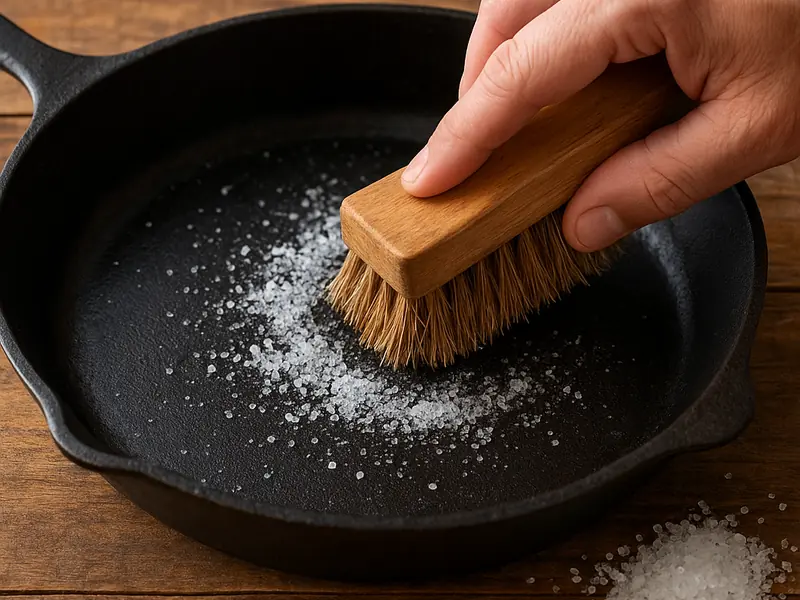
- For stubborn bits, sprinkle a small amount of coarse salt into the pan and scrub with the salt as an abrasive.
- The salt acts as a gentle scouring agent without stripping away too much of the seasoned surface.
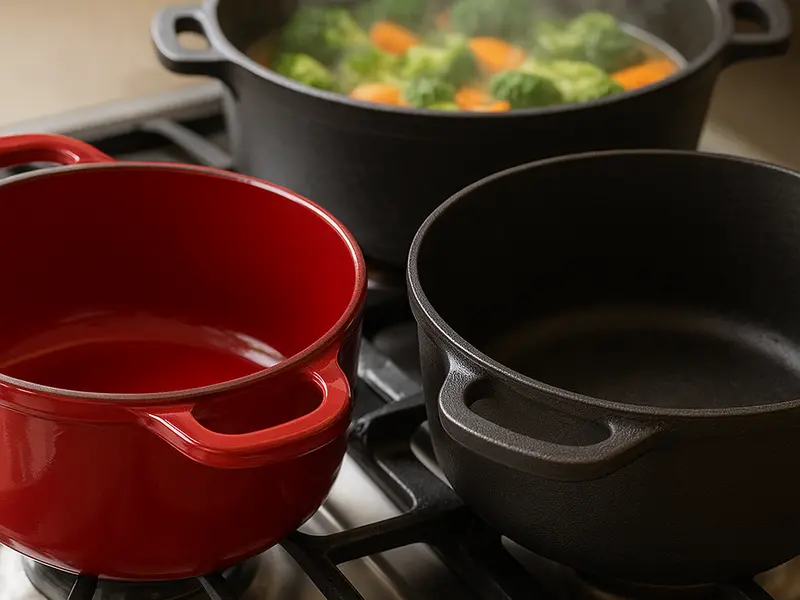
- If you own an enamel coated cast iron pan from brands like Le Creuset or Staub, you can use a mild dish soap and a nonabrasive sponge if needed, though many cooks still prefer to avoid soap with bare seasoning.
- Dry the pan thoroughly right away; you can set it on a warm burner for a few minutes or wipe with a cloth and then air dry.
- A completely dry surface is essential to prevent rust.
The important follow-up is to recoat and heat
- When the pan is dry, apply a thin film of high-smoke-point oil, such as flaxseed, canola, or vegetable oil.
- Wipe away any excess so the surface is just lightly gleaming.
- Then place the skillet on a stove over medium heat or in a warm oven for a short while to help the oil polymerize and set into the surface.
- This quick re-seasoning step restores the protective layer and keeps the pan nonstick.
- Let it cool completely before storage.
- If you’re in a hurry, a light coating and quick warmth on the stove will still help preserve the seasoning, especially after a thorough cleaning.
Stuck-on or burnt-on bits
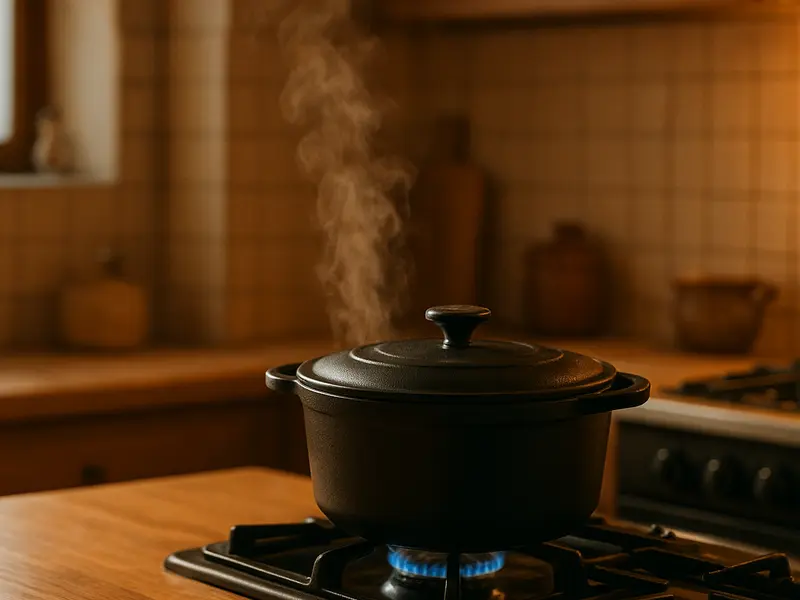
- Boiling water inside the pan is one effective method; fill with hot water, return to a simmer, and loosen the crust with a spatula.
- The steam and heat soften residue so it can be wiped away more easily.
- For very stubborn leftovers, a paste of coarse salt and water can act as an effective scrub.
- For bare cast iron, a chainmail scrubber can be a useful tool because it removes residue without aggressive scraping.
- Enamel-coated pans tolerate gentler scrubbing and soap if needed, and you can use a sponge with a little soap without worrying about stripping enamel.