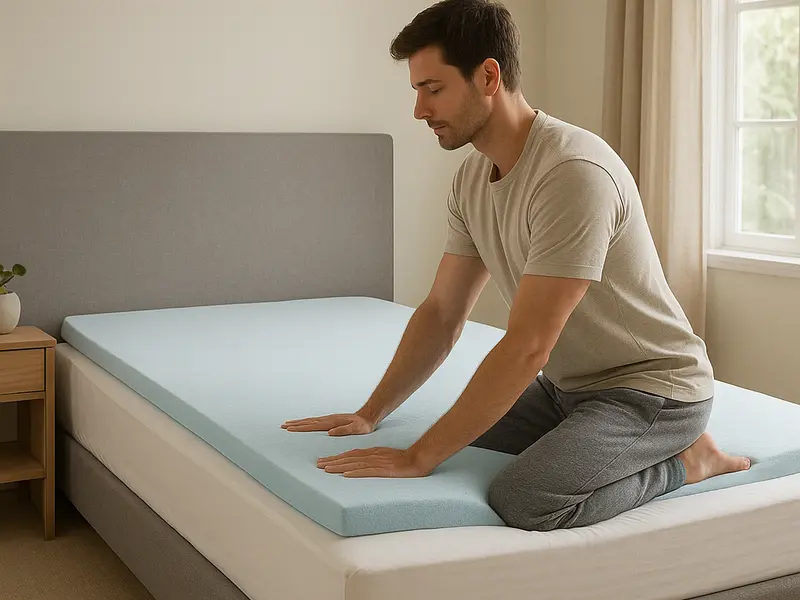
If back discomfort is the reason you're shopping, a well-chosen mattress topper can change how your bed feels, making a mattress that's too firm more cushioning, or adding a more supportive surface, without the cost of a new mattress. A topper is a comfort product, not a treatment, and it can't fix a mattress that sags. This guide explains how toppers work, which materials and firmness levels to consider for your sleep position, and the trade-offs and red flags to watch for.
Related on Amazon · Paid links
-
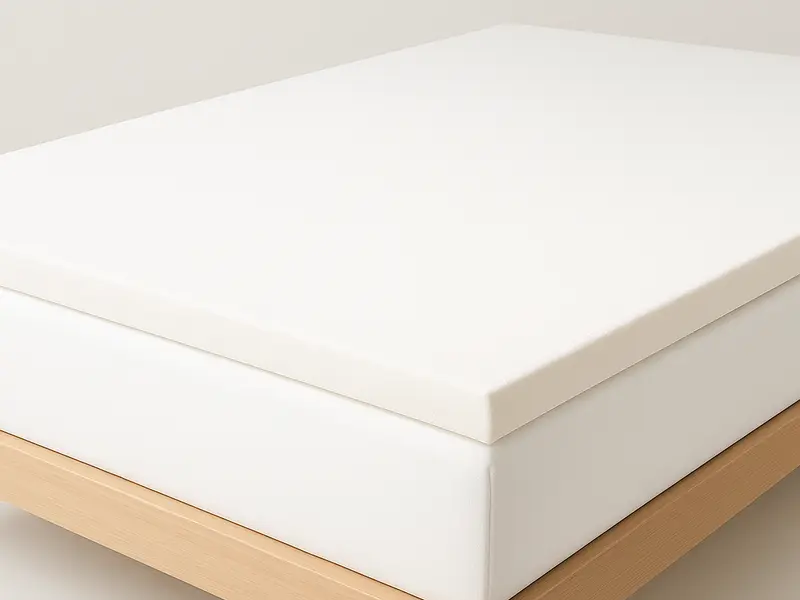 Mattress Toppers on Amazon
Browse top-rated mattress topper on Amazon — compare prices, features, and customer reviews.
Check price on Amazon
-
 Cotton Bed Sheets on Amazon
Browse top-rated cotton bed sheets on Amazon — compare prices, features, and customer reviews.
Check price on Amazon
We may earn a commission if you buy, at no extra cost to you.
Important: when to see a doctor first
Back pain has many causes, and a new topper won't address most of them. See a doctor or other qualified health professional if your back pain is severe, follows a fall or injury, or hasn't improved after a few weeks of self-care. Get medical help right away if back pain comes with numbness, tingling, or weakness in the legs, new trouble controlling your bladder or bowels, fever, or unexplained weight loss. Those can be signs of a more serious problem.
How toppers influence back comfort
A mattress topper is a layer, usually 2 to 4 inches thick, that sits on top of your existing mattress and changes how the surface feels. A softer topper lets your shoulders and hips sink in a little more; a firmer one adds a more even, supportive surface. Many people find a bed most comfortable when it keeps the spine in a relatively natural, neutral line in their usual sleep position, without pressure points at the shoulders and hips.
There's some research on firmness. A well-known randomized trial in The Lancet (Kovacs and colleagues, 2003) found that people with chronic low back pain who slept on medium-firm mattresses reported better results than those on firm mattresses. That study tested mattresses, not toppers, and individual needs vary, but it is a reason not to assume that "firmer is always better" for back pain.
Materials and feel: what to know
Memory foam toppers
Memory foam softens in response to body heat and pressure and contours closely to your shape, which many people find relieves pressure at the shoulders and hips. The trade-offs: some memory foam sleeps warm, it responds slowly when you change position, and low-density foam can soften and develop body impressions over time. Higher-density foam usually lasts longer.
Latex toppers
Latex is more buoyant and responsive than memory foam: it contours, but you feel more "on" the surface than "in" it, and it's easier to change positions. Latex is generally durable and tends to sleep cooler than traditional memory foam. It is usually more expensive and heavier. People with a latex allergy should avoid latex toppers.
Polyfoam, fiber, and other options
Conventional polyurethane foam toppers are the most affordable and come in a range of firmness levels, but they usually wear out faster than memory foam or latex. Fiberfill and down-alternative toppers add plush cushioning but little support. Some toppers combine foam with thin micro-coils for more bounce and airflow.
Temperature and covers
If you sleep hot, look for breathable covers and materials such as latex, open-cell foam, or foam with gel or graphite infusions, which are marketed to sleep cooler; results vary by product. A removable, washable cover makes the topper easier to keep clean.
Certifications and odor
New foam toppers often have a noticeable smell when unpacked. Airing the topper out for a day or two usually helps. Certifications such as CertiPUR-US for foams, or OEKO-TEX and GOLS for textiles and latex, indicate the product was tested against specific standards for content or emissions. If a strong smell persists, return or exchange the topper.
Firmness, thickness, and sleeping position
Sleeping position matters
- Back sleepers often prefer a medium to medium-firm feel that supports the lower back without letting the hips sink too far.
- Side sleepers often prefer a slightly softer feel that lets the shoulders and hips sink in enough to relieve pressure while keeping the spine reasonably straight.
- Stomach sleepers usually do better with a firmer, thinner topper, since a soft surface can let the hips sink and arch the lower back.
- Combination sleepers often do well with a medium feel and a responsive material such as latex that makes turning over easier.
Thickness and feel

- A 2- to 3-inch topper is enough to change the feel of most beds noticeably.
- A 3- to 4-inch topper gives more cushioning and is often preferred by heavier sleepers or people with a very firm mattress.
- Toppers thicker than 4 inches significantly raise the bed and can make fitted sheets and pillows fit differently. They're best for specific comfort needs.
Durability
- Higher-density foams usually hold their shape longer and resist permanent body impressions.
- Latex typically holds up well, though it is heavy to move.
- A topper won't correct a sagging mattress. If your mattress has a visible dip, the topper will sink into it too, and replacing the mattress or checking the bed base is a better fix.
Size, setup, and care considerations
Common sizes
- Toppers come in standard mattress sizes: twin, twin XL, full, queen, king, and California king. Measure your mattress, and check that your fitted sheets have deep enough pockets for the extra height.
- If you share a bed, foam and latex toppers can reduce how much you feel a partner's movement compared with a bouncy innerspring mattress.
Care and maintenance
- Choose a topper with a removable, washable cover, or use a protector over it.
- Rotate the topper periodically if the manufacturer recommends it, to even out wear.
- If you have dust mite allergies, an allergen-barrier encasement or protector over the topper can help.
Use-case driven guidance: practical picks
- If you sleep on your back and find your mattress too hard or too soft, a medium to medium-firm memory foam or latex topper, 2 to 3 inches thick, is a common starting point.
- If you sleep on your side and wake with sore shoulders or hips, a softer, contouring topper, such as memory foam or a softer latex, 3 inches or so, may relieve pressure.
- If you sleep hot, consider latex or a foam topper designed for airflow, with a breathable cover.
- If you share a bed with a restless partner, foam or latex toppers can help reduce motion transfer.
Downsides, trade-offs, and when not to buy
- Toppers are not a cure for a sagging or worn-out mattress or a damaged bed base. If the mattress is the problem, a topper is a short-term patch at best.
- If you have a latex allergy, avoid latex toppers.
- A topper that is too soft can let the hips sink too far, while one that is too firm can create new pressure points, so firmness matters.
- If your back pain is persistent, severe, or getting worse, see a doctor. A topper may make your bed more comfortable, but it isn't a substitute for medical advice or treatment.
- New toppers can have an odor at first; airing them out usually helps.
How to evaluate and compare: a practical decision checklist
- Material and feel: memory foam, latex, polyfoam, or a hybrid, based on your preferred feel, temperature, and any allergies.
- Firmness: choose based on your usual sleep position and body weight, and on whether your current mattress feels too firm or too soft.
- Thickness: 2 to 3 inches for most people; 3 to 4 inches for more cushioning.
- Density and durability: check the foam density in the specifications if it's listed.
- Temperature: breathable covers and cooler-sleeping materials help if you run hot.
- Cover and care: a removable, washable cover simplifies upkeep.
- Certifications: look for independent certifications on foam or latex content and emissions.
- Size and height: confirm the topper and your sheets will fit.
- Return policy and warranty: it can take a couple of weeks to know if a topper suits you, so a generous trial or return window is valuable.
Common mistakes to avoid
- Choosing on price alone rather than fit for your sleep position and body.
- Using a topper to hide a badly sagging mattress.
- Ignoring care instructions and cover quality.
- Assuming one firmness suits everyone; partners with different weights or sleep positions may feel the same topper very differently.
- Not allowing time to adjust; a new sleep surface can take a week or two to feel normal.
Quick-start recommendations
- Back sleepers: a medium to medium-firm topper, 2 to 3 inches, in memory foam or latex.
- Side sleepers: a softer, contouring topper around 3 inches.
- Stomach sleepers: a thinner, firmer topper.
- Hot sleepers: latex or a cooling foam with a breathable cover.
- Couples: foam or latex for less motion transfer, bought from a retailer with a return-friendly trial.
In short, there is no single perfect topper for back pain. The right choice depends on your sleep position, body weight, mattress condition, and temperature preferences, and a topper can only do so much. Use the checklist to compare options, give yourself time to adjust, and talk to a doctor if your pain persists or comes with any of the warning signs above.