If you are choosing a kitchen trash can, start with two practical questions: how much trash and recycling do you produce, and where will the can live? Answering those two points guides capacity, form factor, and lid type, so you don't end up with a can that looks right but won't fit your space or your routine.
Related on Amazon · Paid links
-
 Kitchen Trash Cans on Amazon
Browse top-rated kitchen trash can on Amazon — compare prices, features, and customer reviews.
Check price on Amazon
-
 Kitchen Organization Picks on Amazon
Browse top-rated kitchen organization on Amazon — compare prices, features, and customer reviews.
Check price on Amazon
We may earn a commission if you buy, at no extra cost to you.
Size and capacity
Capacity should reflect both your space and how quickly you fill a bag. In the US, the most common kitchen bag is the 13-gallon "tall kitchen" bag, so a can of about 13 gallons (roughly 50 liters) is the usual standard for a household kitchen. Choosing a can that fits a standard bag size makes liners cheaper and easier to find.
- Freestanding cans: most kitchen models range from about 8 to 16 gallons (30 to 60 liters) for a single compartment. Smaller cans suit one or two people; larger ones suit families who cook often.
- Dual-compartment cans: freestanding models with separate trash and recycling sections are widely available, often totaling around 15 to 20 gallons (55 to 75 liters), split between the two.
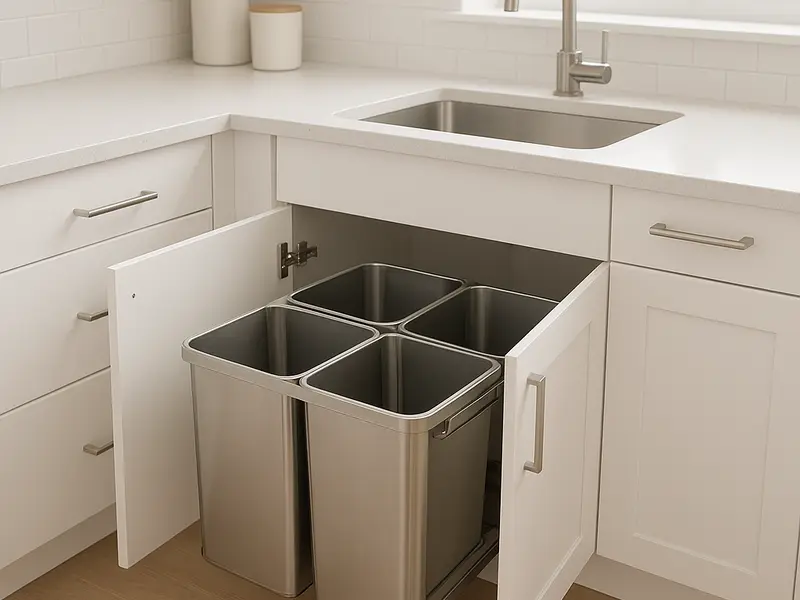
- Under-sink and in-cabinet pull-outs: these use one or two bins on a sliding frame inside a base cabinet. Bin sizes vary widely, so check whether they take standard bags or need a specific liner size.
How to estimate your needs: notice how often you take out a full 13-gallon bag now. If it's every day or two, consider a larger can or a dual-bin setup that moves recycling out of the trash. If a bag takes most of a week and starts to smell, a smaller can that you empty more often may be better.
Types and configurations
Understanding the main configurations helps you match the setup to how you cook and how you sort waste.
Single-bin versus dual-bin
- Single-bin: the simplest and often cheapest option. Best if you don't separate recycling in the kitchen or you sort it elsewhere.
- Dual-bin: two compartments in one unit, or two bins on one pull-out frame. Handy if you recycle regularly, since it keeps recyclables separate at the point you throw them away.
Lid and opening mechanism
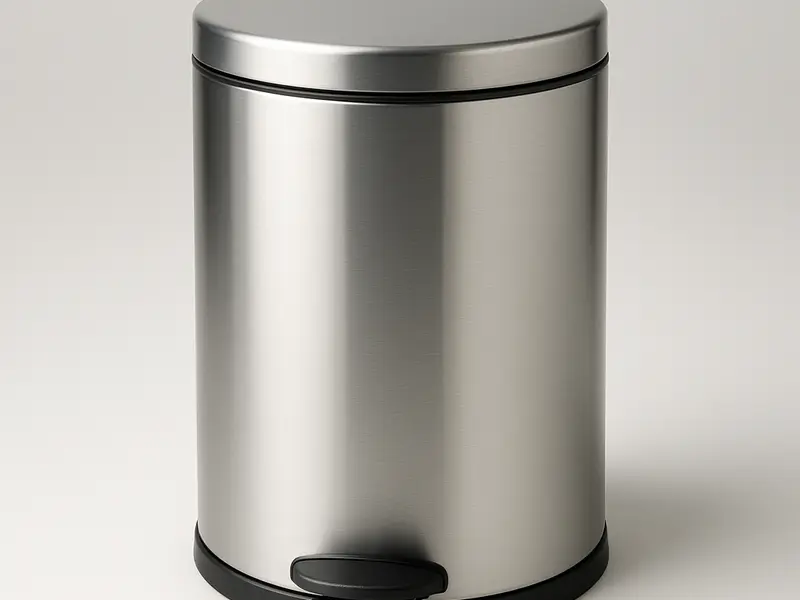
- Step pedal: hands-free and reliable. You can open it while holding a plate or a cutting board. Pedals and hinges can loosen over time, so a sturdy mechanism and a slow-close lid are worth paying for.
- Sensor lid: opens with a wave of the hand. It is convenient and touch-free, but it needs batteries or charging, and sensors can open by accident when you walk past or fail to open if the sensor is dirty.
- Manual or swing lid: simple and inexpensive, but you have to touch it, which is less pleasant after handling raw meat.
- Open-top: cheapest and easiest to toss things into, but it lets odors out and gives pets easy access.
Mounting style
- Under-sink or in-cabinet pull-out: keeps the trash out of sight and off the floor. It needs enough cabinet width, depth, and height for the frame and bins, and room around plumbing and the garbage disposal.
- Freestanding: easy to place, move, and replace. It takes floor space and can tip if it's light and gets bumped.
- Slim or corner models: designed for narrow gaps and awkward corners. They make use of tight spaces but usually hold less and can cost more for their capacity.
Liners and durability
- Bag fit: look for a can that fits standard bag sizes and holds the liner in place, with a liner ring, rim, or bag hooks.
- Finish: stainless steel is durable and easy to wipe; fingerprint-resistant finishes reduce smudges. Plastic cans are lighter and cheaper and are easy to scrub, but they can scratch and hold odors over time.
- Odor control: some models have a sealed lid or a replaceable carbon filter. These help, but emptying the can regularly and keeping it clean matter more.
Materials and finishes

- Stainless steel: durable, easy to wipe, and works in most kitchens. Fingerprint-resistant coatings help but still need regular cleaning.
- Plastic: lighter and usually less expensive, and easy to wash out. It can scratch or discolor with heavy use.
- Painted or coated metal: colored or matte finishes can hide scuffs but may need gentler cleaners.
Choose a material that matches your cleaning routine. If you wipe surfaces daily, stainless with a fingerprint-resistant finish stays looking clean. For a pantry, laundry room, or second bin, a sturdy plastic can is often more practical.
Placement and measurement you can act on
- For an in-cabinet pull-out, measure the cabinet's inside width, depth, and height, and check the manufacturer's minimum cabinet opening, allowing for hinges, the face frame, and plumbing.
- Check that a pull-out can extend fully without hitting the dishwasher door, a drawer pull, or a wall.
- For a freestanding can, make sure the lid can open fully under countertops, cabinets, or a window sill, and that the pedal is easy to reach.
- Place the can close to your main prep area so scraps go straight in.
- If you recycle a lot, a dual-bin unit next to the prep area saves trips to a separate bin.
Use-case scenarios
- If you live alone in a small apartment: a slim 8- to 10-gallon can or a single in-cabinet pull-out is usually enough; empty it often to avoid odors.
- If you cook often for a family and generate a lot of packaging: a 13- to 16-gallon can for trash plus a separate recycling bin, or a dual-compartment can, keeps up with demand.
- If you compost: a small countertop compost pail with a tight lid makes it easy to collect scraps and empty them often, while the main can stays for trash.
- If you have small children or pets: choose a sturdy can with a lid that closes firmly. Some dogs learn to step on pedals, so a locking lid, a sensor can, or an in-cabinet pull-out may be needed to keep them out.
Decision checklist you can use
- Where will it live: in a cabinet or freestanding on the floor?
- What capacity do you need, based on how often you fill a bag now?
- Do you separate recycling in the kitchen? If so, a dual-bin unit or two cans?
- Which lid type suits your routine: pedal, sensor, or manual?
- Which material fits your cleaning habits: stainless steel or plastic?
- Does it fit standard bags, or will you need special liners?
- Is it easy to clean, with a smooth interior and a removable inner bucket?
- For a pull-out, does the cabinet meet the minimum size, and can it extend fully?
- What warranty and replacement parts does the maker offer?
Common mistakes to avoid
- Choosing a can that's too small, so you're emptying it constantly.
- Choosing a can that's too big for how much trash you make, so bags sit for days and smell.
- Buying a pull-out without measuring the cabinet, plumbing, and door clearance.
- Ignoring liner fit, so bags slip, tear, or need an expensive custom size.
- Forgetting pets: a lightweight can with an easy lid is an open invitation to a curious dog.
- Skipping cleaning: cans with rough interiors or complicated seams collect grime and odors quickly.
Quick maintenance and usage tips
- Wash the inside of the can regularly with warm, soapy water and dry it thoroughly.
- Check lid hinges and pedal mechanisms every few months and tighten or replace parts early.
- Use bags that fit and are strong enough for your trash, and tie them off promptly when full.
- Keep the area around the can clean to discourage pests and odors.
In the end, the right kitchen trash can isn't about brand prestige or the most features. It's about matching the can to how much waste you produce, how you sort it, and the space you can give it. Choose a capacity that fits your routine and standard bags, a lid that suits your hands-free needs, and a durable, easy-to-clean finish, and you'll keep your kitchen tidier with less effort.