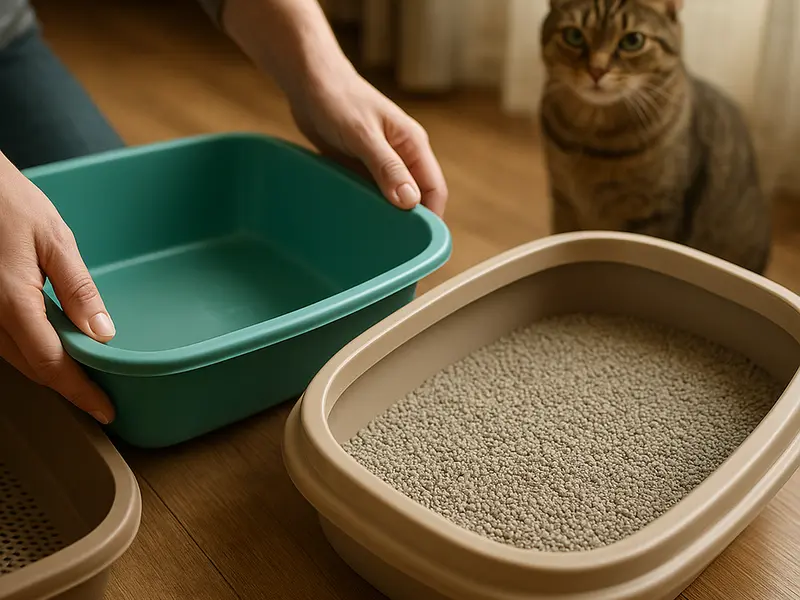
Most cats do best with a large, uncovered box at least one and a half times their body length, filled with 1 to 2 inches of unscented clumping litter. Have one box per cat plus one extra, and choose low entry sides for kittens and older cats.
Related on Amazon · Paid links
- Cat Litter Boxes on Amazon Browse top-rated cat litter box on Amazon — compare prices, features, and customer reviews. Check price on Amazon
-
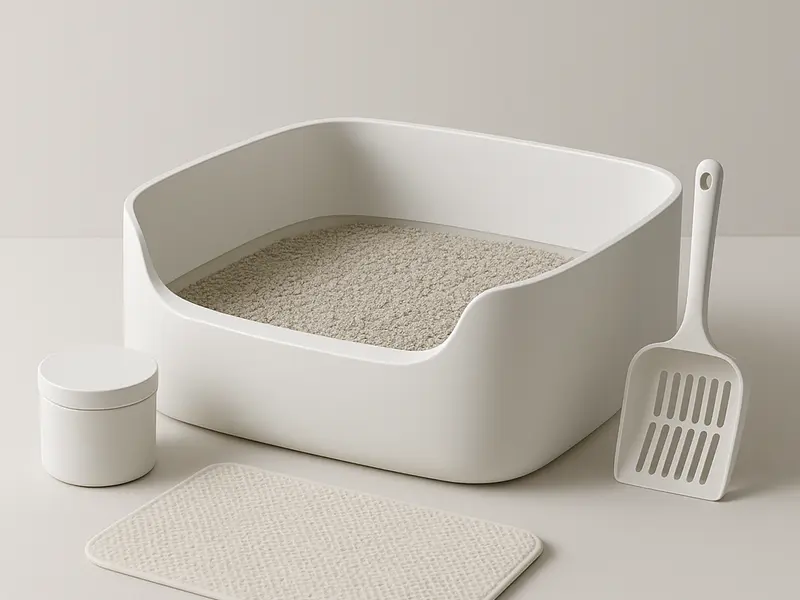 Best Cat Litter on Amazon
Browse top-rated cat litter on Amazon — compare prices, features, and customer reviews.
Check price on Amazon
We may earn a commission if you buy, at no extra cost to you.
The short answer
- Size: bigger is better. A common veterinary rule of thumb is a box at least one and a half times the length of your cat, measured from the nose to the base of the tail. Many commercial boxes are smaller than that, especially for large cats.
- Number: the ASPCA recommends one box for each cat plus one extra, so two cats need three boxes.
- Type: most cats prefer an open box. The ASPCA notes that most cats don't like lids or liners on their boxes.
- Entry height: low sides for kittens, seniors and cats with arthritis; higher sides or a high-backed box for cats that kick litter or spray over the edge.
- Litter: the ASPCA says most cats prefer clumping, unscented litter, at a depth of one to two inches rather than three to four.
Why size matters so much
A cat needs room to step in, turn around, dig, squat without touching the sides and cover its waste. A cramped box is one of the common reasons cats start going beside the box instead of in it. The ASPCA notes that the majority of cats prefer large boxes they can enter easily.
How to measure your cat
Measure from the tip of the nose to the base of the tail while your cat is standing or lying stretched out, then multiply by 1.5. That is the minimum interior length to look for. For a kitten, plan for adult size or expect to replace the box as it grows.
When store-bought boxes are too small
Large cats often outgrow standard litter boxes. A popular workaround, which the ASPCA itself suggests, is a plastic under-bed or sweater storage container. These are usually longer and roomier than boxes sold as litter boxes, and you can cut a low entry in one side if the walls are high. Smooth the cut edge so it cannot scratch.
Covered or uncovered?
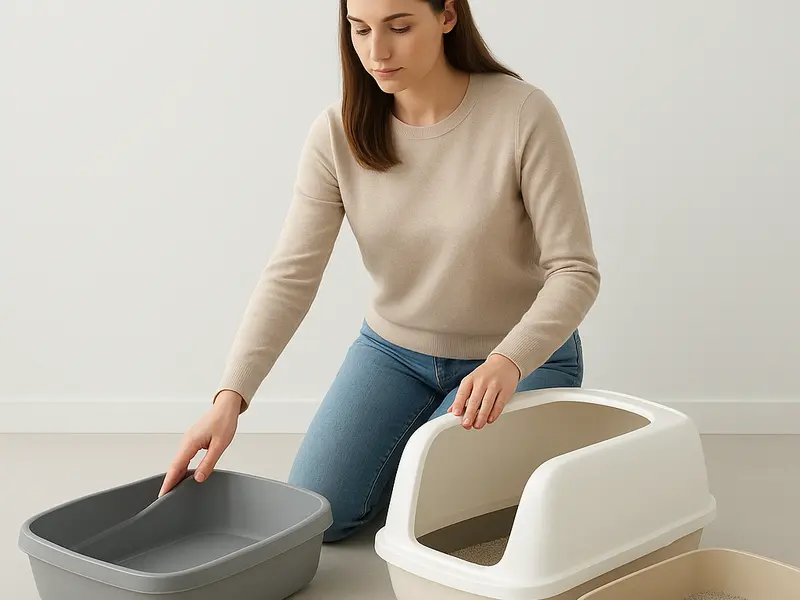
Covered boxes are popular with people because they hide the view and can reduce litter scatter. Cats are less enthusiastic. The concerns with hoods are practical:
- Odor stays inside. A hood can trap smell where your cat's nose is, which may make the box less appealing even if the room smells better.
- Less room. A hood often reduces the usable space, especially for large cats.
- One way in and out. Cats generally like to see who is coming and have an escape route. In a multi-cat home, a cat can be cornered in a hooded box.
- Out of sight, out of mind. A hood makes it easier for people to forget to scoop.
Individual cats vary, and some use covered boxes without any problem. If your cat already uses a covered box happily, there is no need to change it. If you are buying new or your cat is having problems, start with an open box. If you want to try a cover, offer covered and uncovered boxes side by side and let your cat choose.
Other box types
High-sided boxes
Useful for cats that kick litter or that stand while urinating and spray over the edge. Look for a model with a low entry on one side so it is still easy to step into.
Top-entry boxes
These reduce litter tracking, and some people like them in homes with dogs that raid the box. They are a poor choice for kittens, seniors, overweight cats or any cat with joint problems, because the cat has to jump in and climb out.
Sifting boxes
These use stacked trays with slotted bottoms to separate clean litter from clumps. They can save scooping time, but they are designed for specific litter types and the slots can clog with some litters. Check the litter recommendations before buying.
Automatic, self-cleaning boxes
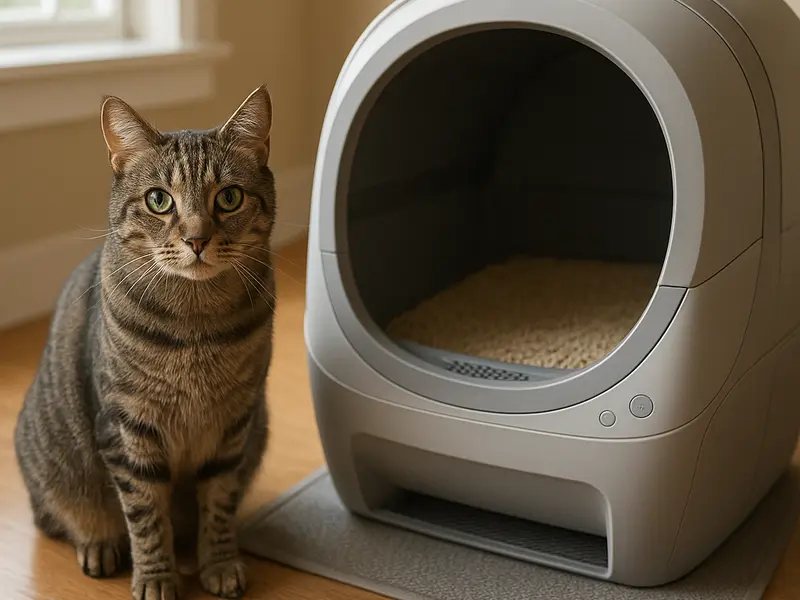
These rake, rotate or sift waste away on their own. They suit some households but come with minimum cat weights, specific litter requirements and noise and reliability trade-offs. They are covered in detail in our separate guide on whether automatic litter boxes are worth it.
Disposable boxes
Handy for travel, fostering or temporary setups, but not designed for long-term daily use.
Material and durability
Most litter boxes are plastic. Over time, plastic gets scratched by digging, and scratches hold odor and bacteria, so plan to replace a plastic box when it is worn and smells even after washing. Stainless steel boxes do not scratch the same way and are easy to clean, but they cost more and come in fewer sizes. Whatever you choose, the ASPCA advises against cleaning with ammonia, deodorants or strong scents.
Litter, depth and liners
- Clumping, unscented litter is what most cats prefer, according to the ASPCA, and it makes daily scooping easy.
- One to two inches deep is usually enough. Deeper is not better for many cats.
- Skip the liners. Many cats dislike them, and claws can catch and tear them.
- Change litter types slowly. Cats often prefer the type of litter they used as kittens, so if you switch, mix the new litter into the old gradually, or offer a second box with the new litter.
Where to put the boxes
Placement can matter as much as the box itself. The ASPCA recommends a quiet location that is not "cornered", where the cat can see others approaching and has more than one escape route. Keep boxes away from noisy appliances such as washers and dryers, and away from food and water bowls.
- Multi-level homes: put a box on each floor.
- Multi-cat homes: spread boxes around the house rather than lining them up in one room, so one cat cannot block access to all of them.
- Senior cats: keep a box close to where they sleep, with no stairs between.
Cleaning routine
- Scoop at least once a day. The ASPCA gives this as a minimum.
- Empty, wash and refill at least once a week using a mild, unscented soap or detergent.
- Wear gloves and wash your hands afterwards. The CDC also recommends changing litter daily, because the toxoplasma parasite does not become infectious until one to five days after a cat sheds it. If you are pregnant or have a weakened immune system, ask your doctor about whether someone else should handle the litter box.
Signs your cat does not like the box
- Going on the floor next to the box, on rugs or on bedding.
- Perching on the rim instead of stepping in.
- Rushing out without covering, or not digging at all.
- Urinating just over the edge.
Before blaming the box, rule out a medical cause. The ASPCA lists urinary tract infections, feline interstitial cystitis and kidney or bladder stones among the medical reasons cats stop using the box. A cat that strains in the litter box and produces little or no urine needs to see a vet urgently; this is an emergency, especially in male cats.
A practical decision checklist
- Measure your cat from nose to base of tail and choose a box at least one and a half times that length.
- Plan one box per cat plus one, spread around the home, with at least one box on each floor.
- Start with an open box; only add a hood if your cat accepts it.
- Choose low entry sides for kittens, seniors and cats with arthritis; high sides for kickers and sprayers.
- Use unscented clumping litter about one to two inches deep, without a liner.
- Put boxes in quiet spots with escape routes, away from food and loud appliances.
- Scoop daily, wash weekly with unscented soap, and replace worn plastic boxes.
- See a vet if your cat starts avoiding the box, and urgently if it strains without passing urine.