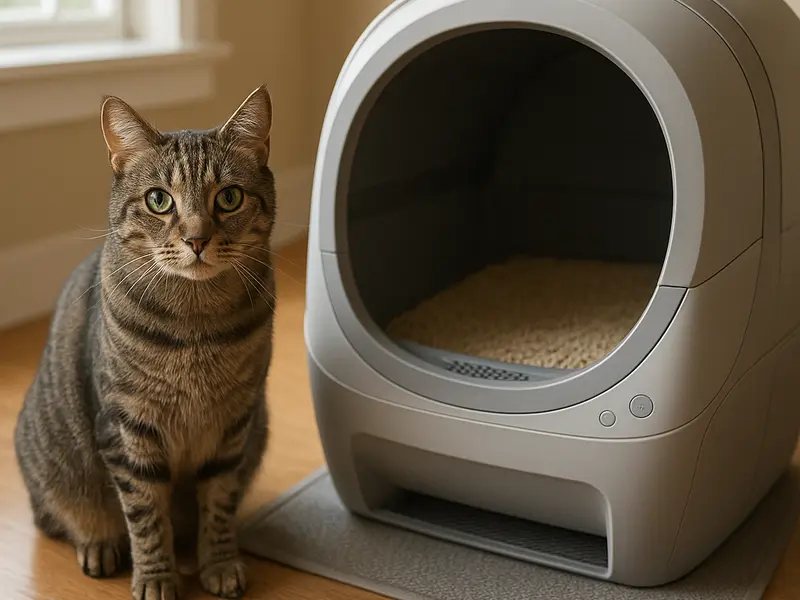
An automatic litter box can be worth it if you are away for long hours, have trouble scooping, or want fresher litter between cleanings. It is usually not worth it for kittens, nervous cats or cats with health problems you need to watch closely.
Related on Amazon · Paid links
- Self-Cleaning Litter Boxes on Amazon Browse top-rated self cleaning litter box on Amazon — compare prices, features, and customer reviews. Check price on Amazon
- Cat Litter Boxes on Amazon Browse top-rated cat litter box on Amazon — compare prices, features, and customer reviews. Check price on Amazon
We may earn a commission if you buy, at no extra cost to you.
The short answer
- Worth considering if: you work long days, travel often for short periods with a sitter checking in, find bending and scooping difficult, or want waste removed soon after each use.
- Probably not worth it if: your cat is a kitten or very small, is easily startled, is elderly with mobility problems, or has a urinary or digestive condition where you need to see every clump.
- It does not remove the work entirely. You still empty the waste drawer, top up litter, and deep-clean the unit on the manufacturer's schedule.
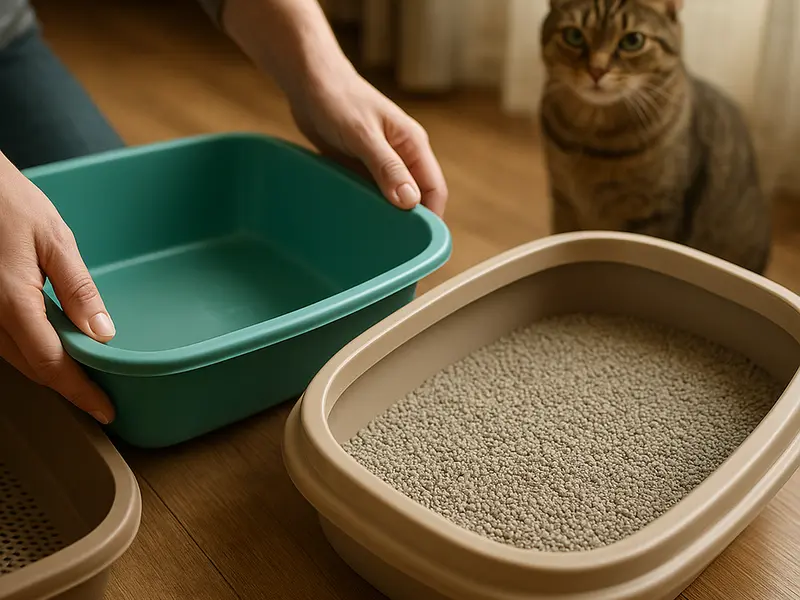
- It does not replace the extra boxes. General guidance from the ASPCA is one litter box per cat plus one. An automatic box can be one of those boxes, but in a multi-cat home it is a poor reason to drop to a single box.
How automatic litter boxes work
Most self-cleaning boxes wait until the cat has left, then separate waste from clean litter. They detect the cat with a weight sensor, an infrared sensor or both, then start a cleaning cycle after a delay so the cat is not disturbed. The main designs are:
- Rake systems. A rake travels through the litter and pushes clumps into a covered compartment.
- Rotating globes or drums. The chamber turns to sift clumps through a screen into a drawer underneath.
- Sifting trays or belts. Litter is sifted or moved along so waste falls into a separate bin.
- Self-washing units. A few designs connect to a water supply and drain, washing and drying reusable granules. These need plumbing and a suitable location.
Most designs require clumping litter, and some only work with a specific litter type, crystal litter or the maker's own refills or pads. That ongoing cost and dependency is easy to overlook.
The real advantages
Cleaner litter for the cat
In a box scooped once a day, the cat may visit a box with waste in it several times. An automatic box can clear waste after every visit, which some cats appreciate, particularly fastidious cats in multi-cat homes.
Less daily handling
For people who find bending, kneeling or scooping difficult, removing the daily scoop is a genuine benefit. Waste is held in a sealed drawer or bag that you empty every few days, depending on the number of cats and drawer size.
Possibly less odor
Because clumps are removed soon after use and held in a closed compartment, many owners report less smell in the room. Results depend on how often the drawer is emptied and on the litter used.
Usage data on some models
Some app-connected models log visits and, on models with a scale, the cat's weight. That can help you notice a change, such as a cat visiting far more often than usual, which can be an early sign of a urinary problem. Treat it as a prompt to look closer, not as a diagnosis.
The honest downsides
You lose the daily health check
Scooping by hand shows you the size and number of urine clumps and the state of the stool every day. Changes, such as larger or more frequent clumps, diarrhea, blood or straining, are often the first sign of illness. With a drawer that collects several days of waste, those signals are easier to miss. A cat that strains in the box and passes little or no urine needs a vet urgently, especially a male cat.
Not every cat accepts it
Movement and motor noise can frighten some cats, and a bad first experience can put a cat off the box. That can lead to accidents elsewhere in the house.
Size, weight and entry limits
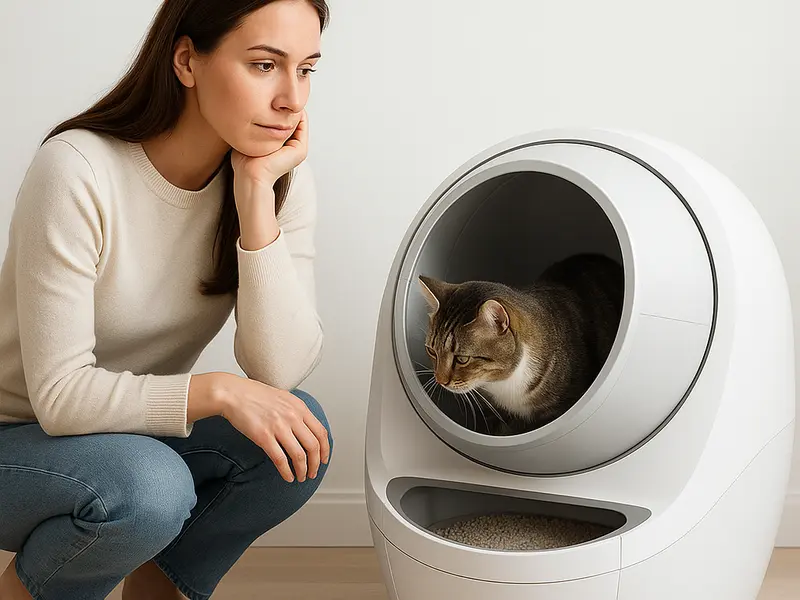
Manufacturers set a minimum cat weight for the automatic cycle, because the sensors must detect that a cat is inside. Whisker, the maker of the Litter-Robot, lists minimums of 3 pounds or more depending on the model. Kittens below the limit should not use the box in automatic mode. Some designs also have a high step-in or a small interior opening that is awkward for large, elderly or arthritic cats.
Mechanical failure and maintenance
Motors, sensors and moving parts can jam or fail, and a unit that stops working leaves the cat without a clean box until you notice. Check how the unit behaves during a power cut, whether parts are sold separately, and how long the warranty lasts. You also still need to deep-clean the unit on the manufacturer's schedule.
Cost over time
Beyond the purchase price, factor in proprietary litter, liners, filters or waste bags if the model requires them, plus replacement parts. A model that only works with its own refills locks you into that cost.
Introducing an automatic box
Manufacturer guidance on introducing a new automatic box is consistent: go slowly. Whisker's acclimation advice for the Litter-Robot is a good template:
- Start with the unit turned off, so it behaves like an ordinary box at first.
- Keep the old box nearby and do not throw it away yet.
- Add a scoop of used litter from the old box to give a familiar scent.
- Use treats around the new box so your cat links it with something good.
- Switch on the automatic cycle only once your cat uses it regularly.
Whisker says most cats adjust within several days to a week, while some need several weeks or more. Keep the old box available until your cat is reliably using the new one with the cleaning cycle running.
Who it suits, and who it does not
Good candidates
- Healthy, confident adult cats above the manufacturer's minimum weight.
- Households where people are out for long stretches each day.
- People with back, joint or mobility problems that make scooping hard.
- Multi-cat homes that still keep additional regular boxes.
Poor candidates
- Kittens and very small cats below the weight limit.
- Shy, anxious or noise-sensitive cats.
- Senior or arthritic cats if the entry is high.
- Cats with chronic kidney, urinary or digestive conditions, unless your vet agrees and you can still monitor output.
- Homes where the unit would sit somewhere without reliable power or space for the drawer to open.
A note on toxoplasmosis
The CDC advises changing cat litter daily, because the toxoplasma parasite does not become infectious until one to five days after a cat sheds it, and recommends wearing gloves and washing your hands with soap and water after handling litter. An automatic box removes waste quickly, but the waste drawer still holds several days' worth. Wear gloves when emptying it. If you are pregnant or have a weakened immune system, ask your doctor whether someone else should handle the litter.
A practical decision checklist
- Confirm your cat is above the manufacturer's minimum weight for automatic mode.
- Measure your cat and compare it with the interior size and entry height, not just the outside dimensions.
- Check which litter the unit requires and whether it needs proprietary refills, bags or filters.
- Look for adjustable cycle delays and safety sensors that stop the cycle if a cat enters.
- Check noise, warranty length, replacement parts and what happens in a power cut.
- Read the return policy in case your cat refuses to use it.
- Plan to introduce it slowly with the cycle switched off and the old box nearby.
- Keep one box per cat plus one, and keep watching for changes in your cat's litter habits.