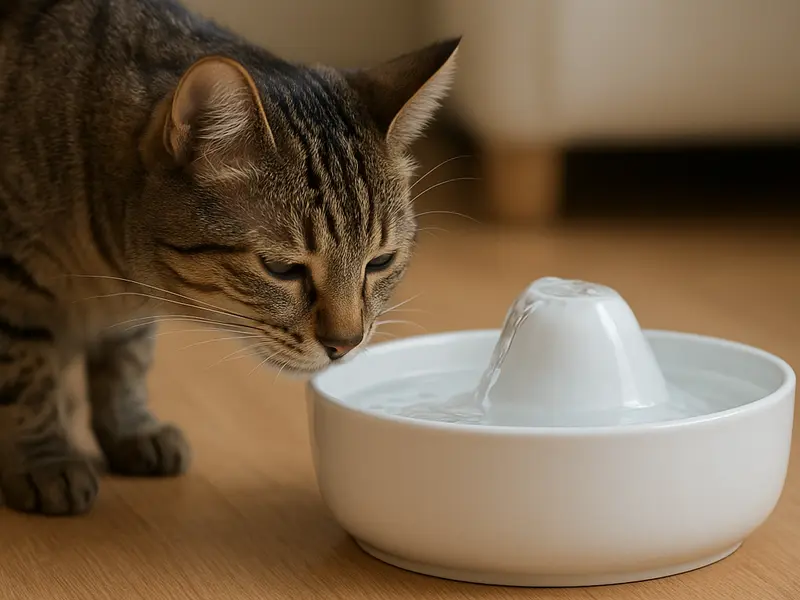
A fountain is worth trying if your cat ignores still water, drinks from taps, or your vet wants it to drink more. A clean, wide bowl changed daily works fine for many cats. What matters most is fresh water your cat likes, in several places, cleaned often.
Related on Amazon · Paid links
- Cat Water Fountains on Amazon Browse top-rated cat water fountain on Amazon — compare prices, features, and customer reviews. Check price on Amazon
We may earn a commission if you buy, at no extra cost to you.
The short answer
- A fountain can help cats that seem to prefer moving water, cats that drink from the faucet, and cats whose vet has asked you to encourage drinking, for example because of kidney or urinary problems.
- A bowl is enough for many healthy cats, as long as it is wide, shallow enough to drink from comfortably, kept full and washed regularly.
- Neither works if it is dirty. A fountain that is not cleaned and refiltered on schedule can be worse than a fresh bowl.
- Evidence is limited. Research on whether fountains make cats drink more is limited and the results are mixed; individual cats differ. Try one and watch your own cat.
- Wet food matters too. Food is a major source of water for cats. Feeding some or all wet food is one of the most reliable ways to raise a cat's total water intake. Ask your vet before changing your cat's diet.
Why cats and water are a special case
Domestic cats descend from desert-dwelling wildcats that got much of their water from prey. Cats tend to have a relatively weak drive to drink compared with dogs, and cats eating only dry food rely on drinking to make up the difference. For most healthy cats this is fine, but for cats with kidney disease or a history of urinary problems, vets often recommend increasing water intake.
That is why water setup gets so much attention: small changes that make water more appealing can matter for some cats.
The case for a fountain
Some cats prefer moving water
Many owners report cats that wait at the tap or bat at running water. A fountain offers that on demand. For these cats, a fountain can make water more appealing than a still bowl.
Fresher-tasting water
Circulating water through a filter can reduce debris such as hair and food bits, and some cats seem to like the taste of filtered water better. The filter does not replace cleaning, though.
Encouraging drinking for health reasons
If your vet has asked you to increase your cat's water intake, a fountain is one of several tools worth trying alongside wet food and extra water stations.
The downsides of a fountain
Cleaning is not optional
Fountains have pumps, tubes, filters and corners where a slimy biofilm builds up. Manufacturers typically say to wash the fountain regularly, clean the pump periodically and replace the filter on a schedule. If you will not keep up with that, a bowl is the better choice.
Pumps and power
The pump needs power and can fail or run noisily. A fountain that runs dry can damage its pump; check whether your model has a low-water warning or automatic shut-off. Cords need to be protected from cats that chew.
Not every cat likes it
Some cats are wary of the hum or the movement. Introduce a fountain alongside the old bowl rather than replacing it, and keep the bowl until you know your cat is drinking from the fountain.
Ongoing costs
Filters and replacement pumps add to the running cost, and some fountains only accept the maker's own filters.
The case for a bowl
Simple and reliable
A bowl has no pump to fail, needs no power, and is easy to wash daily or put in the dishwasher.
Easy to offer in several places
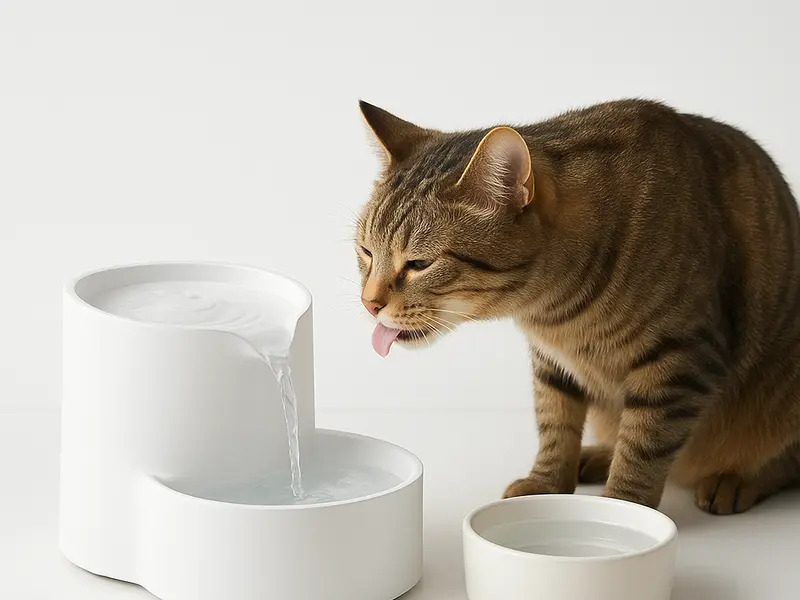
You can place several bowls around the home, which helps multi-cat households and senior cats that do not want to walk far.
Shape matters
Many cats seem to prefer a wide bowl that is filled to the brim, so they can drink without pushing their face deep into it or touching the sides with their whiskers. Whether "whisker fatigue" is a real problem is debated, but a wide bowl does no harm and some cats clearly prefer it.
Materials: fountain or bowl
- Stainless steel: durable, easy to clean, dishwasher-safe and does not scratch easily. A common recommendation.
- Ceramic: heavy and stable, easy to clean if glazed. Check for chips or cracks and use food-safe glazes.
- Glass: easy to see when it is dirty, but can break.
- Plastic: light and cheap, but scratches over time, which can make it harder to keep clean. Replace scratched plastic bowls.
How to set up water stations cats will use
- Keep water away from food. Many cats prefer water placed separately from their food, and away from the litter box.
- Offer more than one water source, in different rooms and on each floor of the house.
- Choose quiet spots where your cat can drink without being ambushed by another pet.
- Change water daily and wash bowls frequently, as you would your own cup.
- Watch the water level so you notice if your cat suddenly drinks much more or less.
When a change in drinking needs a vet
A sudden increase in thirst or urination can be an early sign of conditions such as kidney disease, diabetes or an overactive thyroid. A cat that stops drinking or eating is also a concern. Book a vet visit if you notice:
- Noticeably more drinking, or bigger or more frequent urine clumps in the litter box.
- Drinking less than usual, especially with less appetite.
- Straining in the litter box or passing little urine. In a male cat, straining with little or no urine is an emergency.
- Weight loss, vomiting or lethargy.
Which should you choose
Your healthy cat drinks happily from a bowl
Keep the bowl. Make sure it is wide, clean and refilled daily, and consider adding a second water station.
Your cat drinks from the tap or ignores still water
A fountain is worth trying. Introduce it next to the current bowl.
Your vet wants your cat to drink more
Combine strategies: discuss wet food with your vet, add more water stations, and try a fountain.
You know you will not clean a fountain weekly
Stick with bowls. Several clean bowls are better than one neglected fountain.
You have several cats
Offer several water sources in different places. A fountain can be one of them.
A practical decision checklist
- Watch how your cat drinks now: from bowls, taps, glasses or not much at all.
- Choose a wide, shallow stainless steel, ceramic or glass bowl and change the water daily.
- If you try a fountain, pick one that is easy to take apart and clean, with a stainless steel or ceramic basin if possible.
- Check filter and pump replacement costs and whether the fountain has low-water protection.
- Introduce a fountain next to the old bowl and keep both until your cat uses the fountain.
- Place water away from food and the litter box, in more than one room.
- Ask your vet about wet food if your cat needs more water.
- See your vet promptly if your cat's drinking or urination changes noticeably.