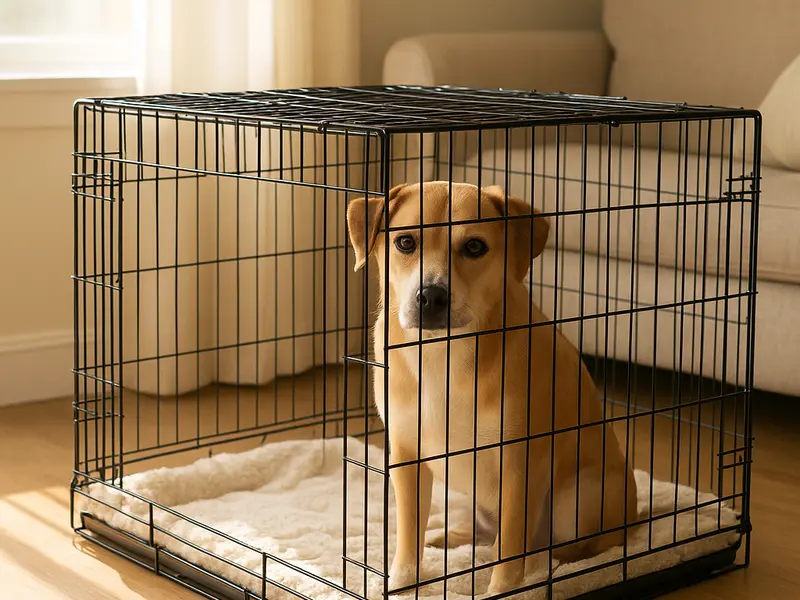
Choosing the right crate size comes down to three practical factors: your dog's current size, how big they will be as an adult, and how you plan to use the crate. A crate should let your dog stand up without ducking, turn around easily, and lie down stretched out. Much more space than that is not a kindness for a puppy in house training, because extra room can become a bathroom corner.
Related on Amazon · Paid links
-
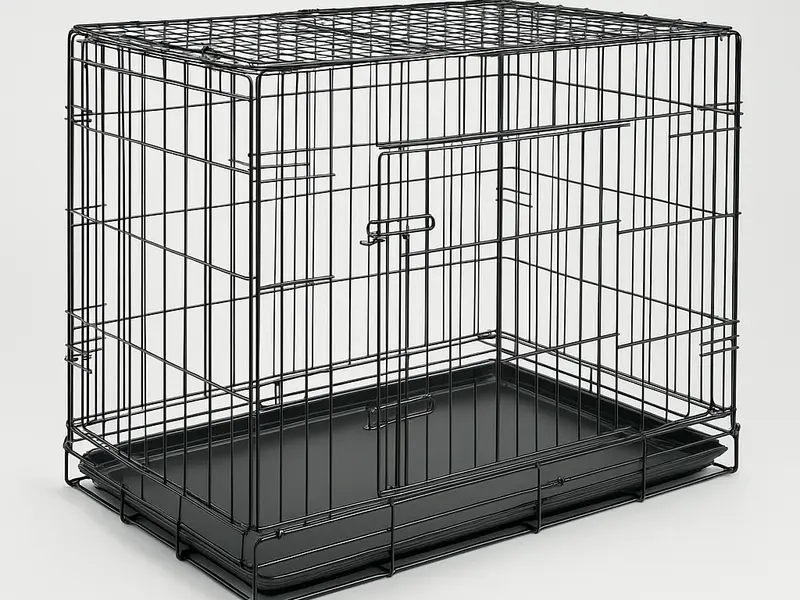 Dog Crates with Dividers on Amazon
Browse top-rated dog crate with divider on Amazon — compare prices, features, and customer reviews.
Check price on Amazon
-
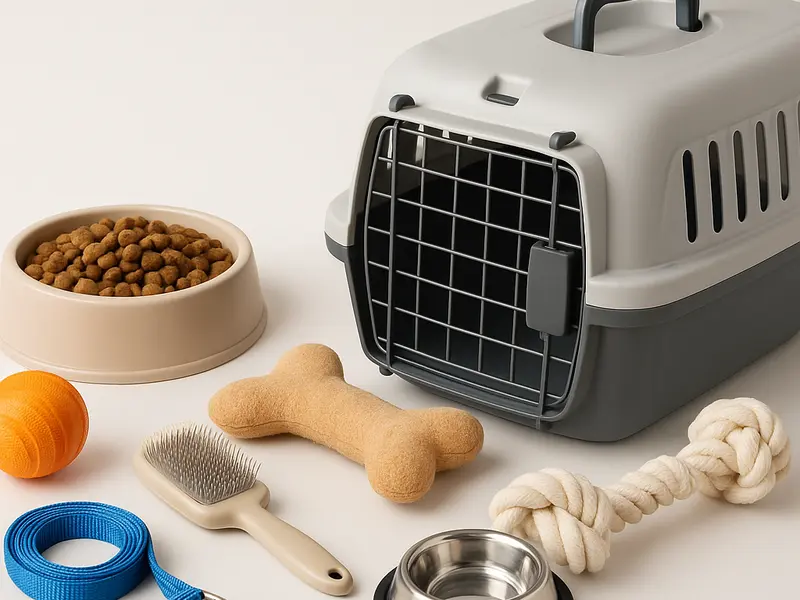 Pet Supplies on Amazon
Browse top-rated pet supplies on Amazon — compare prices, features, and customer reviews.
Check price on Amazon
-
 Top-Rated Dog Food on Amazon
Browse top-rated dog food on Amazon — compare prices, features, and customer reviews.
Check price on Amazon
We may earn a commission if you buy, at no extra cost to you.
How to measure your dog for a crate
Measure your dog while they are standing in a natural position:
- Length: from the tip of the nose to the base of the tail. Measuring to the tip of the tail gives you a slightly roomier result, which some owners prefer for long-tailed dogs.
- Height: from the floor to the top of the head (or the tips of upright ears, if they are taller). Many owners also check the height with the dog sitting, since some dogs sit taller than they stand.
Then add a few inches to each measurement. The American Kennel Club (AKC) suggests adding about 3 to 4 inches; for very small dogs, 2 inches may be enough. Compare those numbers with the interior dimensions the manufacturer lists, not just the size label on the box, since a "36-inch crate" usually refers to the outside length.
If you have a growing puppy, plan for the adult size. The AKC recommends a crate that fits the typical adult size of your dog's breed, with a divider panel that lets you shrink the usable space while the puppy is small. Ask your breeder or veterinarian what adult size to expect, especially for mixed-breed puppies.
Typical crate sizes as a starting point
Crates are usually sold by length. These ranges are rough starting points only; your measurements and the dog's shape matter more than weight or breed:
- Small dogs: about 24 inches long.
- Small to medium dogs: about 30 inches long.
- Medium dogs: about 36 inches long.
- Large dogs: about 42 inches long.
- Very large dogs: about 48 inches long.
- Giant breeds: about 54 inches long, and sometimes larger.
A long, low dog and a tall, leggy dog of the same weight may need different crates, so always confirm with your own measurements.
Crate styles and their trade-offs
No single style is best. The right choice depends on your home, travel plans and your dog's temperament.
Wire crates
- Pros: good airflow and visibility, usually fold flat for storage, and many come with a divider for growing puppies.
- Cons: can feel exposed to shy dogs (a crate cover helps), and some determined dogs can bend panels or work latches.
Plastic crates
- Pros: more enclosed and den-like, easy to clean, and many plastic crates are designed for travel. Some models meet airline requirements, but each airline sets its own rules, so check before you buy.
- Cons: less ventilation and visibility than wire, and bulkier to store.
Soft-sided crates
- Pros: light, portable and quick to set up, which makes them handy for calm dogs on trips.
- Cons: not suitable for chewers or dogs that try to escape, and harder to clean after accidents.

Heavy-duty crates
- Pros: built for dogs that have escaped or damaged standard crates.
- Cons: heavier and more expensive. A dog that is frantic to escape may be dealing with anxiety, so talk to your veterinarian or a qualified trainer rather than relying on a stronger crate alone.
Use cases and decision criteria
- Crate training a puppy: Buy a crate sized for the expected adult size and use a divider so the puppy has just enough room to stand, turn and lie down. Move the divider as the puppy grows. A snug space helps because most dogs avoid soiling where they sleep.
- Car travel: Choose a sturdy crate that fits your vehicle and secure it so it cannot slide or tip. If safety in a collision matters to you, look for crates that have been independently crash-tested rather than relying on marketing claims.
- Anxious dogs: Some dogs relax in a covered, den-like crate; others panic when confined. If your dog shows distress such as frantic chewing at the door, drooling, or injuring themselves, stop and talk to your veterinarian or a qualified behavior professional.
- Dogs that need to be kept out of trouble while you are busy: A correctly sized crate with a divider, washable bedding and a safe chew can help, as long as crate time is introduced gradually and kept to reasonable lengths.
- Senior dogs or dogs with mobility issues: Make sure the door opening is easy to step through and there is room to lie flat and change position. Thick, supportive bedding helps aging joints.
Practical details you can act on
Features to look for
- Secure latches that are easy for you to work but hard for your dog to open.
- A removable floor tray for quick cleanup after accidents.
- Good ventilation on several sides, especially in warm weather.
- No sharp edges or gaps where paws or jaws could get caught.
Common mistakes to avoid
- Choosing a crate that is far too large for a puppy in house training.
- Buying a puppy-sized crate and having to replace it, when a larger crate with a divider would grow with the dog.
- Leaving a collar or tags on in a wire crate. Tags and collars can catch on wire bars, so many veterinarians advise removing collars when a dog is crated unsupervised. A microchip keeps your dog identifiable without the collar.
- Using the crate as punishment, which makes the crate a place to avoid.
- Leaving a puppy crated longer than they can comfortably hold their bladder.
How to introduce the crate
- Start with the door open and place treats, a toy or a comfortable bed inside.
- Let your dog explore on their own and reward them for going in.
- Feed meals in or near the crate.
- Close the door for short periods while you are nearby, then gradually build up time.
- Keep the experience calm and positive, and let your dog out when they are calm rather than while they are crying or barking.
When not to rely on a crate
Crates are a tool, not a cure-all. If your dog reacts with extreme fear, panic or self-injury when confined, stop crating and consult your veterinarian or a qualified behavior professional. Dogs with separation anxiety often need a behavior plan, and sometimes a safe dog-proofed room or exercise pen works better than a crate. A crate should support safety and training, not add stress.
Final decision checklist
- Your dog can stand without ducking, turn around and lie down stretched out.
- You measured length and height and added a few inches to each.
- You checked the interior dimensions, not just the label size.
- You have a divider if you are buying ahead for a growing puppy.
- The style suits your use: wire for airflow, plastic for a den-like feel and travel, soft-sided only for calm dogs.
- Latches are secure, edges are smooth and the tray is easy to clean.
- You will remove collars and tags in the crate and introduce it gradually.
By matching the crate to your dog's measurements and your real-world needs, you get a crate that works as a safe resting spot, a training aid and, if needed, a travel carrier.