
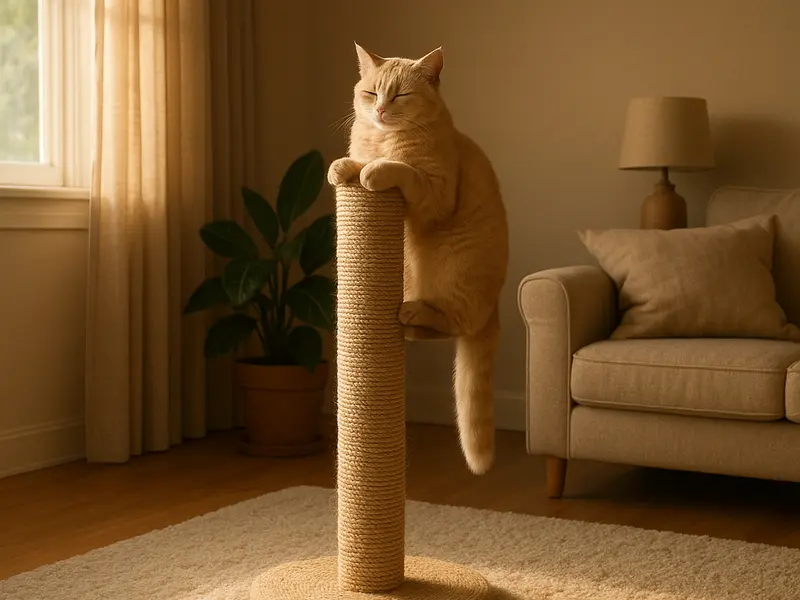
If you want a scratching post your cat will actually use, match it to how your cat already likes to scratch, make sure it is tall and sturdy enough, and put it where your cat already spends time. Scratching is normal, healthy cat behavior. Cats scratch to mark territory with scent glands in their paws, to stretch, and to shed the worn outer layer of their claws, so the goal is not to stop it but to give it a better outlet.
Related on Amazon · Paid links
-
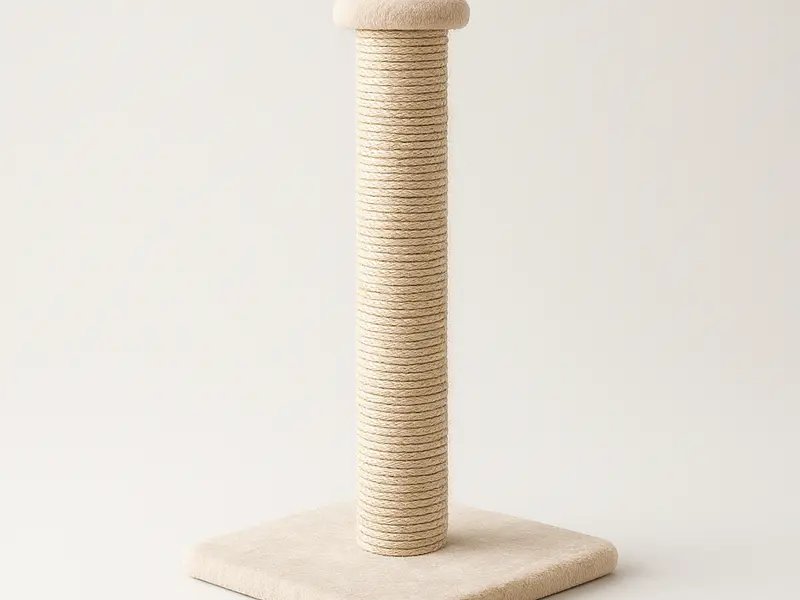 Tall Cat Scratching Posts on Amazon
Browse top-rated tall sisal cat scratching post on Amazon — compare prices, features, and customer reviews.
Check price on Amazon
-
 Interactive Cat Toys on Amazon
Browse top-rated interactive cat toys on Amazon — compare prices, features, and customer reviews.
Check price on Amazon
-
 Best Cat Litter on Amazon
Browse top-rated cat litter on Amazon — compare prices, features, and customer reviews.
Check price on Amazon
We may earn a commission if you buy, at no extra cost to you.
Know your cat and your space
Watch where and how your cat scratches now. That tells you most of what you need to know: the surface they like (rough fabric, carpet, wood or cardboard), whether they stretch upward or scratch on flat surfaces, and which rooms matter most to them. A post tucked away in a spare room is much less likely to be used than one next to the sofa your cat has been targeting.
Vertical versus horizontal scratching
Some cats stretch up and scratch upright surfaces like the sides of sofas or door frames. Others scratch flat surfaces such as rugs and carpet. The Cornell Feline Health Center recommends matching the post to your cat's preferred orientation: a tall vertical post for upward scratchers, and a horizontal pad, flattened cardboard scratcher or log for cats that scratch along the floor. Many cats use both, so offering one of each is a good way to find out.
Space and placement
Place the post right next to the spot your cat already scratches. Once your cat is using it reliably, you can move it gradually, a little at a time, to where you would prefer it. If your cat scratches in several places, provide several scratching surfaces. Areas near sleeping spots and room entrances are common favorites, since many cats scratch right after waking up.
Design features that boost usability
Height
A post that is too short will not let your cat stretch out fully, and many cats ignore it. Cornell advises that a post should be at least as tall as your cat standing on their hind legs with front legs outstretched. For most adult cats, that means a tall post rather than a small tabletop scratcher.
Stability
A post that wobbles or tips over is one of the quickest ways to put a cat off for good. Cornell stresses that the post must be sturdy enough not to topple during use. Look for a wide, heavy base, or a post that mounts securely to a wall or door frame. Give it a firm push yourself before you buy or install it.
Texture
Match the texture to what your cat is already choosing. Cornell suggests sisal or other rope-like coverings for cats that like to scratch couches and other nubby fabrics, carpet-covered posts for cats that target carpet, and cardboard scratchers for horizontal scratchers. Sisal is a popular choice because it is rough and holds up well to heavy use.
Materials and durability
- Sisal rope or sisal fabric: durable and satisfying for many cats. It frays with use, which is normal.
- Carpet: familiar to cats that scratch rugs, though some owners worry it encourages carpet scratching elsewhere.
- Cardboard: inexpensive and popular, especially for horizontal scratching, but it wears out quickly and needs replacing.
- Wood: some cats like scratching bare wood or logs; make sure it is untreated and free of splinters.
A shredded, ragged-looking post is a sign of success, not failure. Cornell notes that a worn post is one that is doing its job, so resist the urge to replace it with a brand new one the cat no longer recognizes.
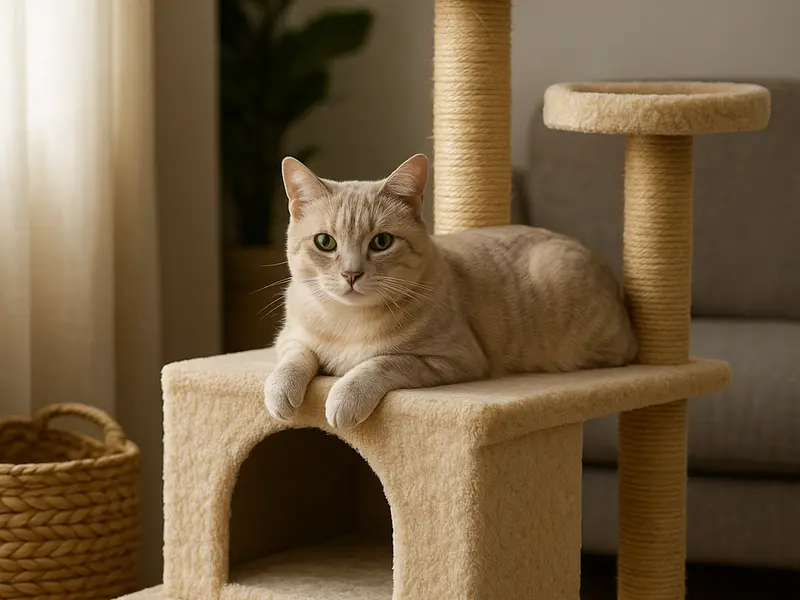
Multi-surface and enrichment features
Cat trees and combination units that offer vertical and horizontal surfaces, perches and hiding spots can work well, especially in multi-cat homes. Make sure each scratching surface is still tall and stable enough to be useful, rather than a decorative strip of sisal on a wobbly frame.
Practical scenarios and recommended choices
- One adult cat and limited space: a tall, heavy-based sisal post, or a sturdy wall- or door-mounted scratcher placed next to the furniture being scratched.
- Two or more cats: several scratching surfaces in different rooms, plus at least one larger cat tree. Separate resources help reduce competition and tension between cats.
- A kitten or a new, shy cat: start early with an easy-to-reach post and a horizontal scratcher, and reward any use with treats and praise.
- A senior cat or a cat with arthritis: horizontal or angled scratchers at floor level may be easier on stiff joints. If your older cat stops scratching or seems stiff, mention it to your veterinarian.
- A small apartment: wall-mounted panels, door-hanging scratchers or a slim floor-to-ceiling post save floor space.
- A cat that ignores the post: move it right next to the scratched furniture, try a different texture or orientation, and make the furniture less appealing for a while.
How to encourage your cat to use it
- Reward use. Cornell recommends treats, gentle petting and praise when your cat uses the post.
- Make it interesting. Rub catnip or silver vine on the post, or place treats on and around it. Dragging a wand toy over the post can also prompt scratching.
- Make off-limits spots less attractive. Temporarily cover scratched furniture with a throw, plastic or double-sided tape, and put the post right beside it.
- Do not punish. Cornell warns that punishment can damage your relationship with your cat and tends to teach the cat to scratch only when you are not around.
- Keep claws trimmed. Regular nail trims reduce damage while your cat learns. Your veterinarian or a groomer can show you how.
Maintenance and safety
- Check the base, screws and wall fixings regularly and tighten anything that has loosened.
- Trim loose threads on sisal or fabric so claws do not catch.
- Replace cardboard scratchers when they are worn through, ideally in the same spot.
- Avoid units with dangling cords or small parts that could be chewed off and swallowed.
What to avoid
- Short, lightweight posts that tip over or slide.
- Placing the only post in a room your cat rarely uses.
- Giving up too early. Some cats take a few weeks to switch habits, especially if they have been scratching furniture for a long time.
- A single small post for several cats.
Decision checklist
- Does your cat prefer vertical, horizontal or both?
- Is the post at least as tall as your cat at full stretch?
- Is the base heavy and wide enough, or the mount secure enough, that it will not wobble?
- Does the texture match what your cat already scratches?
- Will it go right next to the furniture or spot your cat is using now?
- Do you have enough scratching options for the number of cats in your home?
- Are there no dangling cords, loose parts or sharp hardware?
A practical plan to pick your post
- Note where, how and on what your cat scratches for a few days.
- Buy one tall, sturdy post in the texture your cat prefers, plus a cheap horizontal scratcher to test.
- Place them right next to the spot your cat scratches most.
- Encourage use with catnip, treats, praise and play, and temporarily cover the furniture.
- After a couple of weeks, add more scratching spots where needed and gradually move posts to where you want them.
A well-chosen post in the right place, introduced with patience and rewards, usually wins out over the sofa. If scratching suddenly changes, increases a lot or seems linked to stress, check in with your veterinarian, since changes in behavior can sometimes have a medical or stress-related cause.