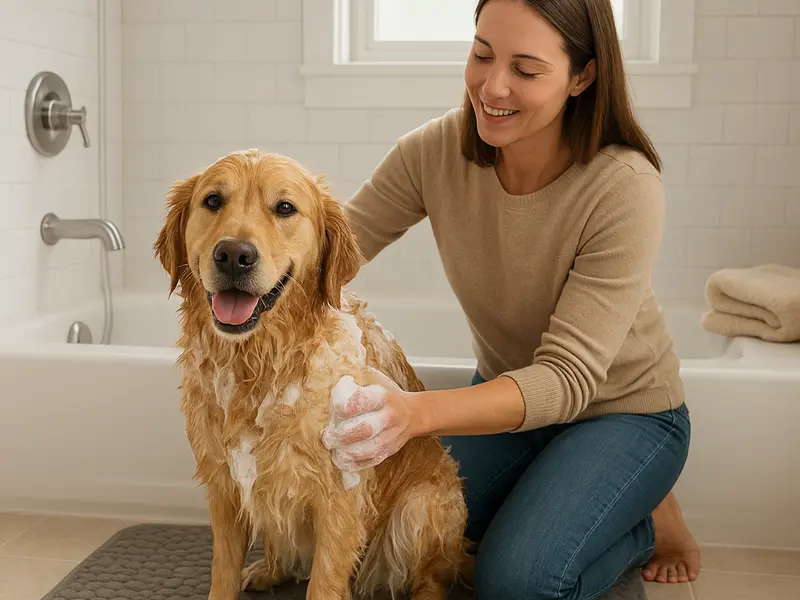
There is no single right answer to how often you should bathe a dog. It depends on your dog's coat type, skin health, activity level and lifestyle. The ASPCA suggests bathing most dogs at least once every three months, with more frequent baths for dogs that spend a lot of time outdoors or have skin problems. Many healthy, mostly indoor dogs do well with a bath every month or two, and a good general rule from the American Kennel Club (AKC) is simple: bathe your dog when they need it.
Related on Amazon · Paid links
-
 Dog Shampoo on Amazon
Browse top-rated dog shampoo on Amazon — compare prices, features, and customer reviews.
Check price on Amazon
We may earn a commission if you buy, at no extra cost to you.
What bath frequency actually affects
Bathing removes dirt, odor, loose hair and allergens from the coat. Bathing too often with the wrong products can strip natural oils from the skin and coat and lead to dryness and irritation. Going too long between baths can let odor, dirt and matting build up. The goal is a routine that keeps your dog clean and comfortable without irritating their skin.
How coat type shapes the schedule
These are general starting points, not rules. Adjust based on how your dog looks, smells and feels.
- Short, smooth coats: often need fewer baths. Many do well with a bath every one to three months, plus regular brushing or a wipe-down with a damp cloth.
- Water-repellent and double coats (such as retrievers and many northern breeds): the AKC notes that overbathing can strip the oils that protect these coats, so bathe less often and rely on regular brushing, especially during seasonal shedding.
- Long or silky coats: the AKC notes these can need a bath anywhere from weekly to every four to six weeks, along with frequent brushing to prevent mats.
- Curly, wiry or corded coats: follow breed-specific grooming advice. Many curly-coated dogs are bathed around professional grooming appointments, while some corded breeds need fewer baths.
- Dogs with naturally oily skin or coats: may need baths more often to control odor and greasiness.
- Hairless breeds (such as the Chinese Crested and Xoloitzcuintli): the AKC describes these dogs as surprisingly care-intensive, often needing weekly baths with a gentle shampoo. Their exposed skin also needs extra care, so ask your veterinarian about skin and sun protection.
Life stage, environment and health considerations
- Active outdoor dogs and swimmers usually need baths more often. A quick rinse with plain water after swimming in a lake, pool or the sea, or after a muddy walk, can reduce how often you need a full shampoo.
- Puppies should be bathed only when needed, with a gentle puppy shampoo and warm water, and dried thoroughly so they do not get chilled. Ask your veterinarian or breeder when your puppy is old enough for a full bath.
- Senior dogs may find baths tiring or hard on stiff joints. Use a non-slip mat, keep baths short and warm, and dry them well.
- Dogs with skin conditions such as allergies, infections or seborrhea are a special case. Veterinarians sometimes prescribe medicated shampoos that need to be used more often than routine baths. VCA Animal Hospitals notes that medicated baths are often recommended weekly, with the lather left on the skin for about 10 minutes or whatever contact time your vet prescribes. Follow your veterinarian's instructions exactly, and do not swap in other products.
Practical use cases and decision guidance
- Mostly indoor dog with a normal coat and healthy skin: a bath every one to three months, or when they look dirty or smell, plus regular brushing.
- Dog that hikes, swims or rolls in things: rinse off mud, salt water or chlorine as needed, and shampoo every few weeks or when dirty.
- Dog with dry or flaky skin: do not just bathe more or less; see your veterinarian first. Dry skin can be caused by allergies, parasites, diet or hormonal problems, and the right bathing plan depends on the cause.
- Dog with a diagnosed skin condition: follow the bathing schedule and product your veterinarian prescribes.
- Heavy shedder: brushing several times a week does more for shedding than extra baths. A bath followed by a thorough brush-out can help during peak shedding season.
Shampoo, tools and technique
- Use a shampoo made for dogs. The ASPCA advises against human shampoo, because dog skin has a different pH and human products can be drying. Mild, unscented formulas are usually the gentlest choice.
- Consider a dog conditioner for long or dry coats. It can make brushing easier and help reduce tangles.
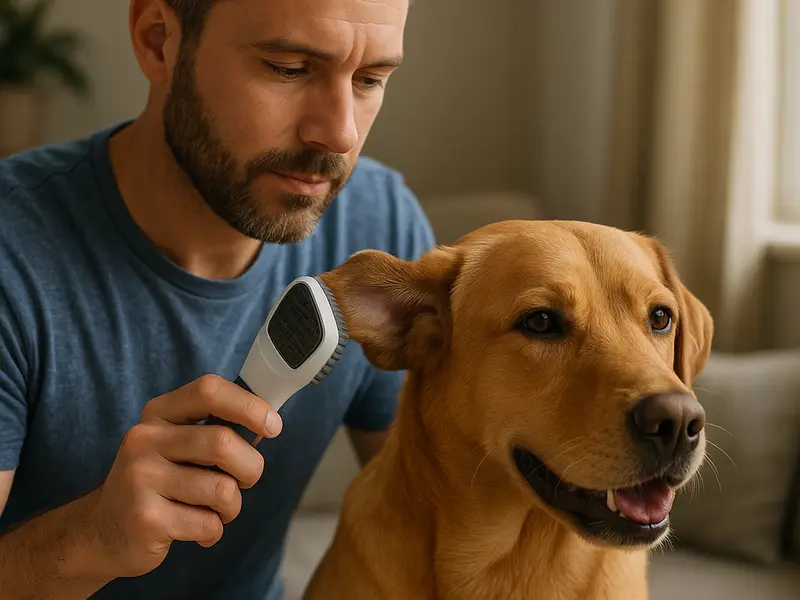
- Brush before bathing. Removing loose hair and mats first makes the bath easier. Water tends to tighten mats, so work them out beforehand or have a groomer remove them.
- Use lukewarm water. Water that is too hot or too cold is uncomfortable and stressful.
- Rinse thoroughly. Leftover shampoo can irritate the skin and cause itching, so keep rinsing until the water runs clear.
- Take care around the face and ears. Keep shampoo out of eyes and ears, wipe the face with a damp cloth, and dry the outer ears afterward. If your dog is prone to ear infections, ask your vet about a suitable ear cleaner.
- Dry thoroughly. Towel dry, then use a dryer on a cool or low-heat setting if your dog tolerates it. Dense coats can stay damp next to the skin for a long time, which can lead to odor and skin irritation.
- Between baths, a damp cloth or a dog-specific waterless shampoo can freshen up a dog that has gotten a little grubby.
Common mistakes to avoid
- Using human shampoo, dish soap or heavily scented products.
- Bathing very often with regular shampoo when there is no need.
- Not rinsing well, which leaves irritating residue.
- Getting shampoo in the eyes or water deep in the ears.
- Leaving a thick coat damp, which can cause odor and skin problems.
- Treating itchy or smelly skin with more baths instead of seeing a veterinarian.
A practical decision checklist
- Does your dog smell, look dirty, or feel greasy? If yes, it is time for a bath.
- What is your dog's coat type, and does it need more brushing or more bathing?
- Is your dog active outdoors, swimming or rolling in things?
- Is your dog itchy, flaky, red or smelly despite regular baths? If so, see your veterinarian.
- Are you using a dog-specific shampoo, rinsing well and drying completely?
- Is your dog a puppy or senior who needs a gentler, shorter routine?
- If your vet prescribed a medicated shampoo, are you following the schedule and contact time exactly?
A simple starter plan you can adapt
- Typical indoor dog with healthy skin: a bath every one to three months, or when needed, plus regular brushing.
- Outdoorsy dog: rinse as needed and shampoo every few weeks or when dirty.
- Hairless or oily-coated dog: more frequent gentle baths, as often as weekly for hairless breeds.
- Dog with skin problems: whatever schedule your veterinarian prescribes.
- Puppies and seniors: gentle, short and warm baths only when needed.
In the end, how often you bathe your dog should reflect their coat, their lifestyle and how their skin responds. Use these guidelines as a flexible starting point, watch how your dog's skin and coat respond, and ask your veterinarian or a professional groomer for advice tailored to your dog, especially if itching, odor or flaking keep coming back.