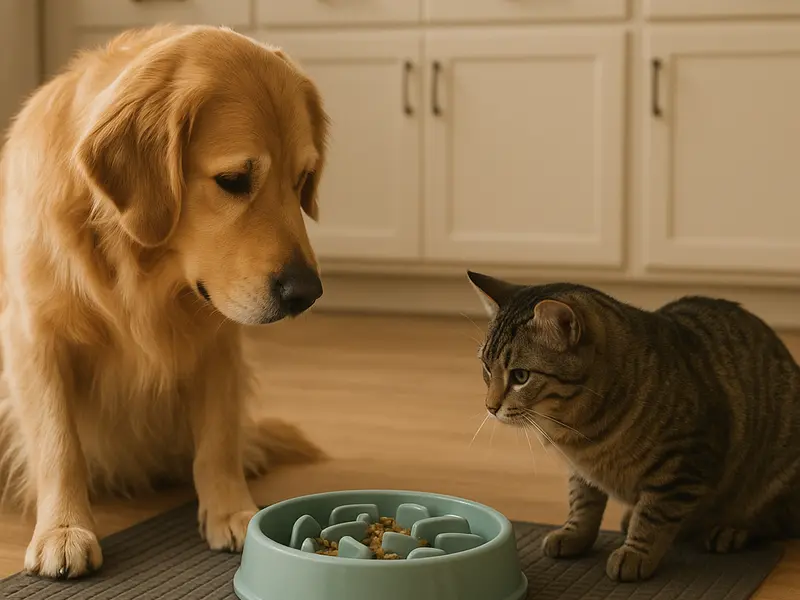
Slow feeder bowls do what the name says for many fast eaters: they make a meal take longer. What they do not do is guarantee protection against serious problems like bloat. If your dog or cat inhales meals in seconds, a slow feeder is a reasonable, low-cost tool to try, as long as you match the design to your pet and treat it as one part of a sensible feeding routine.
Related on Amazon · Paid links
-
 Slow Feeder Dog Bowls on Amazon
Browse top-rated slow feeder dog bowl on Amazon — compare prices, features, and customer reviews.
Check price on Amazon
-
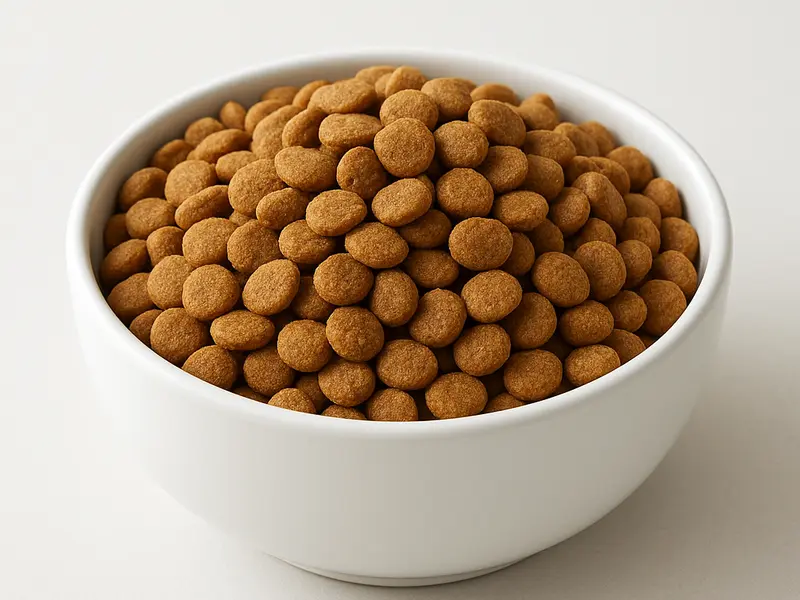 Top-Rated Dog Food on Amazon
Browse top-rated dog food on Amazon — compare prices, features, and customer reviews.
Check price on Amazon
We may earn a commission if you buy, at no extra cost to you.
How slow feeder bowls work
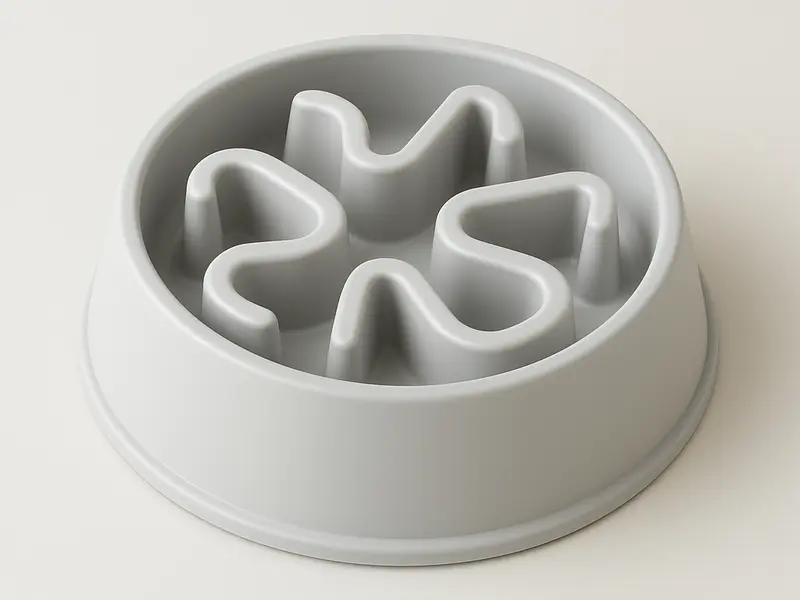
Slow feeders have ridges, walls, pegs or maze-like channels built into the eating surface. Your pet has to move their mouth, tongue or paw around those obstacles to reach each bite, so they cannot take huge mouthfuls. Puzzle feeders and treat-dispensing toys work on the same principle, but usually require more problem solving.
What the evidence says
- They slow eating. A small study by researchers at Harper Adams University in the UK found that slow-feed bowls did reduce how fast dogs ate. It also found that dogs got quicker as they became used to the bowl, and that the dogs tended to prefer a regular bowl when given the choice. In other words, expect a real but modest effect that may fade somewhat over time.
- Eating fast is a known risk factor for bloat, but slow feeders are not proven to prevent it. Gastric dilatation-volvulus (GDV, or bloat) is a life-threatening emergency in which the stomach fills with gas and can twist. The American College of Veterinary Surgeons (ACVS) lists rapid eating of large meals, being fed one large meal a day, a deep chest, older age and having a close relative with GDV among the risk factors. Slowing a fast eater addresses one of those factors, but no bowl can rule out bloat.
- They can add mental stimulation. Veterinary feline guidelines from the American Association of Feline Practitioners (AAFP) encourage food puzzles and foraging-style feeding for cats as a way to meet their natural hunting and foraging needs.
If you have a large or giant, deep-chested breed (ACVS names Great Danes, Weimaraners, St. Bernards, Irish Setters and Gordon Setters among those commonly affected), ask your veterinarian about bloat risk. ACVS notes that many veterinary surgeons now recommend a preventive gastropexy (a surgery that tacks the stomach in place) for at-risk breeds, often done at the same time as spay or neuter.
Who should consider a slow feeder
- Dogs that finish meals in seconds, especially if they gulp air, cough or regurgitate after eating.
- Cats that eat very fast and then vomit shortly after meals. Talk to your vet first, though, because frequent vomiting can also have medical causes.
- Pets that need to lose weight, where a longer, more engaging meal can help mealtime feel more satisfying. Portion control still does the real work.
- Bored or busy pets who benefit from a little mental work at mealtime.
Slow feeders are not a fix for food competition between pets. If you have several pets, feed them in separate spots or rooms so nobody steals food or feels pressured to eat fast.
Types of slow feeder bowls
Materials
- Stainless steel: durable and easy to clean. Slow-feed designs in steel are usually simpler, with fewer ridges.
- Ceramic: heavy and stable, but can chip or crack. Discard chipped bowls.
- Hard plastic: light, inexpensive and available in the widest range of patterns. Replace it if it gets deeply scratched or chewed, since scratches are hard to clean.
- Silicone: flexible and often dishwasher safe, but not a good choice for pets that chew their bowls.
Design approaches
- Maze or channel designs that make your pet work food out of grooves.
- Raised ridges or pegs that break the bowl into small pockets.
- Shallow lick mats or spiral plates, which suit wet food and many cats.
- Insert-style feeders that sit inside a regular bowl and can be removed for cleaning.
Size and fit
- Choose a bowl sized for your pet's muzzle. A flat-faced breed may struggle with deep, narrow channels; a large dog may simply push small bowls around the floor.
- For cats, shallow, wide designs are usually more comfortable than deep bowls.
- Make sure the bowl holds a full meal without overflowing over the obstacles.
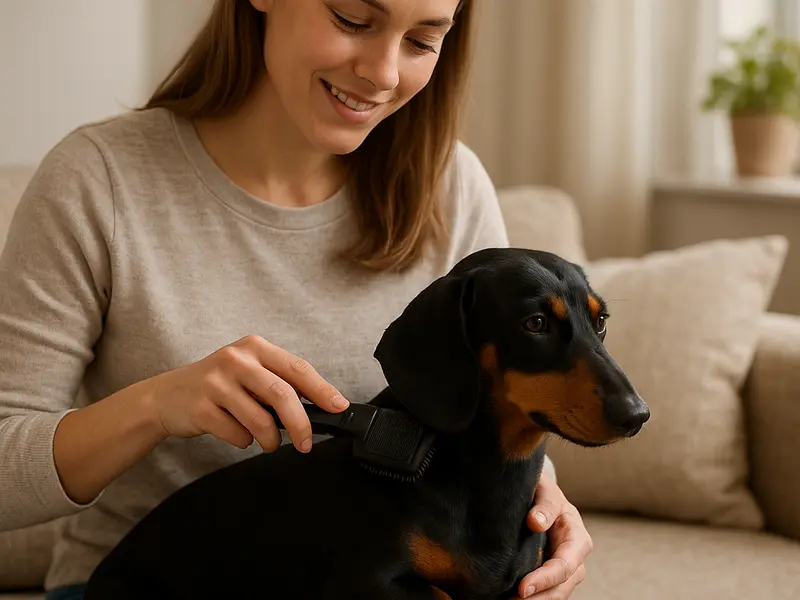
Features that matter
- A non-slip base or mat so the bowl does not slide or flip.
- Smooth, rounded surfaces that are easy to scrub.
- Dishwasher-safe materials if you want easy cleaning.
- Sturdy construction with no small parts that could break off and be swallowed.
Realistic pros and cons
- Pros: slows most fast eaters, inexpensive, easy to try, and can make meals more interesting.
- Cons: some pets get frustrated and walk away, some learn to flip or chew the bowl, and ridges trap food that needs regular cleaning.
- Trade-offs: a simple design is easier to clean and accept but may not slow a determined eater much. A complex maze slows eating more but some pets reject it.
Practical usage tips
- Start easy. Pick a design with gentle obstacles and move to a more challenging one only if your pet adapts well.
- Keep portions right. A slow feeder changes how fast your pet eats, not how much. Measure meals according to your veterinarian's advice or the food label and your pet's body condition.
- Split the daily ration. ACVS recommends multiple small meals (two to three per day) rather than one large meal for dogs at risk of bloat.
- Clean after every meal. Wash bowls with hot, soapy water or in the dishwasher, paying attention to grooves where food collects.
- Supervise at first. Watch for chewing, flipping the bowl, frustration, coughing or gagging, and switch designs if needed.
- Do not force it. If your pet consistently refuses to eat from the bowl, go back to a regular bowl and try a different approach, such as scatter feeding kibble or a simple food puzzle.
Know the signs of bloat
Bloat can kill within hours. Early signs listed by ACVS include an anxious look or looking at the belly, standing and stretching, drooling, a swelling belly, and retching without bringing anything up. As it worsens, dogs may pant, become weak or collapse. If you see these signs, take your dog to a veterinarian or emergency clinic immediately. A slow feeder is never a substitute for urgent care.
When a slow feeder is not the right tool
- Food guarding or aggression around food: adding obstacles can increase frustration. Work with your veterinarian or a qualified behavior professional.
- Pets with dental pain or mouth problems: pushing food out of tight grooves may be uncomfortable. Have your vet check the mouth first.
- Pets that refuse to eat from it: skipping meals is a bigger problem than eating quickly, especially for cats, which can become ill if they stop eating.
- Destructive chewers: pieces of a chewed bowl can be swallowed. Choose sturdy steel or use a different strategy.
Quick start plan
- Time how long your pet currently takes to finish a meal.
- Choose an easy design in a size that suits your pet's muzzle and meal size.
- Introduce it with a portion of a normal meal, and supervise.
- Compare meal times after a week and watch for frustration or refusal.
- Adjust the design, or switch to a puzzle feeder or scatter feeding, if it is not working.
Bottom line
Yes, slow feeder bowls work for their main purpose: most fast eaters take longer to finish meals with one. They are a sensible, inexpensive tool for dogs and cats that gulp their food, but they are not a guarantee against bloat or a replacement for portion control and separate feeding stations. If your dog is a large, deep-chested breed, or your pet vomits or coughs after meals, talk to your veterinarian about the bigger picture.