
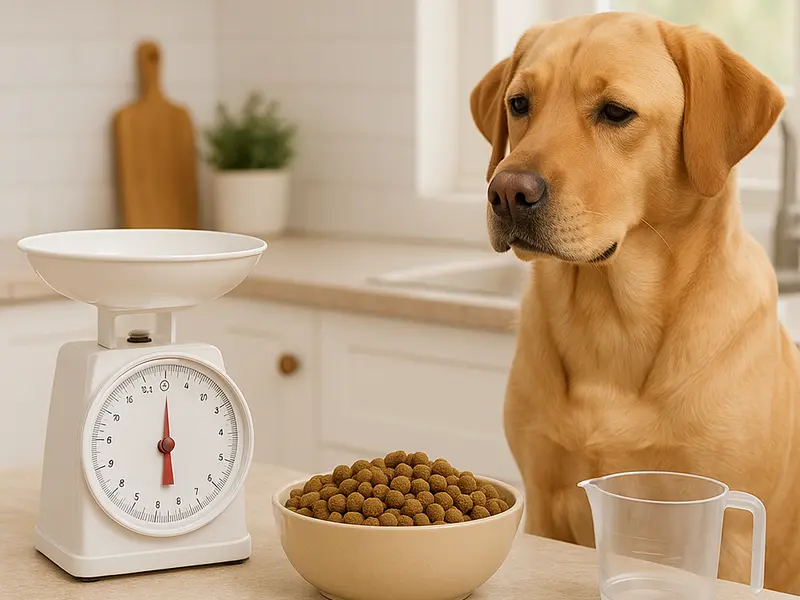
How Much Should I Feed My Dog By Weight
Article
2026-07-02 • 7 min read

How Much Should I Feed My Dog By Weight

If you want to feed by weight, start with your dog’s current body weight, life stage, and daily energy needs, then translate those needs into portions based on the food you buy. Every dog is different, but most reliable plans use three pillars: the calories...

Reviewed by the need-24 editorial team · Updated July 2, 2026 · Why you should trust us

Affiliate disclosure: this article contains paid links. If you buy through them we may earn a commission, at no extra cost to you.

Recommended guide Best Dog Food of 2026 See our top picks →

How to decide how much to feed your dog by weight

If you want to feed by weight, start with your dog’s current body weight, life stage, and daily energy needs, then translate those needs into portions based on the food you buy. Every dog is different, but most reliable plans use three pillars: the calories in the food, your dog’s activity, and how close you are to a healthy body condition. The goal is not a single perfect number but a practical plan you can monitor and adjust.

How to translate weight into portions

Start with the dog food label. Most dry kibble and canned foods list calories per cup or per can. Use that value as the foundation for portioning. The core idea is to estimate daily calories, then divide that total into meals that fit your schedule and your dog’s appetite.

  • Estimate daily calories using body weight and activity level. A common framework uses a resting energy requirement, or RER, and then a daily energy requirement, or DER, that accounts for activity. A practical takeaway is that more active dogs need more calories, and older or less active dogs need fewer. This framework helps you compare foods that are not the same in calories per serving.
  • Convert calories to portions. Once you know how many calories your dog should eat per day, divide that by the calories per unit of food (per cup or per can) to determine how many units to offer daily. Then decide how to space those units across meals.
  • Start conservative, then adjust. Begin with the label’s recommended range for a dog of your pet’s weight and activity, then monitor weight and body condition. Small, gradual changes are safer than large jumps.

Use-cases to contextualize decisions

  • If your dog is very small or has a sensitive stomach, choose a food with a clear feeding guideline and measure precisely. Small dogs often require slightly more precise portions by weight, since a small error in a portion can represent a large percentage difference.
  • If your dog is a growing puppy, follow puppy feeding guidelines on the label and adjust as the dog gains weight. Puppies burn energy differently than adults, and growth spurts can change daily calories quickly.
  • If your dog maintains a steady weight with moderate activity, you may keep portions close to the label’s daily recommendation but still recheck body condition every few weeks.
  • If your dog needs to gain or lose weight for health reasons, plan a gradual calorie change, and recheck weight on a weekly or biweekly basis. Small direction changes are safer than abrupt shifts.

How to calculate in practice

  • Step one: identify your dog’s current weight and target weight if you have one. If you aim to maintain weight, use the current weight as a baseline.
  • Step two: locate the calories per serving on the food label, whether per cup or per can. If you are weighing food, note the calories per unit for the item you’re using.
  • Step three: estimate daily calories needed by considering activity level. A dog with higher activity uses more calories; a sedentary dog uses fewer.
  • Step four: compute daily portions. Daily calories divided by calories per serving equals servings per day. Then decide how many meals you will feed, and divide accordingly.
  • Step five: measure carefully and record. Use a kitchen scale or a reliable measuring cup, and log what you feed alongside any treats.

Practical guidance for different scenarios

  • For weight management: many owners find success by targeting a modest daily calorie reduction while preserving lean mass. This often means reducing portions slightly and avoiding high-calorie treats, while still providing balanced meals and regular exercise.
  • For athletic or working dogs: higher energy needs may require more frequent meals or a larger daily portion. Some owners split meals into three or four smaller portions to sustain energy through the day and to reduce gastrointestinal upset.
  • For seniors: older dogs tend to have lower energy needs, but appetite and digestibility can shift. Monitor weight and adjust portions carefully, prioritizing easily digestible ingredients and a consistent meal schedule.

How Much Should I Feed My Dog By Weight

Special considerations

  • Protein and ingredient quality matter. When comparing foods, don’t focus only on calories. Look at protein quality, fat content, fiber, and the overall balance to support muscle maintenance and digestion.
  • Treats count. Do not overlook calories from treats and table foods. If you use treats for training, you’ll need to subtract those calories from the daily total to keep portions accurate.
  • Food form differences. Wet foods often have different calorie densities than dry kibble, so you may need to adjust portion numbers accordingly if you switch between forms.
  • Measurement accuracy. Free-feeding is tempting for some dogs but makes portion control unreliable. Measuring portions precisely helps you learn how much your dog needs and how appetite changes over time.

What to watch for and when to adjust

  • When to adjust upward. If your dog starts to appear thin, with ribs slightly visible or hip bones prominent, consider increasing portions gradually and reassessing in a week or two.
  • When to adjust downward. If your dog starts to gain weight, or you notice a rounder waist, trim portions a little and recheck in a similar timeframe. Consistency is easier than chasing rapid changes.
  • When not to follow a strict weight-based plan. If your dog has a medical condition that changes energy needs, or you’re using a therapeutic diet prescribed by a veterinarian, rely on professional guidance over a general rule. Also, if you struggle with measuring accurately, seek a plan that emphasizes simple, repeatable measurements to reduce errors.

A practical decision checklist for choosing a plan

  • Calorie clarity: Does the food label provide calories per serving, and can you convert that to daily calories easily?
  • Form preference: Is dry kibble or wet/canned food better aligned with your dog’s preferences and digestion?
  • Portion stability: Will measured portions remain consistent as you switch brands or batches? Look for foods with stable caloric density and clear feeding guidelines.
  • Feeding schedule: How many meals will you offer per day, and is that compatible with your work and family routine?
  • Treat accounting: Do you have a simple method to track treats and add them into the daily calorie total?
  • Monitoring plan: Do you have a simple system to weigh or measure your dog and record changes in weight and body condition?
  • Medical caveats: Does your dog have any health conditions that require veterinary supervision or a special diet?
  • Reassessment cadence: How often will you recheck weight and adjust portions? A short, regular cadence helps catch drift early.
  • Consistency of food: Will you keep calories constant if you switch between foods, or will you choose one diet and stick with it for a while?

Common mistakes to avoid

  • Relying solely on the bag’s broad recommendation without tying it to your dog’s actual weight and body condition. Labels are starting points, not exact prescriptions.
  • Ignoring treats and extra foods. Treats can quickly add up to more than a full meal’s worth of calories.
  • Switching foods too quickly. A sudden change in calories or ingredients can upset digestion; gradual transitions are gentler on the gut.
  • Underestimating the effect of life stage and health. Puppies, seniors, pregnant or lactating dogs, and dogs with medical issues often require different energy targets.
  • Skipping regular reweighing. Body condition can drift with seasonal changes in activity, pacing, or appetite; recheck weight regularly and adjust.

Putting it into practice at home

  • Start with a plan, then track results. Choose a target daily calorie range, measure portions with a scale or reliable cup, and record what you feed and your dog’s weight.
  • Schedule meals consistently. Regular meals help digestion and appetite regulation, and they make it easier to notice changes quickly.
  • Use a single source of truth for calories. If you switch foods, recalculate portions based on the new food’s calories per serving instead of using old numbers.
  • Seek professional guidance when in doubt. If your dog has a medical condition or you’re not seeing the expected changes after a few weeks, consult a veterinarian or a veterinary nutritionist.

If you’re weighing options, prioritize foods with clear caloric information, predictable feeding guidelines, and a plan for monitoring your dog over time. The most dependable approach is one you can repeat—day after day, week after week—so you can fine-tune portions as your dog’s needs evolve. Weight-based feeding isn’t a one-time calculation; it’s an ongoing routine that grows with your dog.

Frequently asked questions

How do I estimate how many calories my dog should eat per day?

Start with your dog’s current weight and activity level and estimate daily calories using resting energy requirement (RER) and daily energy requirement (DER); this helps you compare foods with different calories per serving.

How do I translate daily calories into actual portions for meals?

Find calories per serving on the food label, divide the daily calorie target by that number to get daily servings, then split those into meals.

When should I adjust my dog's portion sizes?

Monitor weight and body condition; increase gradually if your dog appears thin, or trim portions if weight increases, and recheck regularly (weekly or biweekly) after changes.

What common mistakes should I avoid with weight-based feeding?

Avoid relying only on broad bag recommendations, ignoring treats, switching foods too quickly, and not measuring portions or reweighing regularly.

Related articles

← Back to all articles